The Only Watercolor Brushes You Need for Professional Paintings
Jun 08, 2026When it comes to picking out watercolor supplies, it can feel very overwhelming. Do you ever find yourself wondering what brushes you really need for that professional finish?
There are so many different options out there, so it can be difficult to know what to spend your money on.
It turns out that most of what you paint can be accomplished with just three brushes. So today I'm going to let you in on the three most important brushes to have in your arsenal - and how to use each.
The Brushes I Use Most Often
Mop Brush: Raphael Soft Aqua, Size 6
What we want first is a mop brush that can hold a lot of water and paint. My go-to mop brush is a Raphael Soft Aqua, size 6. Mop brushes are the biggest brushes that you will use and often are the most expensive, but this is a good, affordable mop brush.
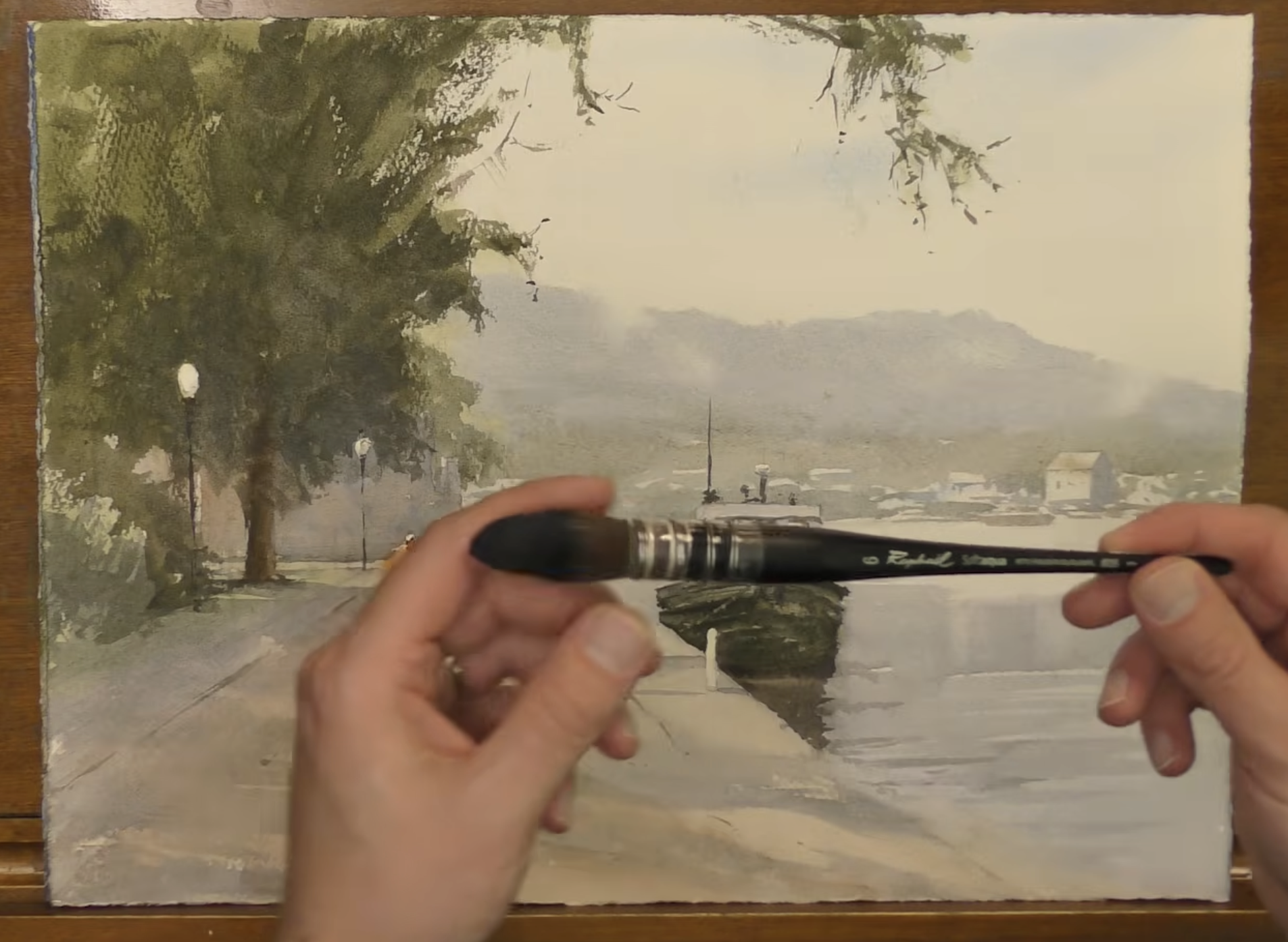
This one is synthetic. If you were buying a natural hairbrush, it's going to cost a bit more money. But I have found that this is a good option. If you don't want to spend a lot of money on a brush, this Soft Aqua Raphael size 6 is a good brush to have.
Now, what do I use the mop brush for?
When I am painting a scene, at the beginning of my process, I need to think about covering up most of the paper, right? I'm just toning the paper, getting that first wash in, and establishing the light colors around the scene.
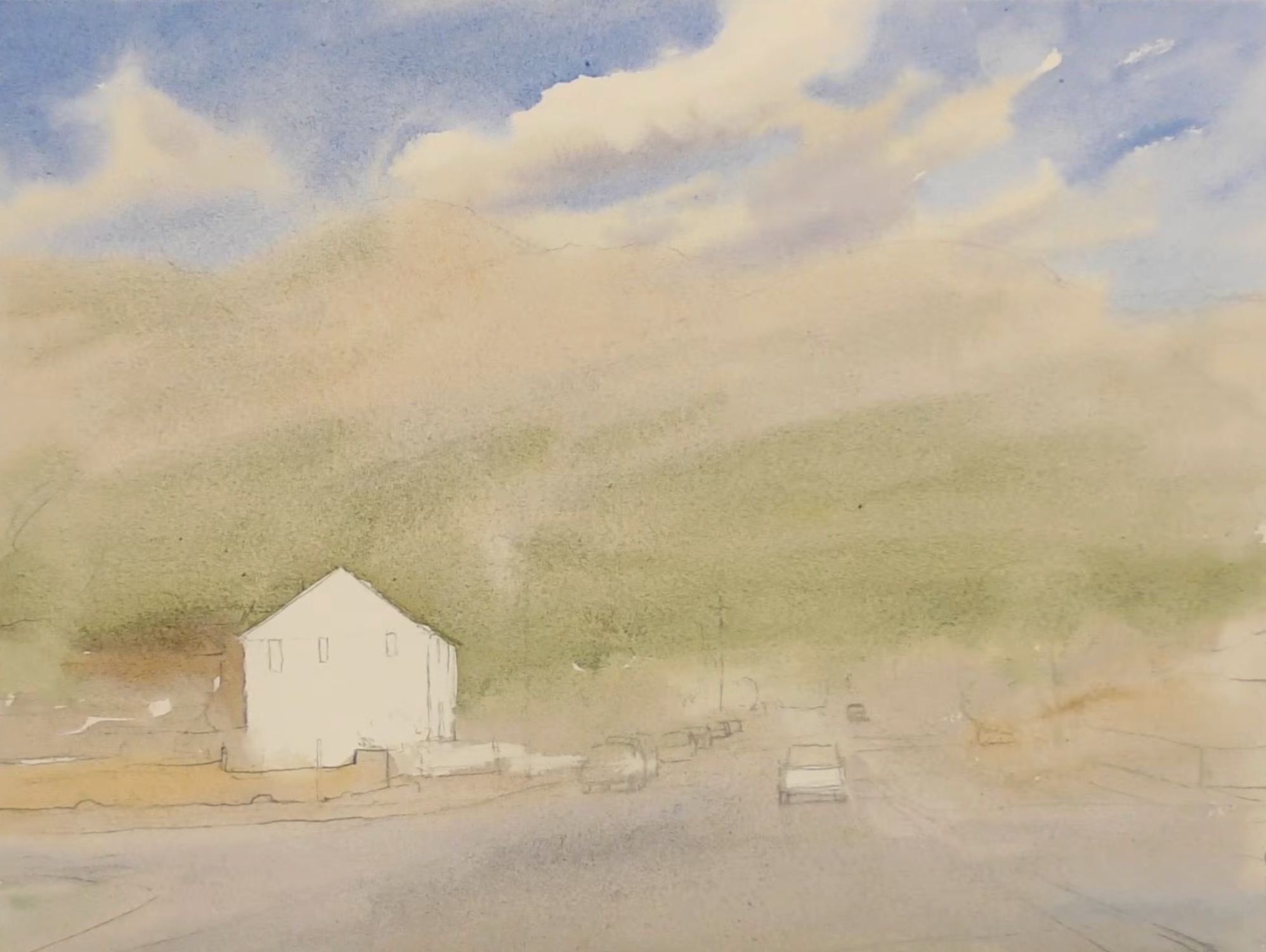
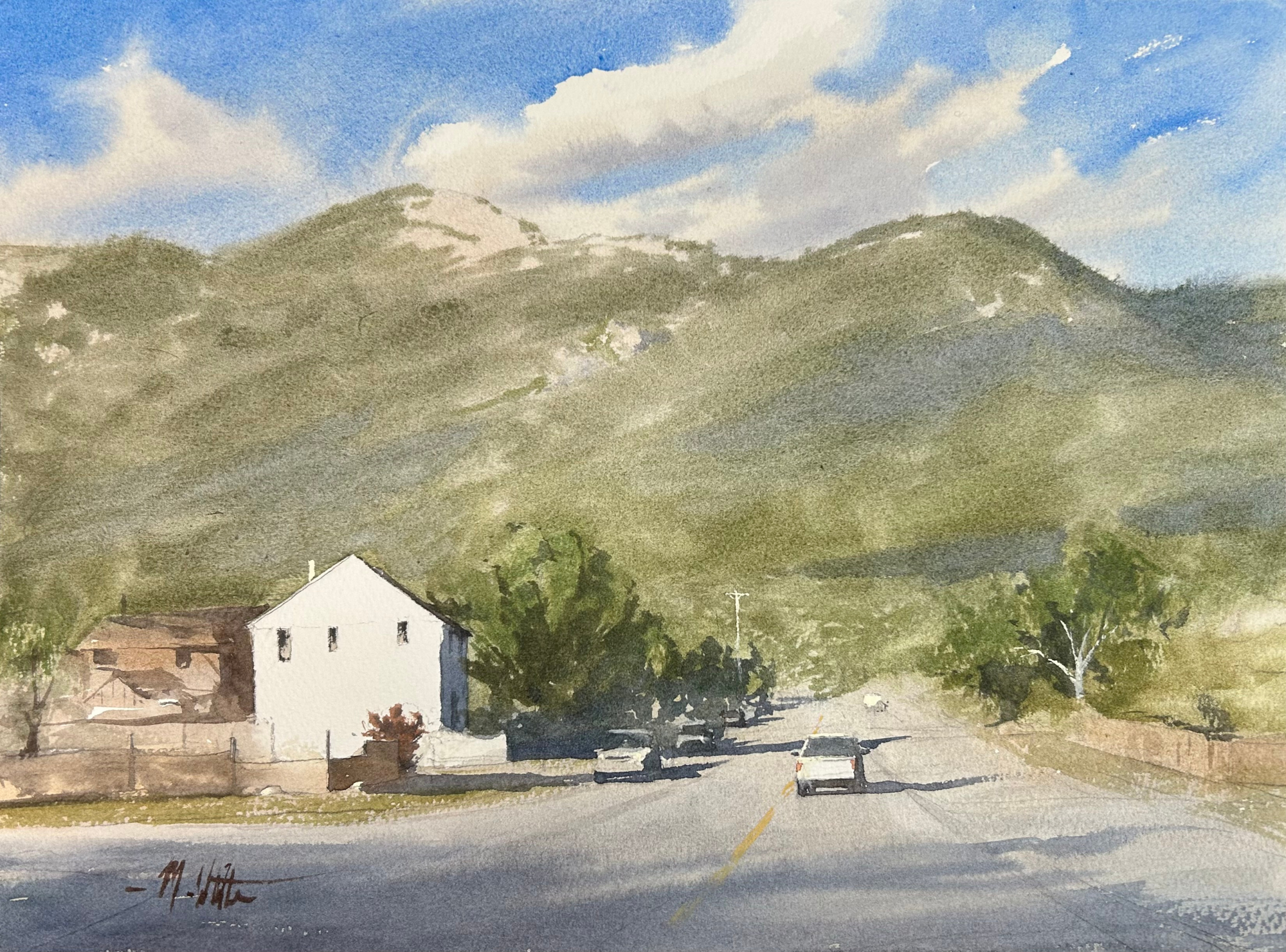
So in the painting above, I used a mop brush to paint the sky, the light values on the mountain down to the road, the light colors on the road, and some of the light areas in the foreground. I avoided this white of the paper for the building, but all the rest of this is painted with a mop brush.
Medium-Sized Brush: Silver Black Velvet, Size 16
After you've laid in that first initial wash, what comes next?
Well, that is when we need a medium-sized brush, and this one here is a Silver Black Velvet, Size 16.
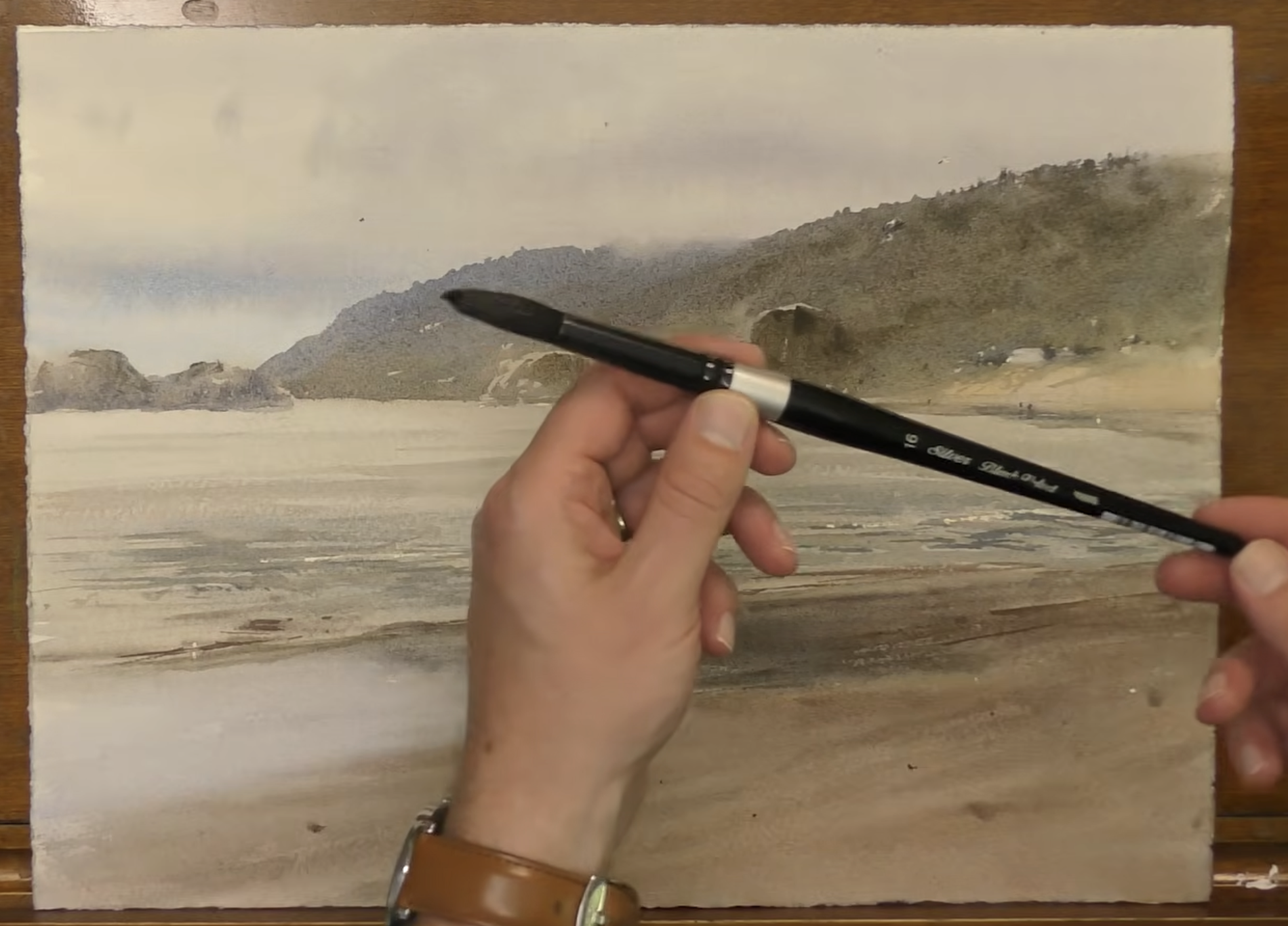
This brush has a blend of natural hair and synthetic fibers, but it is a good, reasonably affordable brush that can hold a decent amount of paint and water.
Now, when we move into the second phase of the painting, we are painting the middle values, the large connected shape of the scene.
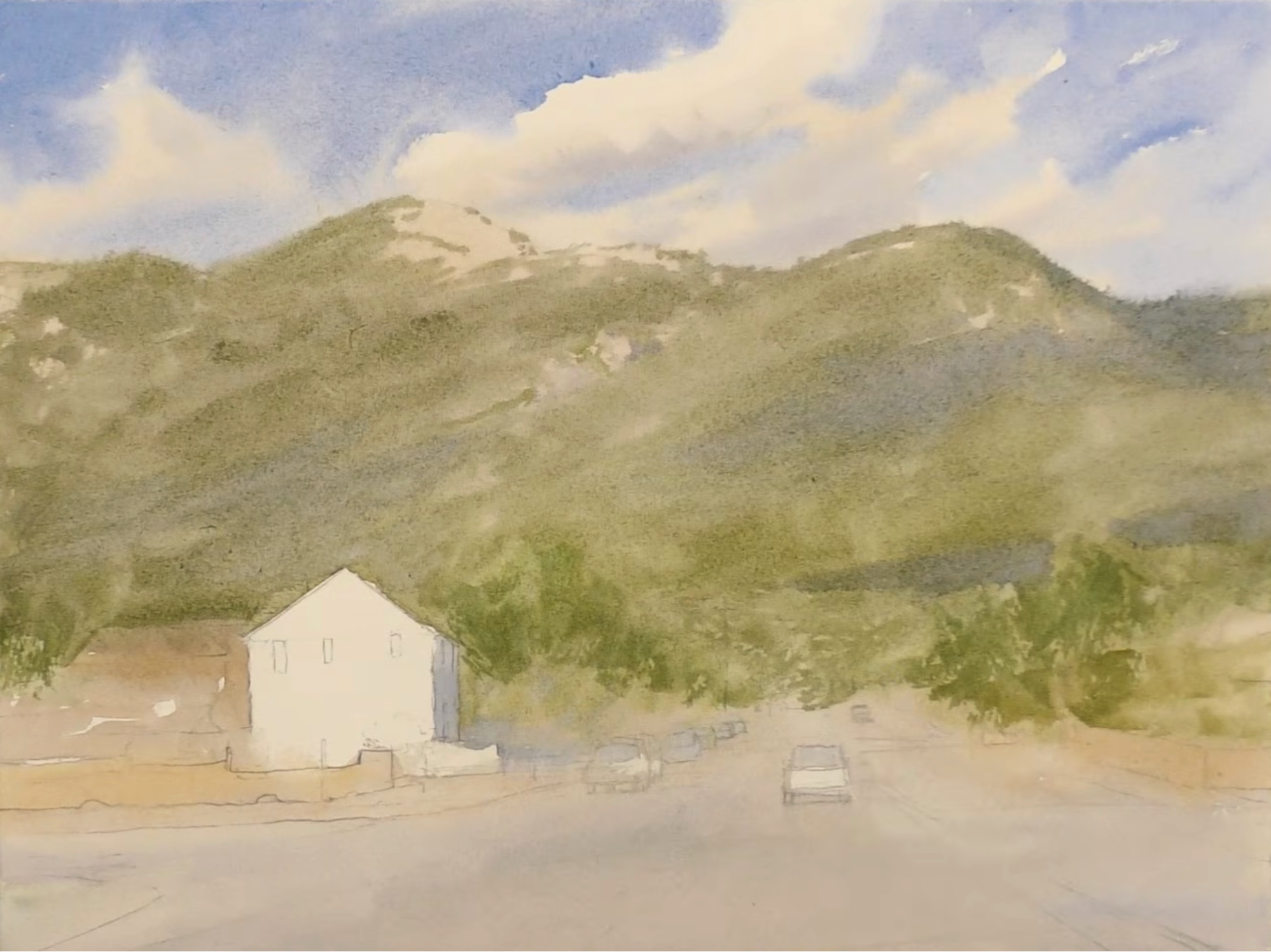
I used this brush to paint the hill, to paint some of the sweeping marks over the light values of the water, and to paint the larger shape of the sand when I get down to that part of the scene. I used a middle-sized brush to paint the trees and to paint the connected shadow shape, and to paint all of the green on top of the lighter values of the mountain that I dropped in.
Smaller Brush - Escoda Perla, Size 12
What comes next is an Escoda Perla, Size 12. This is the brush that I use for most of the details in my paintings.
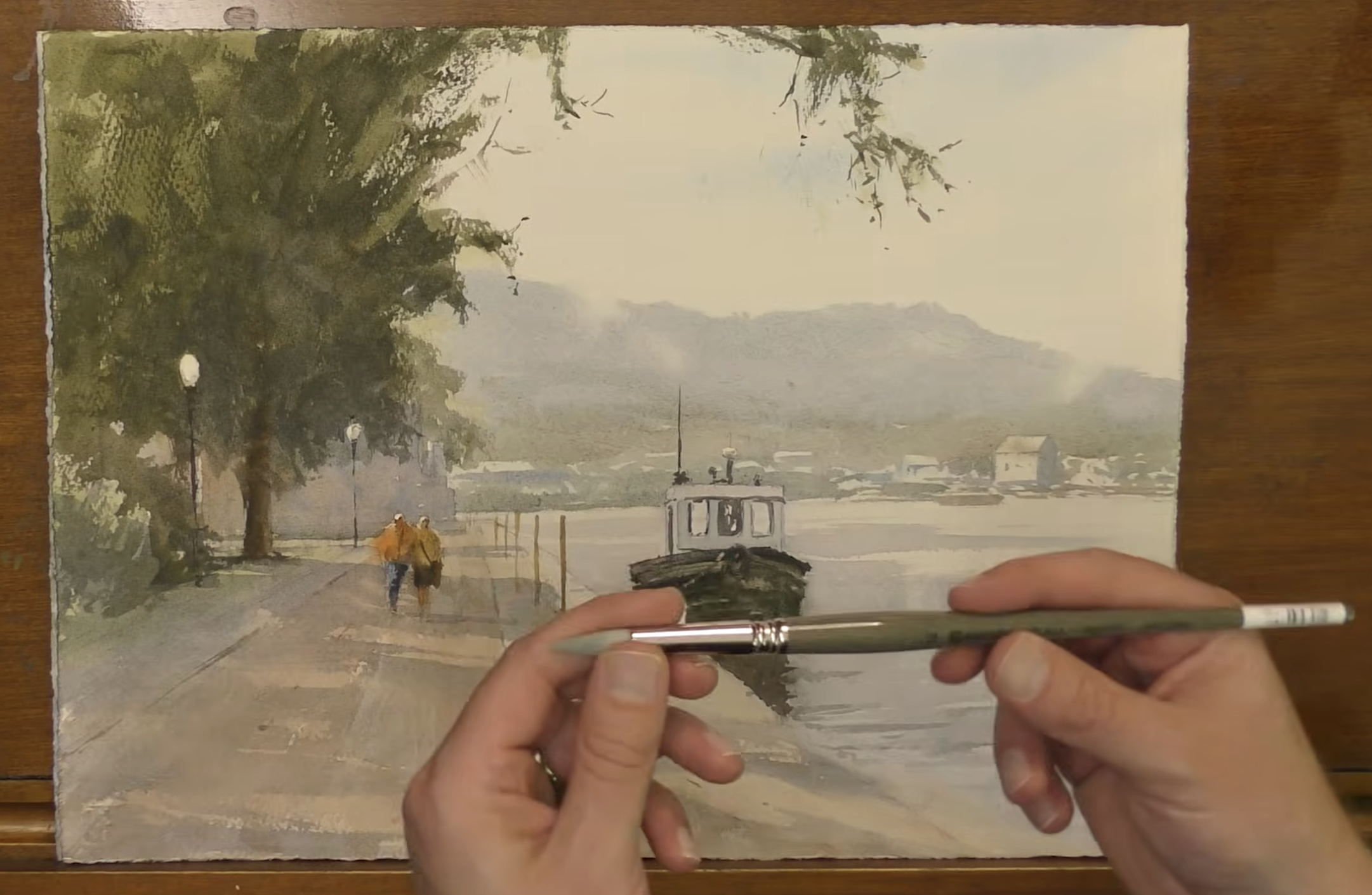
And what I like about this brush is it's a size 12, so it's not really tiny, but it comes to a very sharp point. This makes it really good for details.
In the mountain scene, when I get into painting the darks on the cars, details, little windows on the houses - smaller pieces around the scene - that's what this brush is really good for.
The Most Essential Watercolor Brushes
Okay, these are the three brushes I recommend for professional paintings:
- A large mop brush to get in your light values in the scene, to really take away the white of the paper, and to really load that up and cover a big area,
- A middle-sized brush for the middle values and some of the shapes that really start to define your painting, and
- A smaller brush for the darks and the details of the scene.
If you think about it, as far as my process goes, we are painting big washes, big shapes to smaller ones.
We are painting more abstractly to more defined and more detail work. The brushes go in that same way. A mop for more for laying light values, the middle value brush to get the shapes, the big shapes of the scene, and then finally, something to add in all the details.
So that's a good thing to keep in mind that can help clear up some of the noise about all the different brushes and all the different options. Those are my three essentials.
Honorable Mention
One thing that is tricky with painting is really fine lines.
And that is where a rigger brush comes into play. For this, I use an Escoda, Size 4 Rigger Brush. This is nice for fine lines and little details.
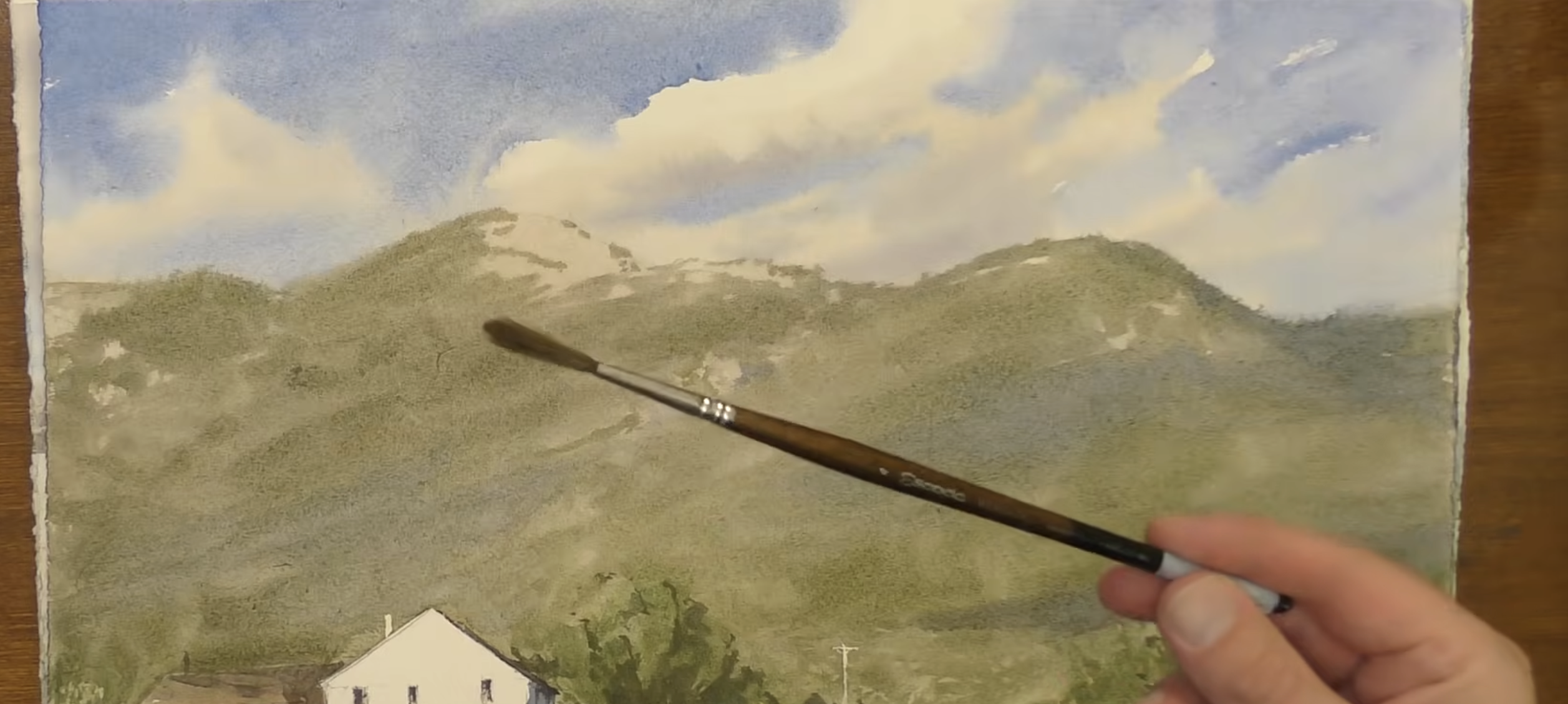
When I'm adding in the final touches, and I'm looking at the trees and little details around the scene, a rigger brush can be good for breaking up some larger shapes or adding fine little marks to add some energy to the painting.
These are really great for power lines in street scenes or rigging on a boat.
I hope that that look at my brushes and a little bit of explanation how I use those brushes is helpful for you. If you have questions about my approach to painting and would like to know more about my process, reach out!
Related Blogs
The Watercolor Artist's Guide to Paints
Choosing the Right Brushes: Comprehensive Guide
How my John Pike Palette Helps Me Increase the Vibrancy of My Watercolors