This One Simple Watercolor Technique Unlocks Insane Luminosity
Aug 17, 2026Let Me Teach You The Glow Technique
Have you ever noticed that some skies in watercolor look luminous and dynamic... and others don't?
In this video, I'm going to:
- reveal an underused technique to create dynamic and luminous skies,
- show how any level of painter can use this to transform their work,
- talk about the places that I got stuck along the way,
- and show you the solutions that made all the difference.
This is the technique that has transformed hundreds of my students' paintings.

And it's this exact approach that helped me go from painting skies like this:
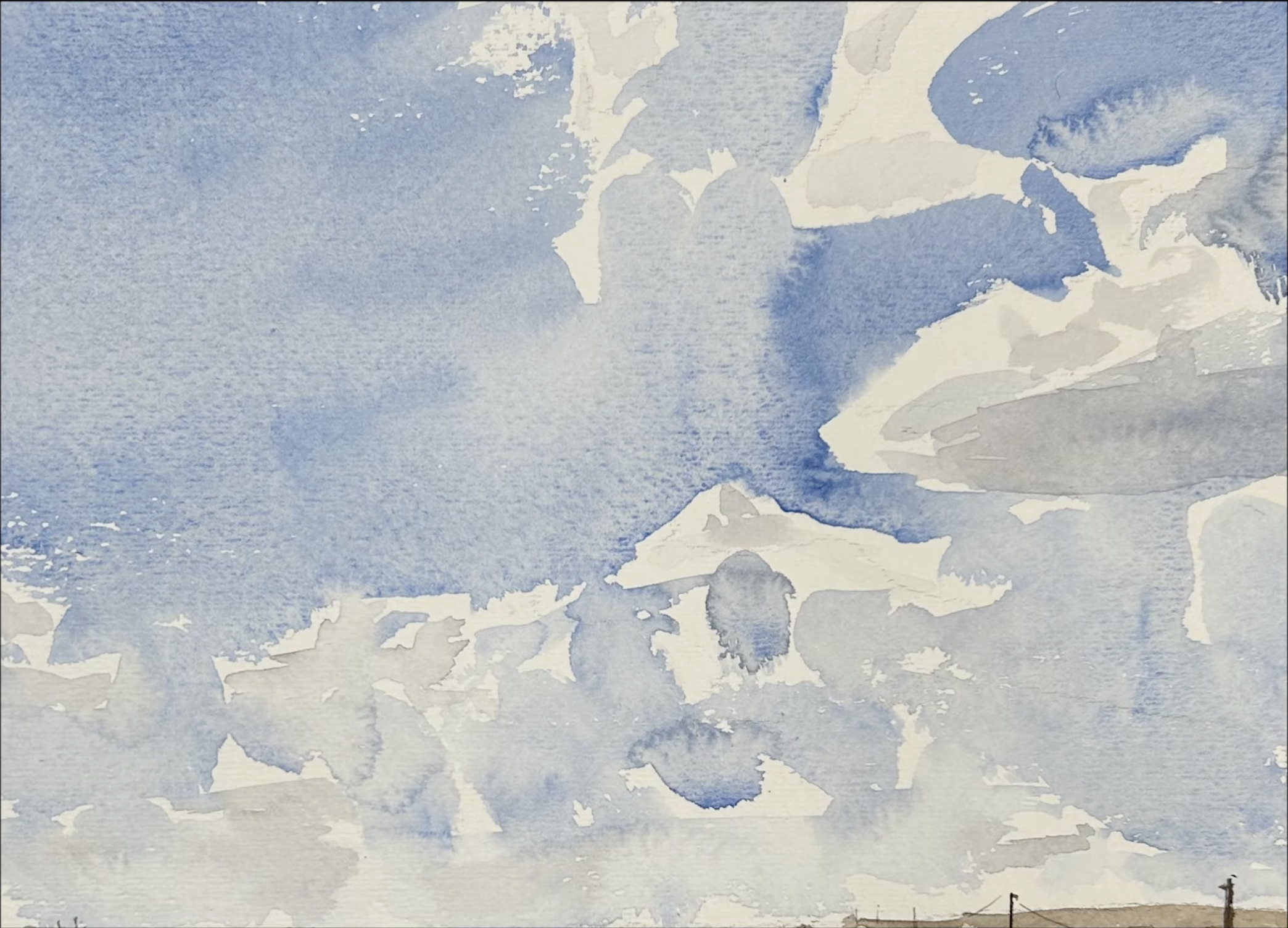
To this:
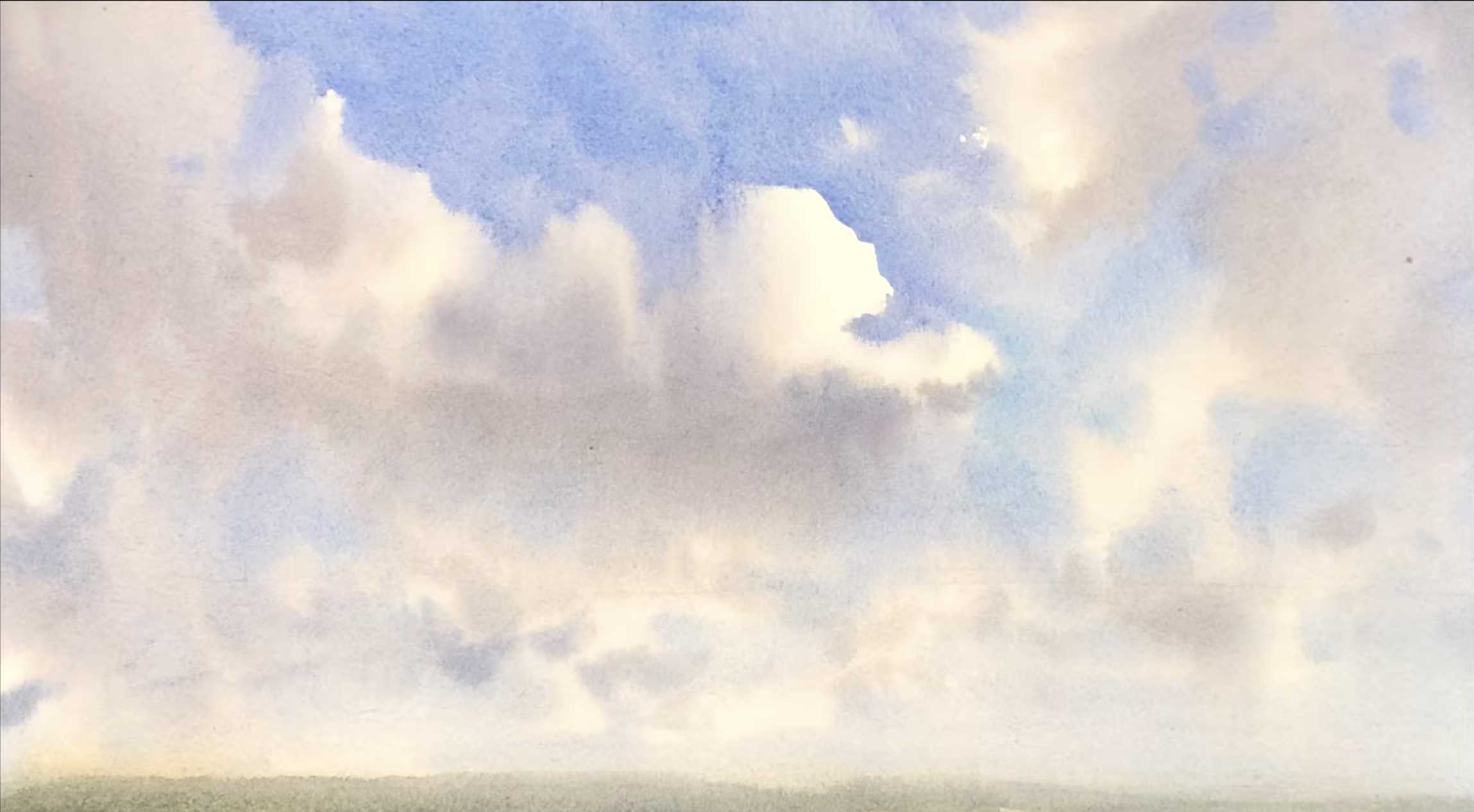
Keep reading for the essential tips to painting a luminous sky.
1. Set a Foundation with Your Values
So let's say that we have a house. The first skill is the foundation of the house. If we don't establish this, the whole thing is going to collapse.
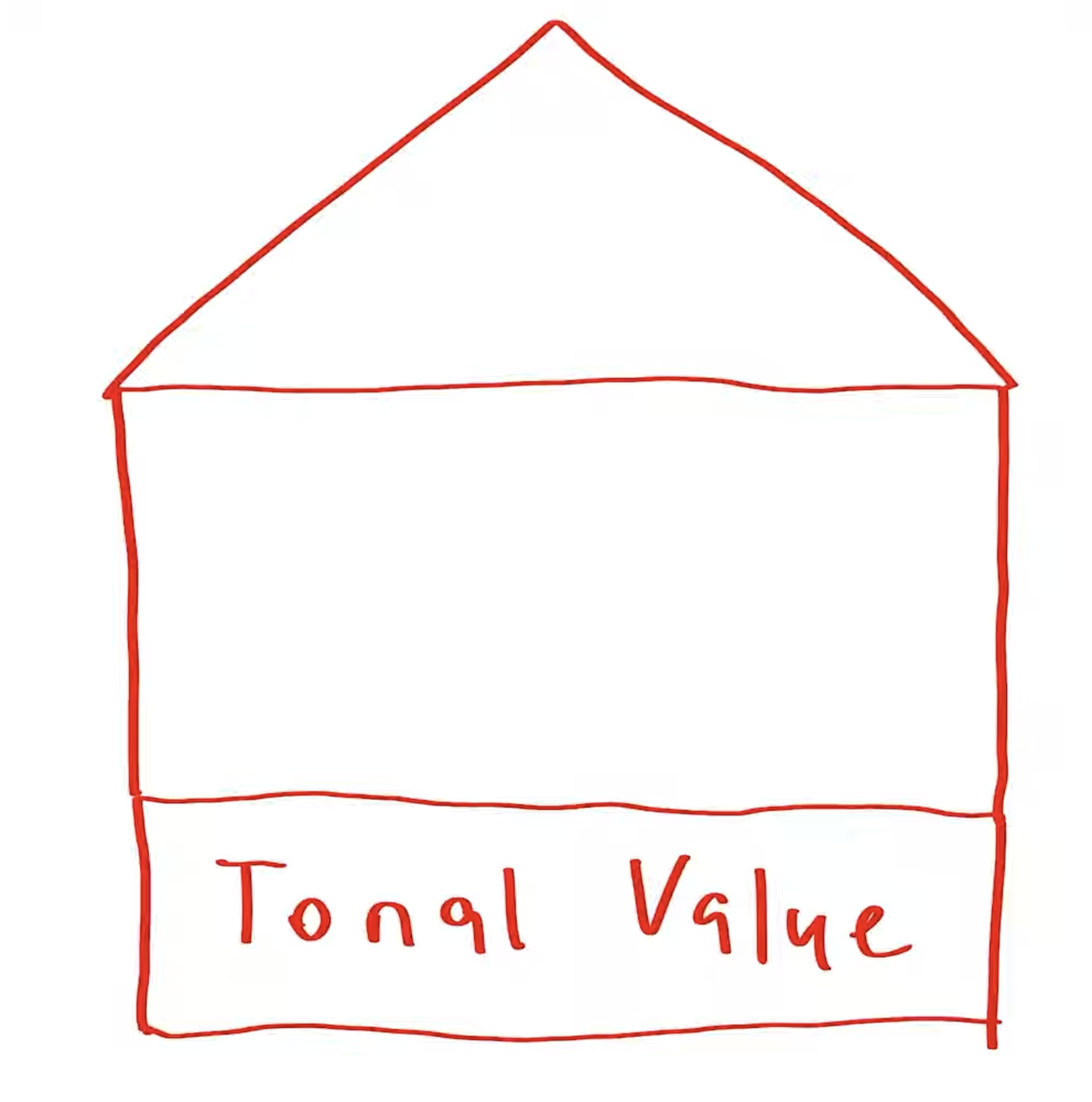
So if we look at this old sky painting of mine versus the new one, what do you see? Obviously, there are a lot of differences between the two, but if we turn them black and white, we can see the difference in tonal value.
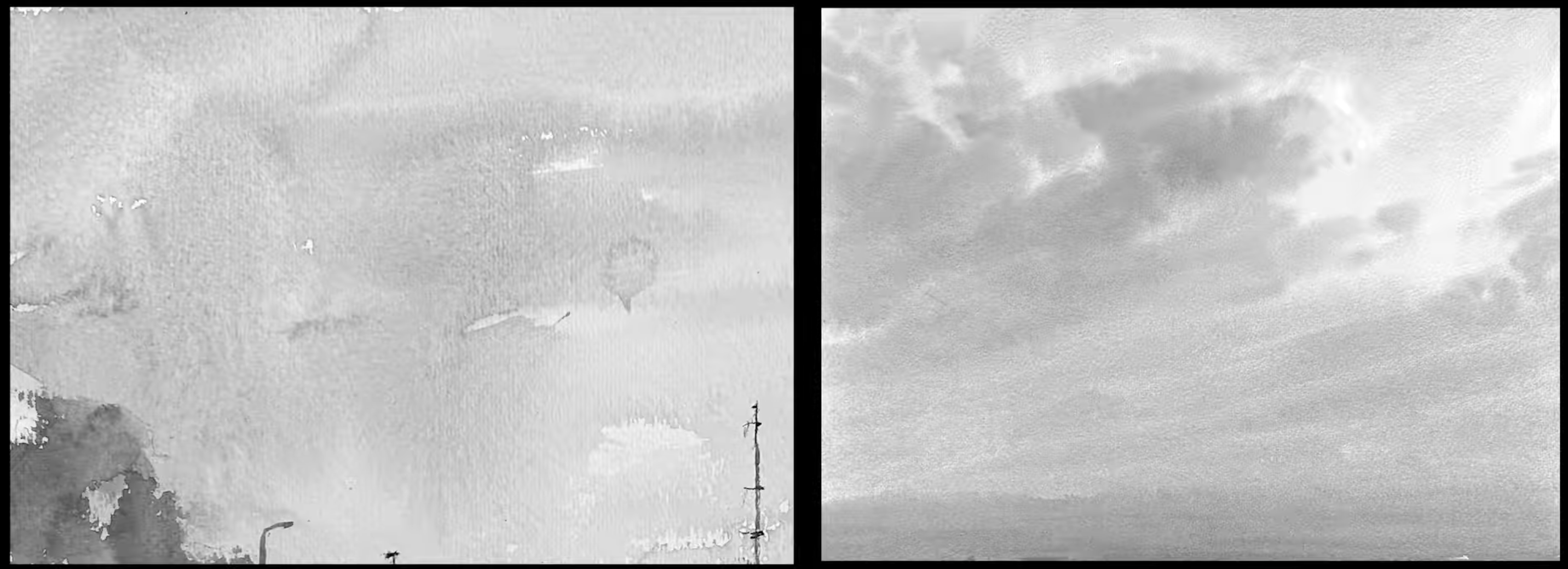
What I was running into time and time again in my early paintings was lack of strength in the middle value and the darks. No matter how much time I put into thinking about color, the painting never worked if I didn't paint strong enough.
If your paintings are not working, think of the foundation - your tonal values.
If you're not creating compelling light, 90% of the time this is where your issue is. So to check this, take a photo of your painting and put it side by side with the reference and take the color away from both of them. If you see a big difference between the two, you know that you are likely painting too light within your scenes. This isn't to say that we need to match exactly the contrast of the photo, but this can tell you quickly and easily if the values are off.
Do you Have a Technique or a Supplies Issue?
A problem with values can point to either a technique or a supplies issue. So let's rule out the supplies issue quickly. Often, if a watercolor painter is struggling to paint dark enough, they are using pan paints instead of tube paints. With pan paints, it's harder to create rich mixtures. If you're using pan paints and struggling to create correct values, consider switching to tube paints.
The other issue to consider is that watercolor fades when it dries.
One of my favorite teachers, Andy Evanson, always says, "If it looks right when you paint it, it's wrong."
What he means by this is that you need to paint a little bit darker than you think you need to to compensate for the drying and fading that happens.
2. Know Your Main Idea and Simplify
There is this odd house in our neighborhood that has baffled me and my wife for years. For years, we would speculate about what it might be, as it seemed to have different people and activities going on around it. One day, my wife found a Groupon for a farmer's market at this house. So being curious, we go to the location on a Saturday morning. We look around, and there aren't any vendors or vegetables.

Instead, we find one person loitering in the driveway. We asked them about our Groupon, but they had no idea what we were talking about. Confoundingly, they said that they were part of the "limo side of things." Limousines - like the really long fancy cars.
Soon after, we noticed that the house was advertising a martial arts studio, and then soon after that, up for sale again with a sign that said "NOT A HOUSE." We were so confused.
The problem with this house/business was that they were trying to do too many things. The didn't know who they were.
We see this same lesson ring true in almost everything. You use too many spices and the soup is ruined. You have too many layers of audio and the song just becomes noise.
Painting is exactly like this. Even if you nail the values in the scene, if you overwork the sky and try to include every detail, it just becomes a mess.
So let's look back at our metaphorical house. The middle part of the house is what defines it, and this requires simplification and focus.
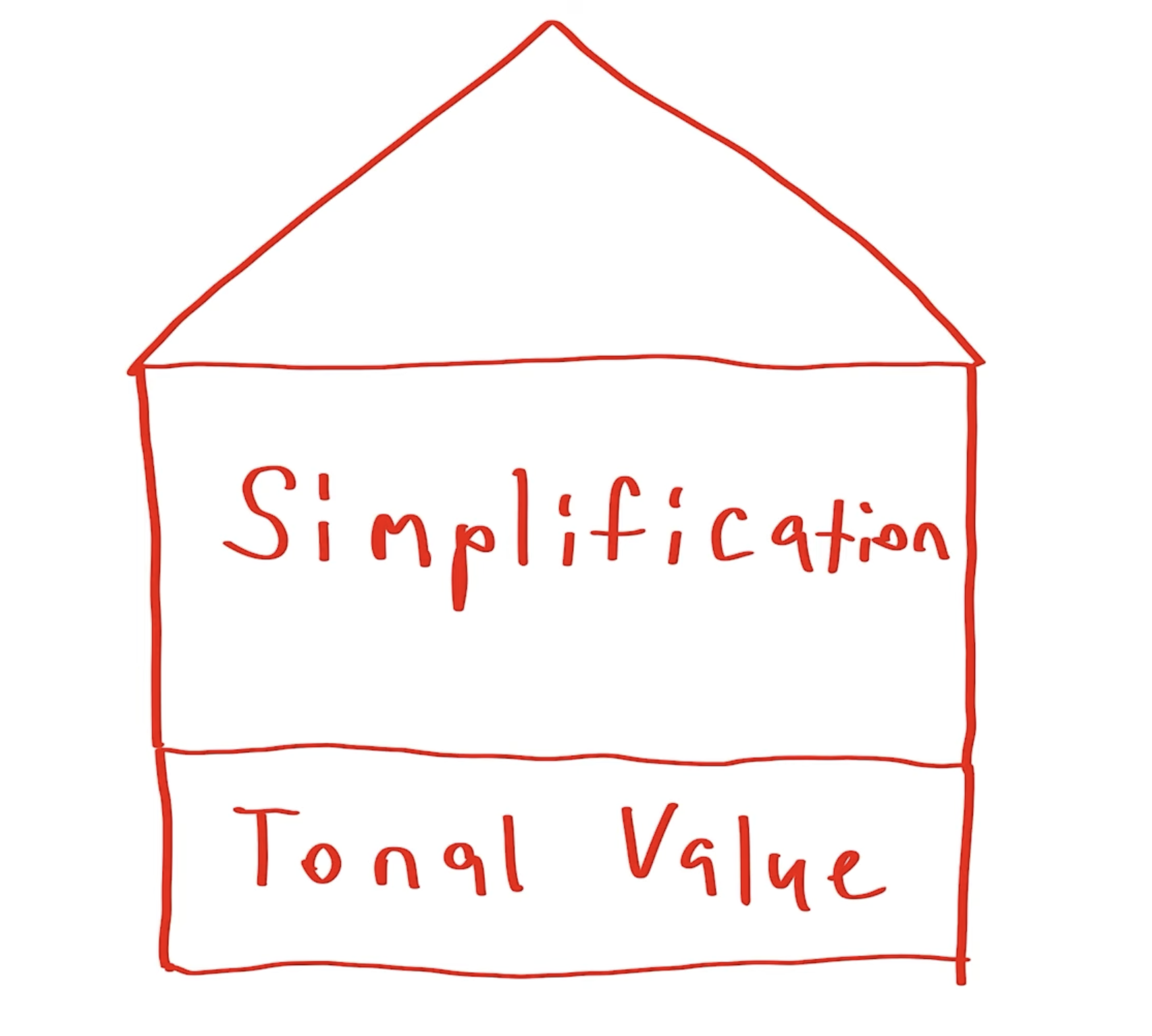
Painters fall into the trap of including everything they see. Painting is not just copying what you see from a photograph and recreating it. It's about remembering what attracted you to the scene in the first place. Ask yourself, why am I painting this? and keep that focus in the front of your mind as you paint.
Remember: If we emphasize everything, we emphasize nothing. So decide what you want your focus to be and stick to it, simplifying along the way.
How to Bring Focus to Your Painting
Here are a couple tips to help you bring focus to your painting:
Consider your hierarchy of importance.
What is most important for you to capture in the scene? What are some other, less important aspects of the painting? Think through these in order of importance. Then strategically think about how to emphasize your focal area and downplay the rest of the scene.
Emphasize the important areas.
To do this, give them more contrast, more saturation, and harder edges. Where we have the most of these things is where the viewer's attention is naturally going to go.
Squint at your reference.
If you're struggling to identify that focal point and eliminate unnecessary detail, here's a simple trick: look at your reference photo and squint. Squinting helps you remove unnecessary information and simplify what you're looking at. This can help you identify what really pops out in the scene and what should be de-emphasized in the scene.
Crop your photo.
Zoom in and play around with different compositions. Remember that you are the artist and you can take liberties with the reference. If there are distractions, remove them. If elements of the scene look better in a slightly different position, move them.
3. Master Edges With Wet Into Wet Painting
Now we need to put a roof on our house: Edges.
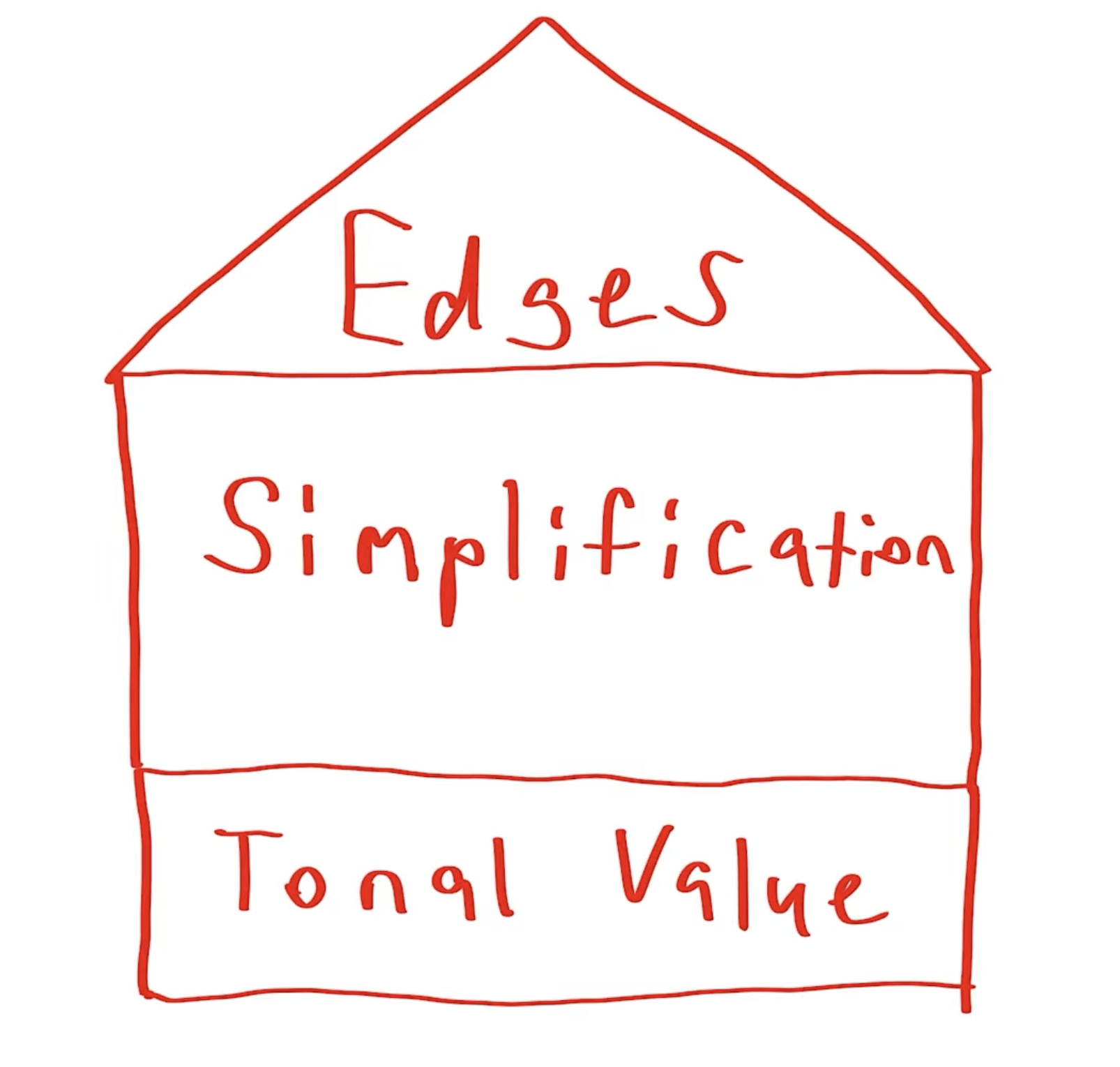
We don't have a lot of advantages over other mediums, but one gigantic advantage that we have is painting wet into wet. The soft and lost edges that we can effortlessly create with watercolor is perhaps the greatest strength of the medium.
Looking back on my early paintings, I didn't understand that creating hard edges all over the sky was wrecking my paintings.
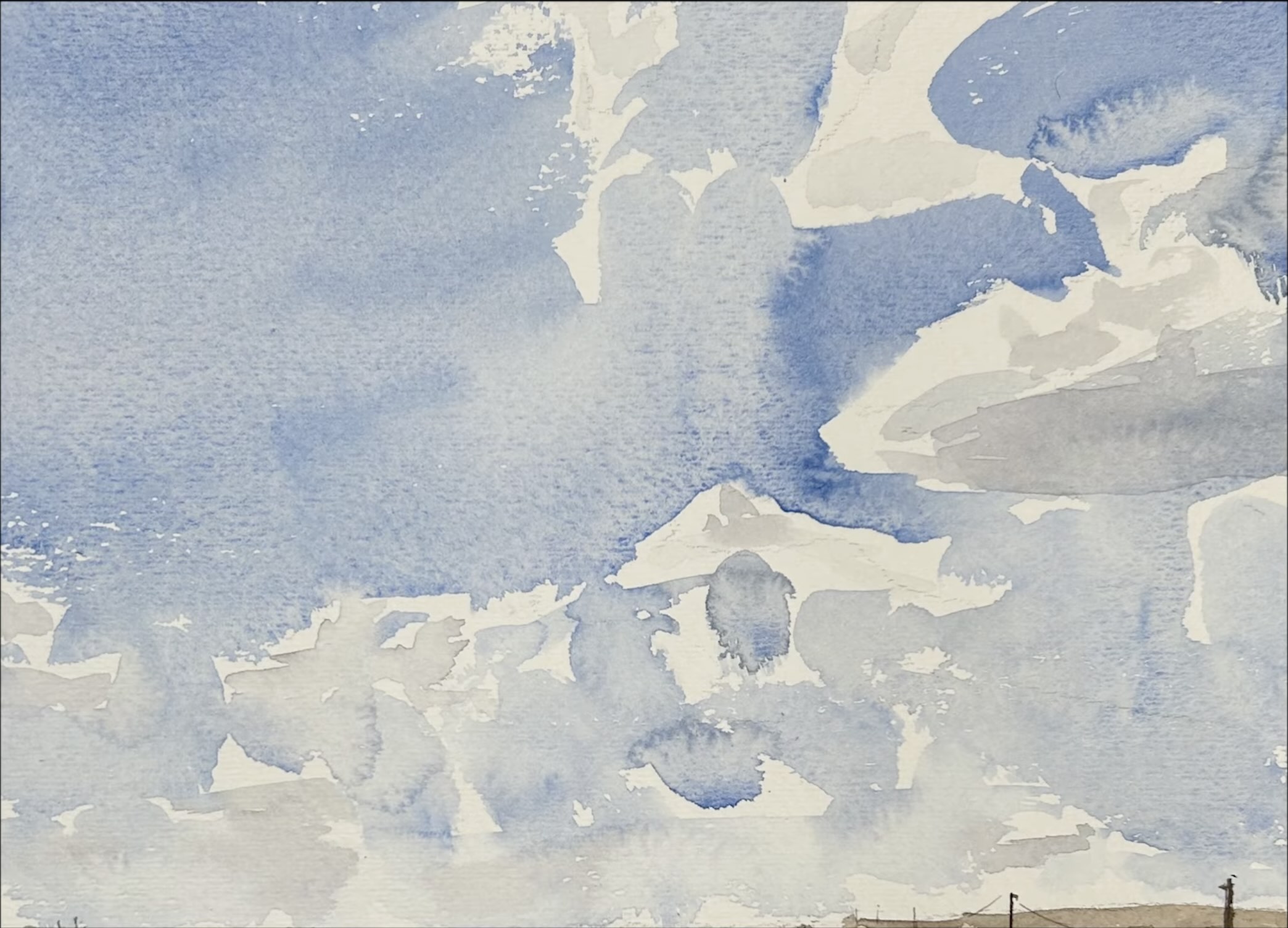
Part of what makes dynamic and compelling skies work is that there aren't hard edges all over the place. There's a real softness to it, and when we do decide to emphasize an area with a firmer edge, it locks in that hierarchy that I was talking about earlier. Suddenly our sky has focus. We're not distracted by every little cloud around the scene and the parts of the sky that don't have hard edges are now left with beautiful soft transitions from shape to shape and color to color.
That's exactly what we see when we look up at the sky and it's the secret ingredient that many watercolors overlook.
Here are three things to help you improve with this specific technique:
Practice painting wet and wet skies outside of painting complete paintings.
This is the fastest way to improve and often I see students just getting these repetitions in when they are painting a complete painting.
Use 100% Cotton Paper.
I know supplies are not cheap, but if you can try to get 100% cotton paper, you'll see a huge difference. I use Saunders Waterford 140 pound cold press. If you have questions about the supplies that I use, you can check out my watercolor supplies guide here.
Pre-wet your paper.
Now I know a lot of you who have seen my videos before, see me dampening the front and the back of my paper and laying it loosely on my surface to paint. If you're not comfortable with that, that's okay. Just tape your paper down like you normally do and then use a sponge and dampen it evenly before you get started.
What You Should Practice Next
Now that you have a handle on this important technique in watercolor, we need to talk about layering.
This will unlock a powerful approach that you can use on any scene. I've made a complete video on this topic that you can see right here.
Related Blogs
Painting Light In Watercolor Street Scenes