You Took a Photo - Now What? Paint a Beautiful Watercolor!
Apr 13, 2026Sometimes I paint on site, but most of the time I work from my studio and use a reference photo as inspiration.
Over the years, I've had to learn to give myself permission to break away from the reference when it better serves the painting. Let me demonstrate what I mean.
Paint the Most Captivating Parts of a Photo
This photo was taken on last year's retreat to Sicily in an ancient village called Gangi (if you're interested in a painting retreat with me, click here - I'd love to meet you).
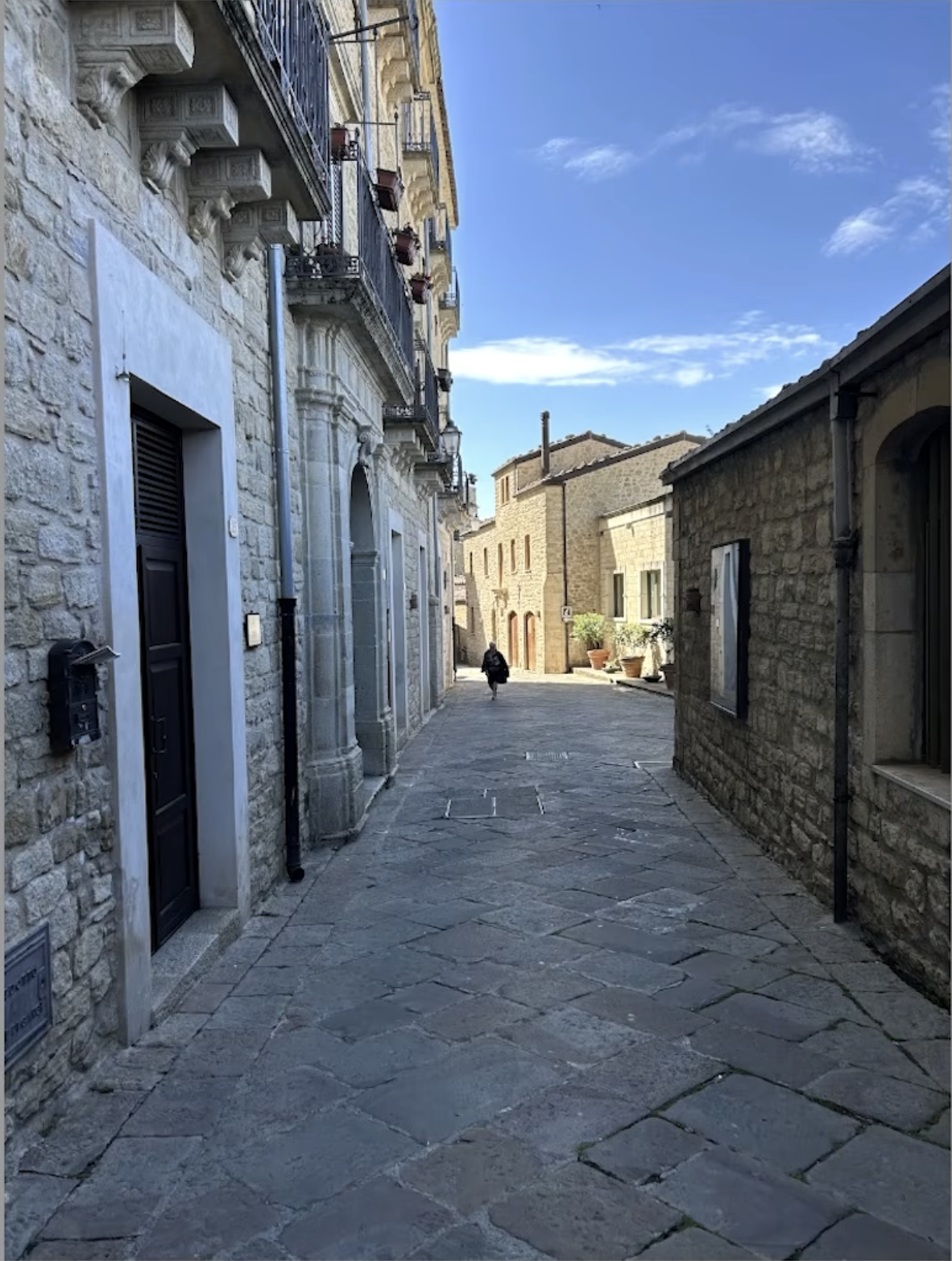
I took tons of photos while I was in this unique town with narrow streets and an abundance of character. So when I got home and sorted through them, I had countless options for studio painting. This one stood out because of the light shining on the building in the background, the shadows cast on the walls, and the figure.
Feel Free to Take Artistic Liberties
But the photo I took wasn't ready to paint as is. In fact, no photo is. I always take some liberties - change composition, crop the photo, simplify parts of the scene, move things around, etc.
This photograph is no different. As I studied it, I asked myself: What do I love about this scene? Remembering what captivated me when I took the photo helps direct my next steps.
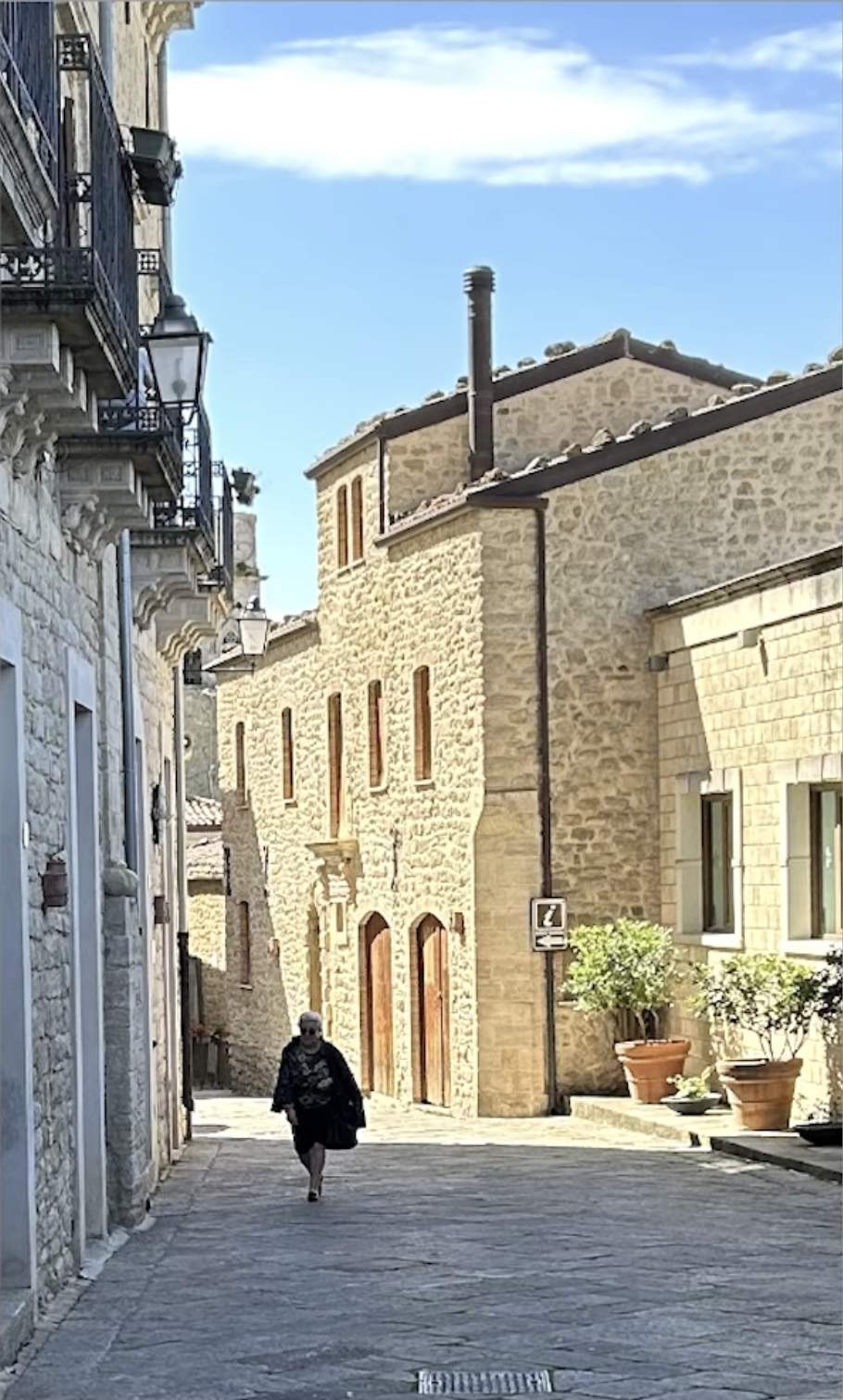
I cropped the photo like this (see above) so that it included all the features I loved about the scene and eliminated distractions from the light, shadow, and figure that I love.
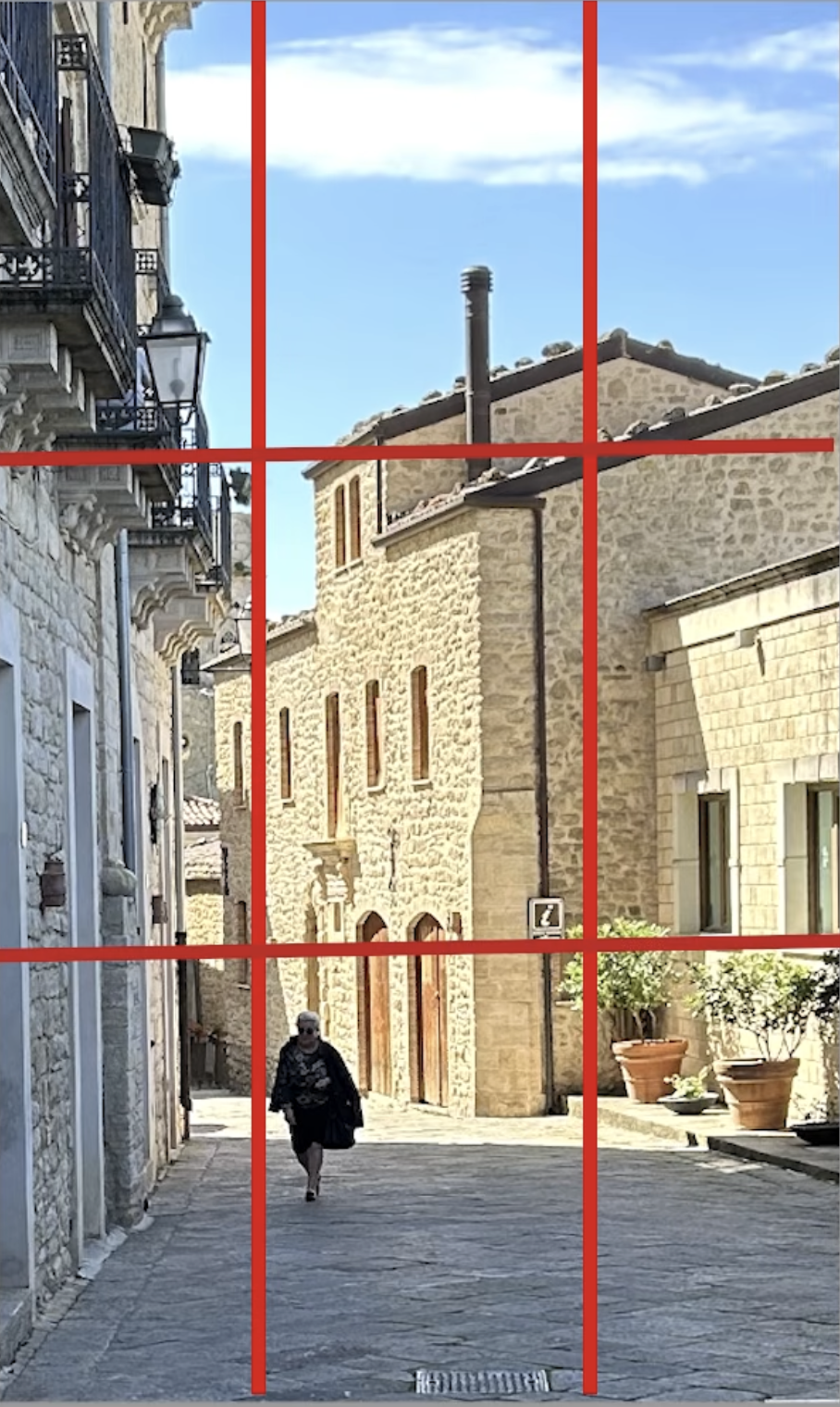
Additionally, using the rule of thirds, I made sure the figure was optimally placed in my composition.
Moving from Photo to Painting
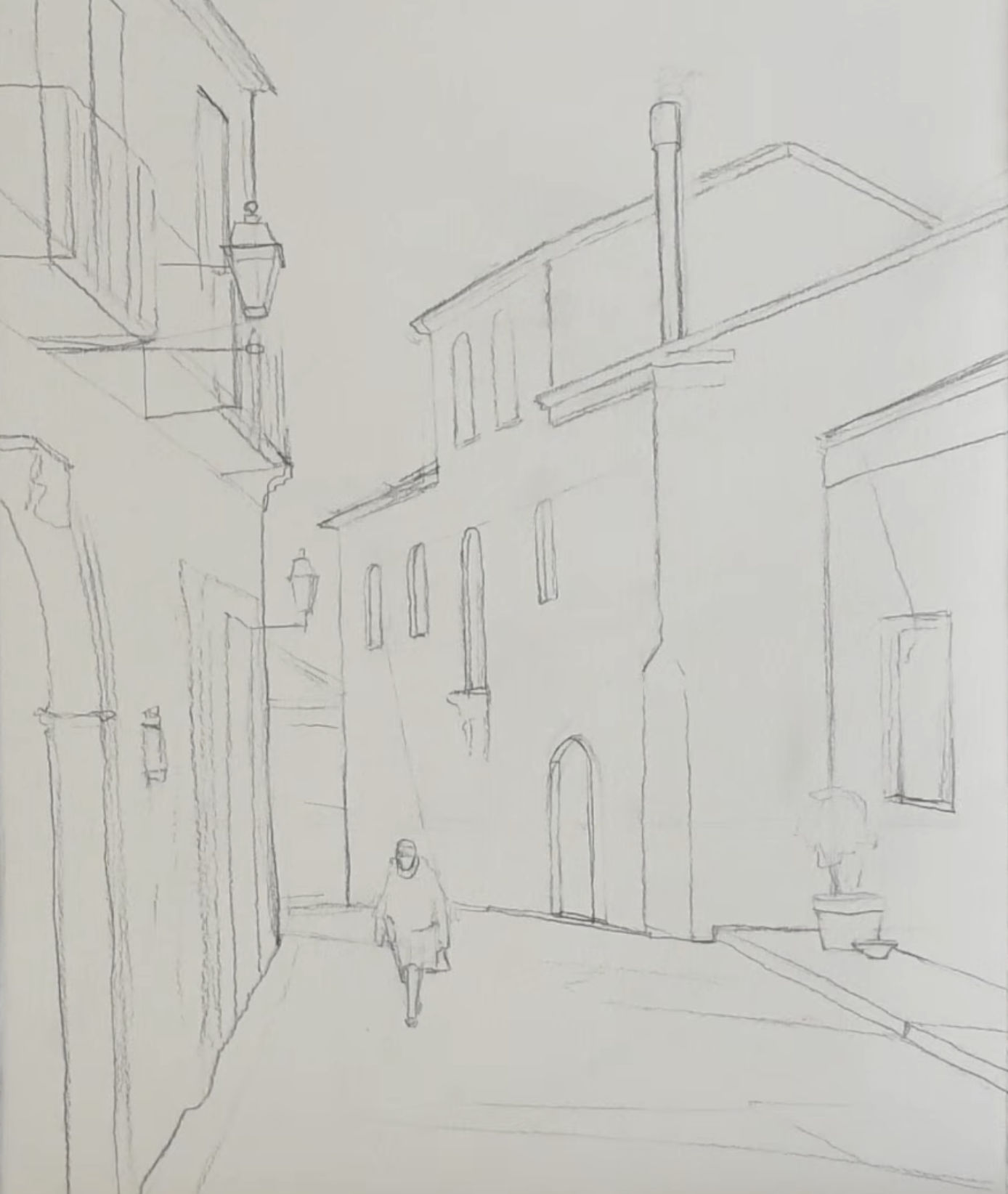
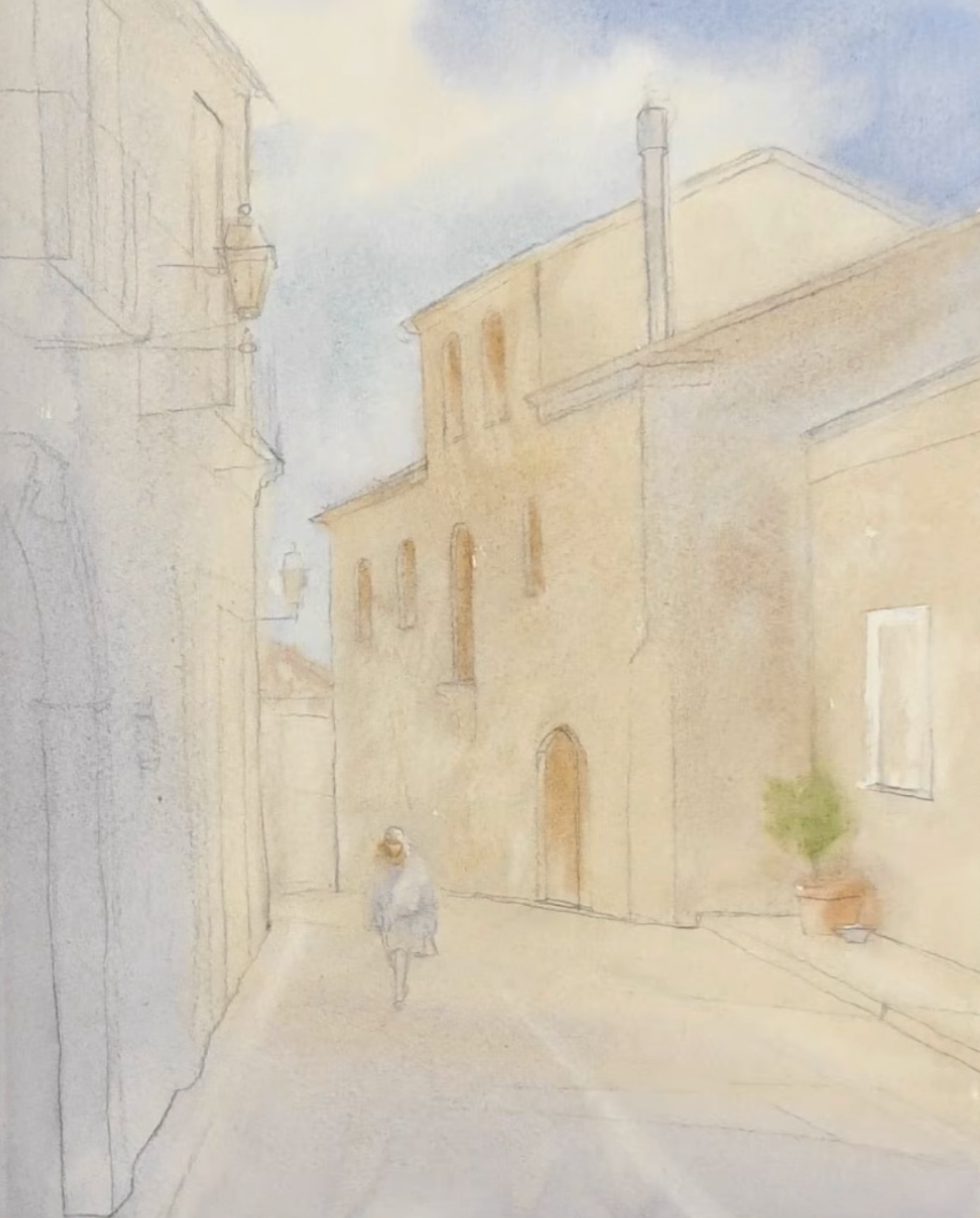
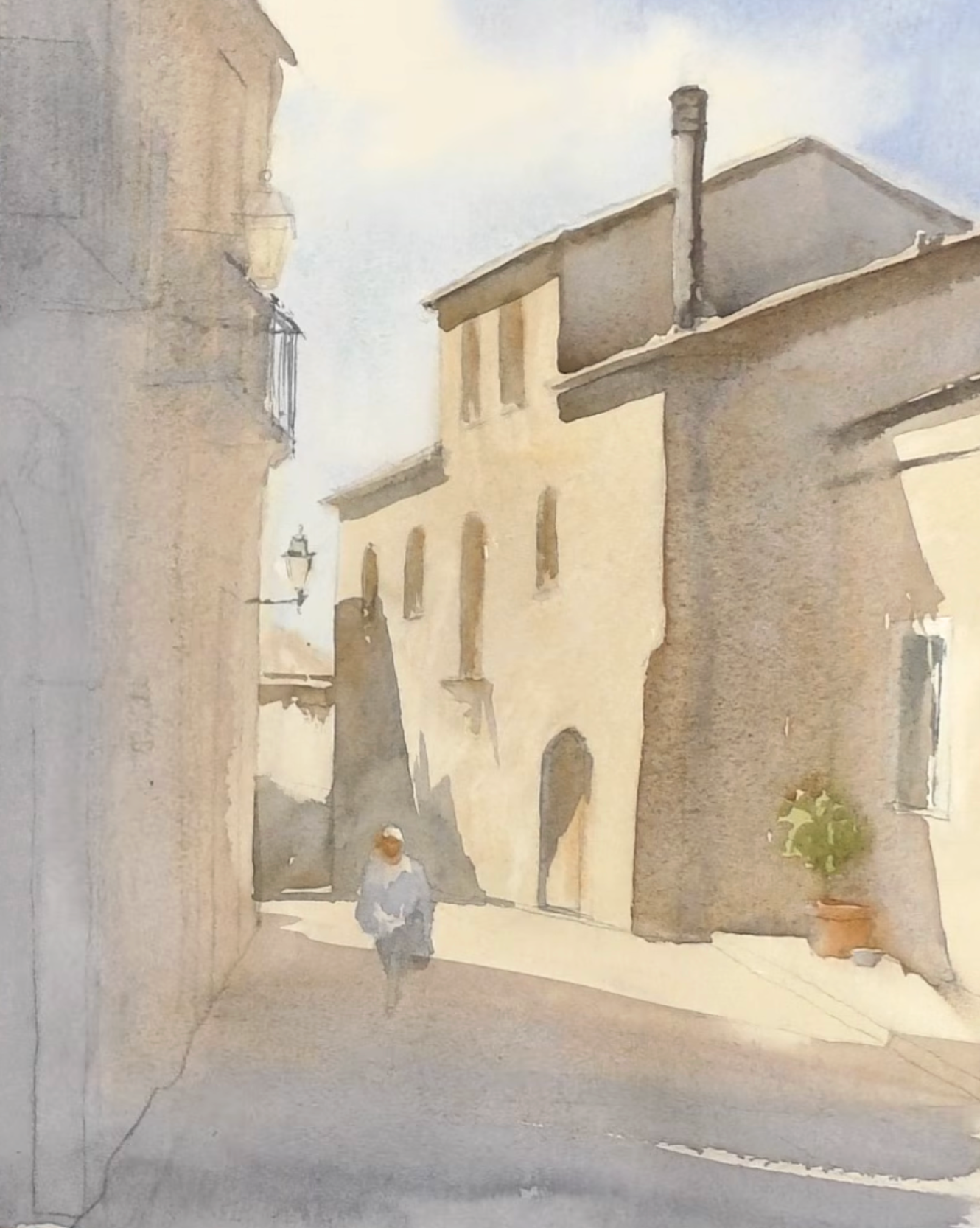
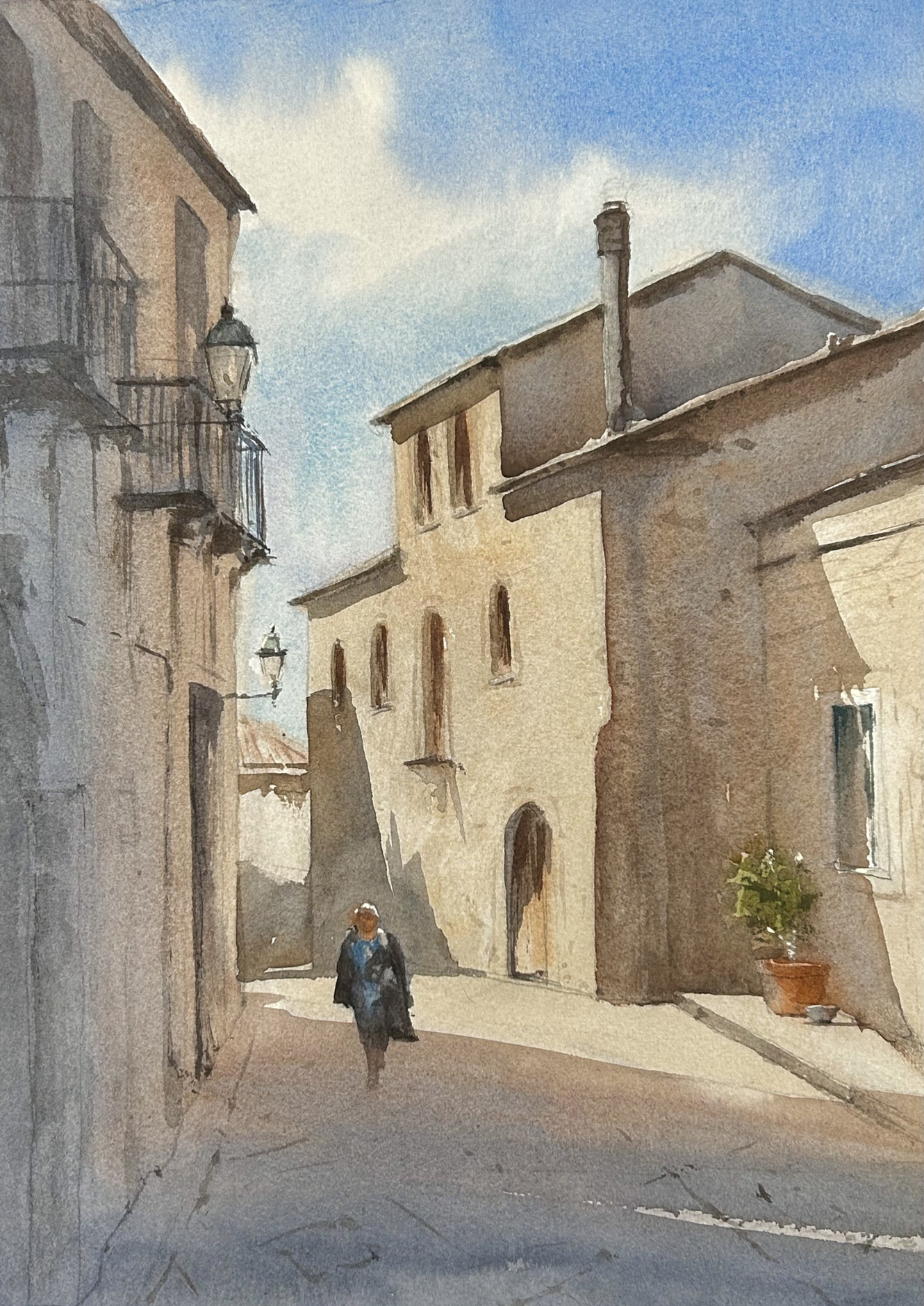
Then I moved into my 3-step painting process. Notice that I made decisions along the way to eliminate details that detracted from my main idea and to simplify parts of the scene that didn't serve my vision.
Drawing
First Wash - Lightest Values
Second Wash - Middle Value Connected Shape
Third Wash - Dark and Details
Follow Along on My Video Above
For a more comprehensive explanation of my painting process, watch today's YouTube video.
I talk about the priorities of each stage and how they all work together to create a full-spectrum of values and a complete (but not overworked) painting.
Related Blogs
How To Use Any Reference Photo To Paint A Stunning Watercolor
Social Media and Watercolor - How to Become Unstoppable
Learn to Paint a Watercolor from a Photo with These Easy Steps