A Study of Chien Chung-Wei: How to Turn Inspiration into Action
Apr 06, 2026Watercolor has a reputation for being delicate. People think of small paintings, dainty subjects, and it being used mostly for sketches.
Among the artists that push against this reputation and who demonstrate the power of this medium is Taiwanese artist, Chien Chung-Wei.
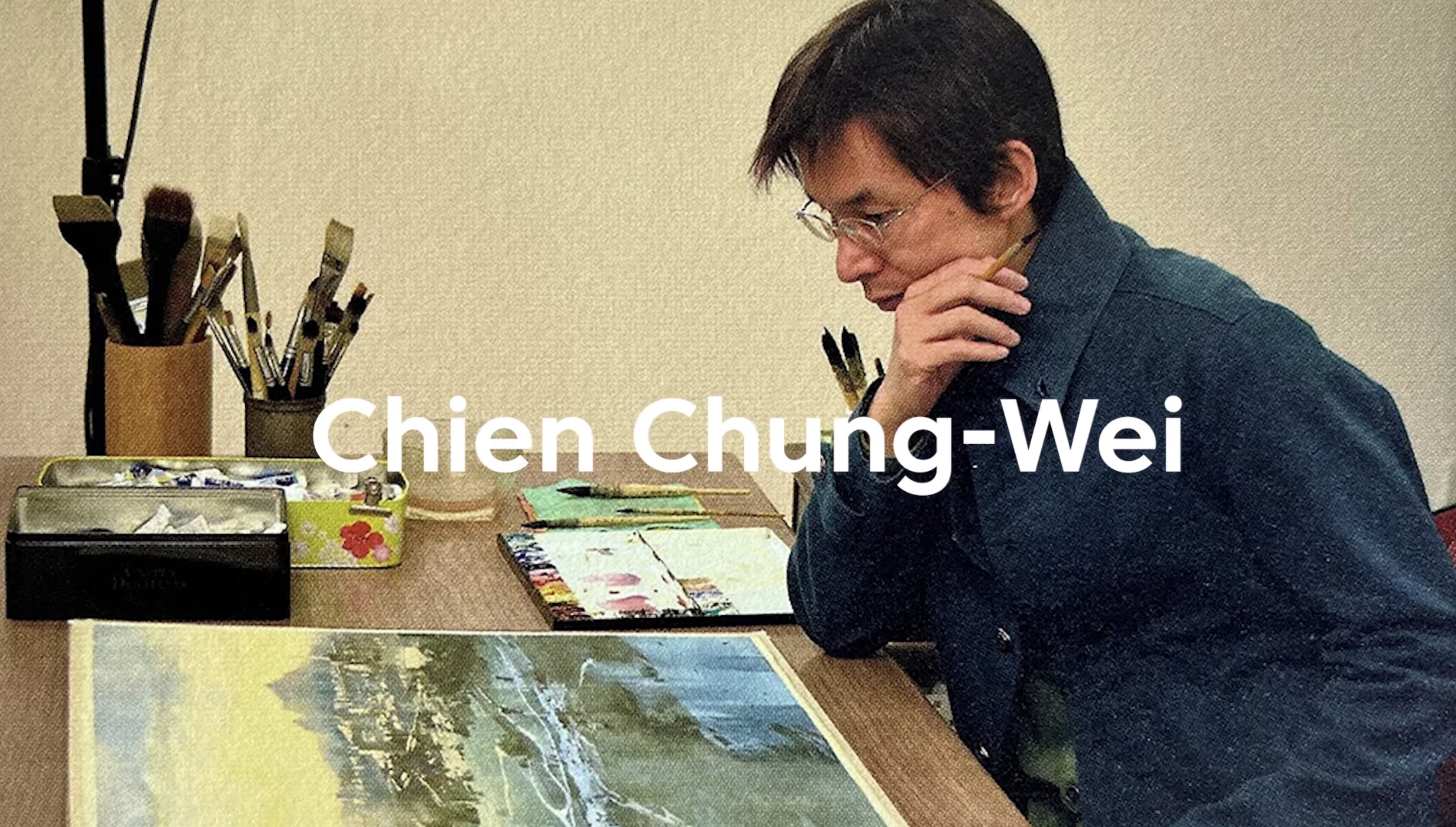
Let's look at what makes him such an expressive, inspiring artist and how we might inject some of his enthusiasm and bold approach into your own paintings.
Why Chien Chung-Wei Stands Out
I encountered Chien Chung-Wei's art very early in my exploration of watercolor, and he blew me away immediately. The way that he creates such kinetic yet serene scenes with such complicated compositions astounded me then and still impresses me now.
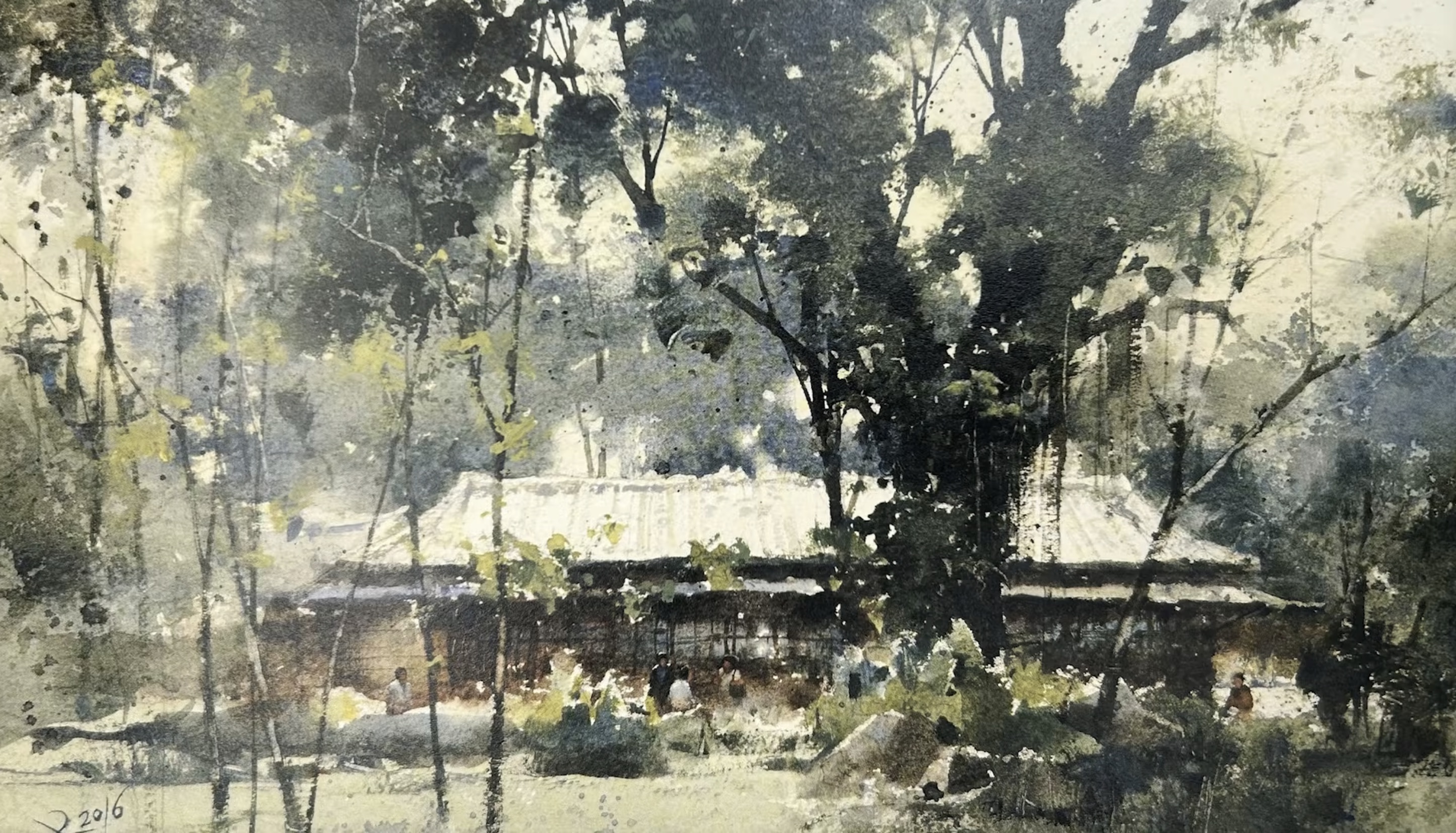
Chung-Wei is known for pushing values - painting with dark values and bold colors - which allows him to create a glow in his paintings.
What makes scenes like this work is that he paints with incredible boldness. The colors are so dark - even opaque sometimes - which makes the lighter, more transparent colors really resonate. The risk he takes with these bold, dark colors really pays off when you see the light effect in his scenes.
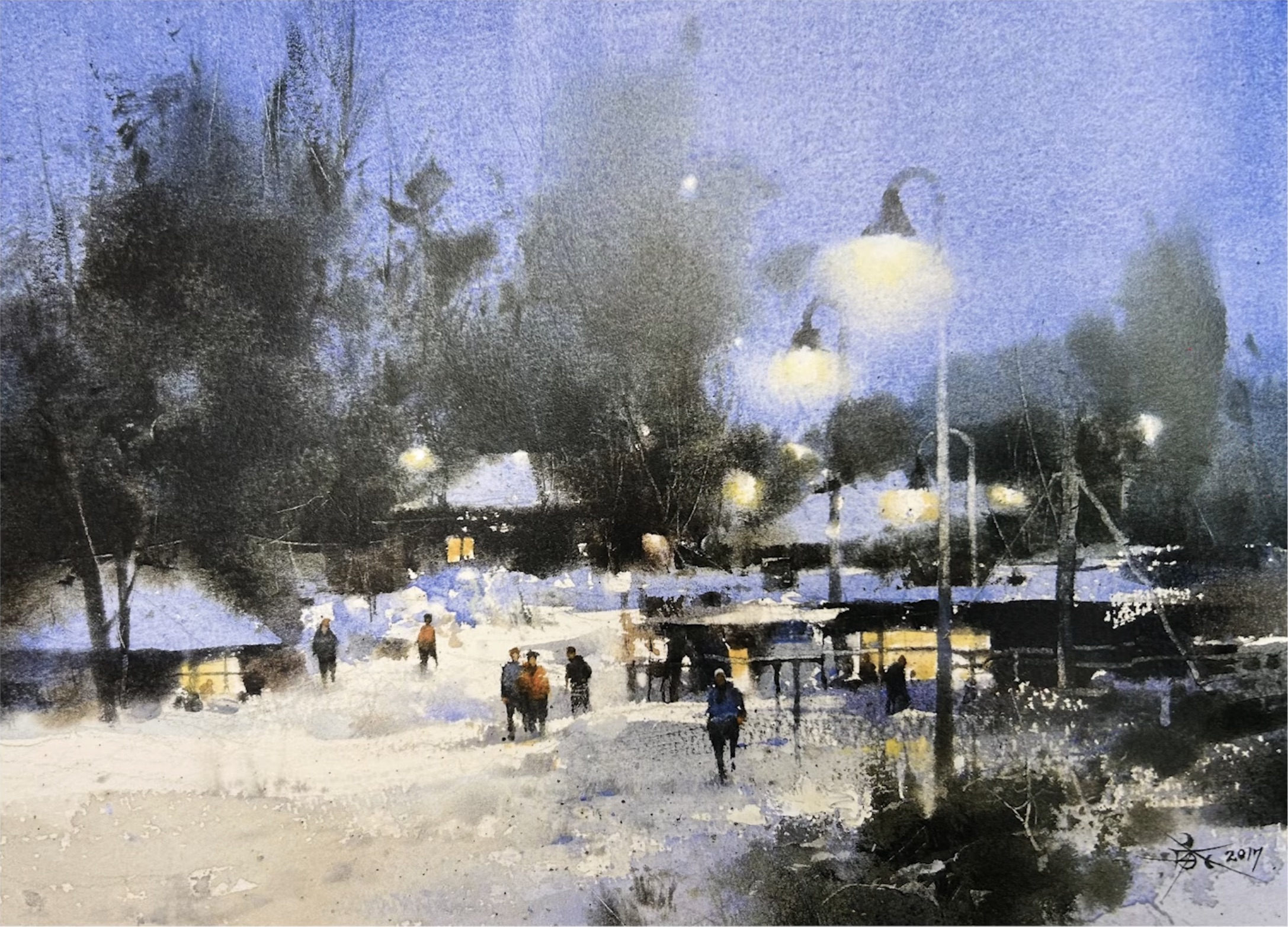
Chung-Wei tells his students, "Color is the skin of the painting; Values are the bone."
Some of his light is created through negative painting, but he also routinely uses gouache after laying in his first wash.
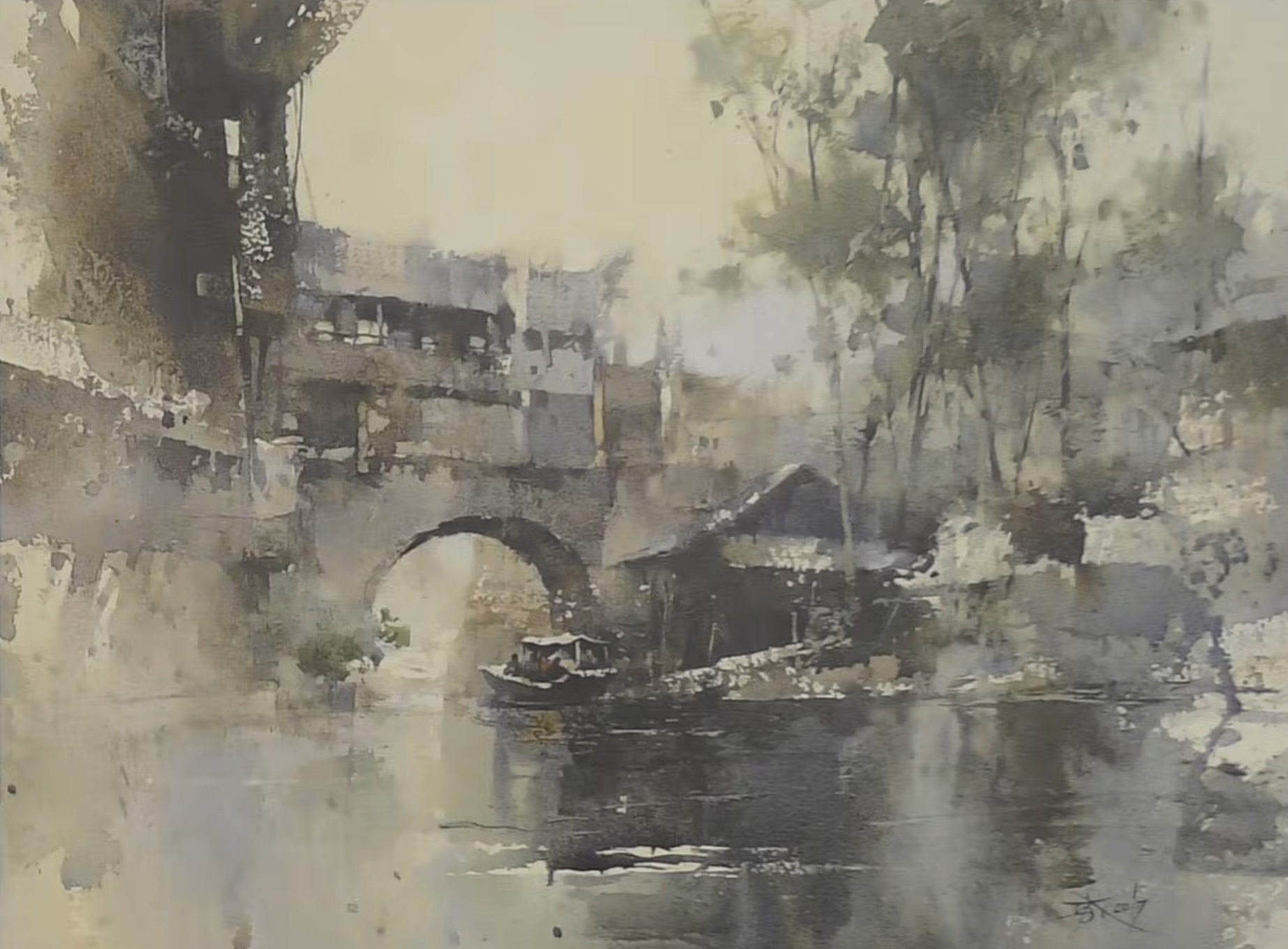
Look closely at tree on the right edge of the painting above. This kind of mark is very difficult to achieve. It has a soft edge but also a defined shape. He painted this shape when the sky was still wet, and was able to achieve this definition by adding some gouache into his watercolor mix. Gouache gives the mixture a little more body so that it will stay put on the page while still keeping its soft edge.
 .
.
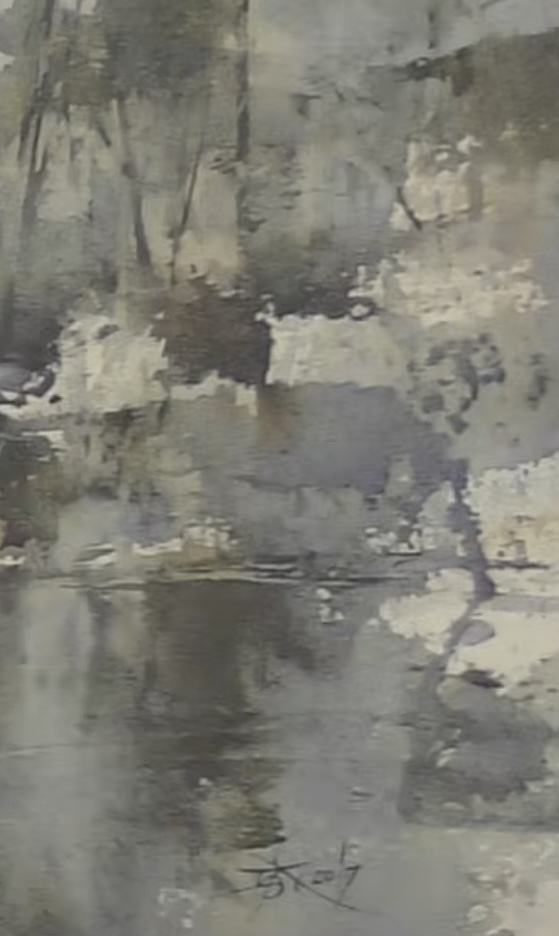
Something else that is so compelling about the way he approaches his paintings is his level of abstraction. He paints very abstractly and loosely - especially on the edges of his paintings.
If you were to just look at the bottom right section of this painting, you wouldn't be able to tell what you're looking at. But in the context of the larger painting, it reads perfectly. It gives just the right amount of information to support the main idea of the scene.
Another way that Chung-Wei uses this gift for abstraction is in his paintings that include groups of people.
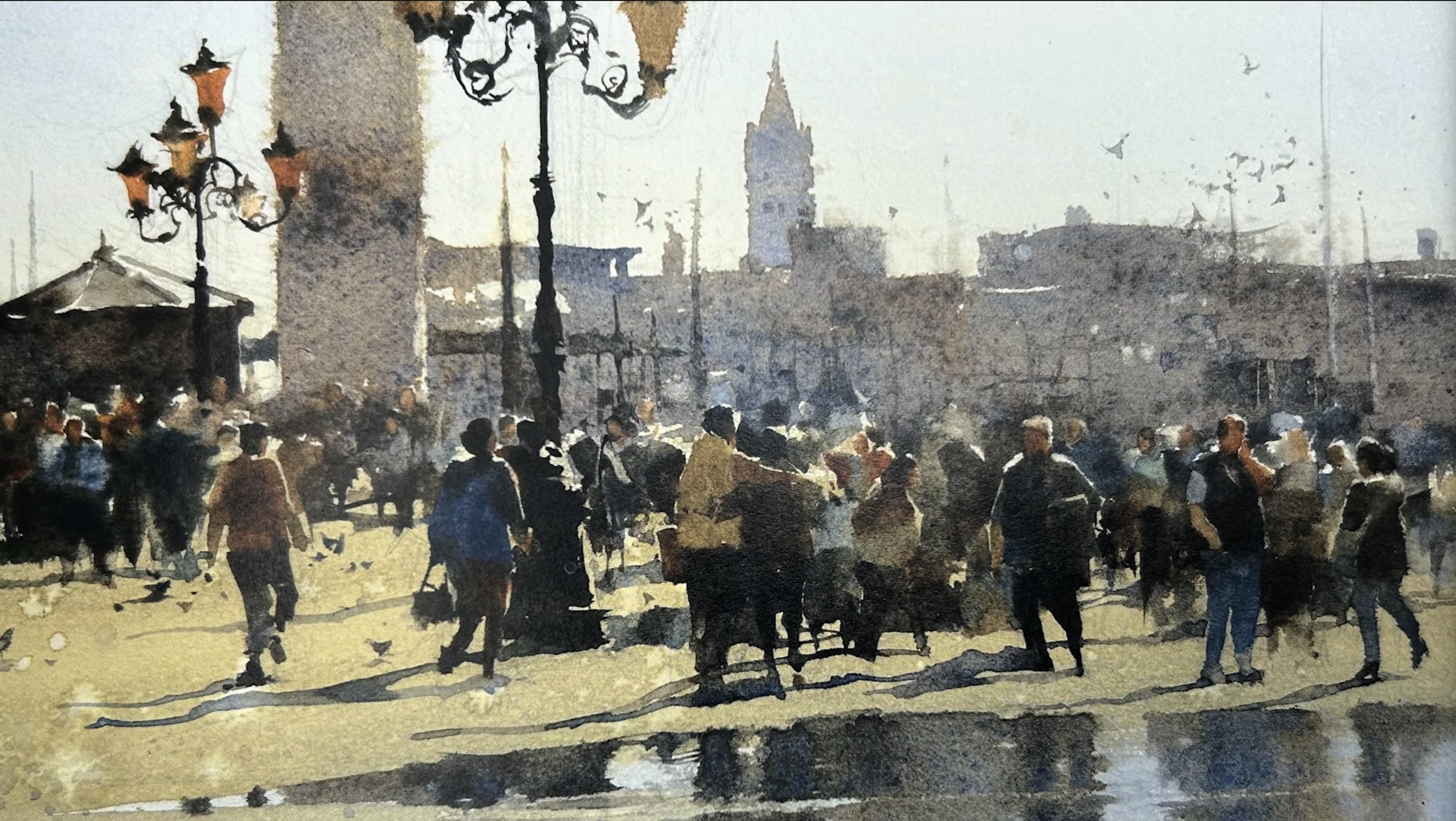
Notice how many of the figures are loose, abstract shapes. He gives a few of the figures full definition and detail and leaves the rest abstract. Though many of the figures would not look like figures on their own, because he's given more texture to a few key people, we're able to fill in the gaps. The scene then is not overworked and it resembles the way that we often we perceive the world.
Chung-Wei also has a keen awareness of how the elements of his paintings will guide a viewer through the scene. He uses every tool and technique available to him to, as he puts it in an article in Outdoor Painter, "create the ideal, perfect, and intriguing image in my mind."
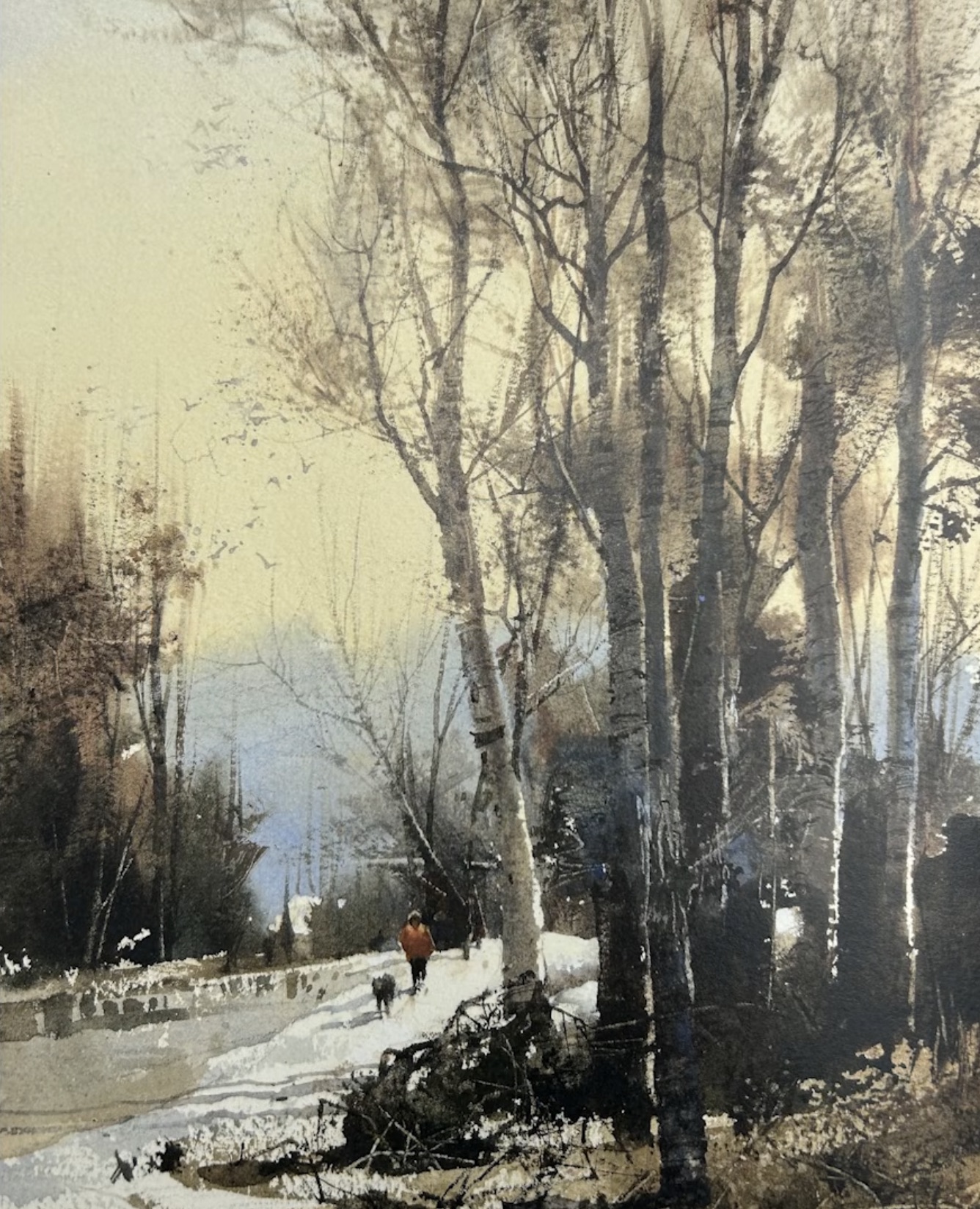
He has a language all his own and a style that is consistent throughout his many paintings. If you're inspired by him as much as I am, check out some of his books.
Key Takeaways from Studying Chien Chung-Wei
1. Don't Be Afraid to Paint Boldly and Darkly.
In your next watercolor, ask yourself whether you're painting dark enough to really make your light create the mood you want it to in your painting.
2. Be Open to Trying New Tools.
Don't limit yourself. Like I said before, Chung-Wei does not take tools off the table to create a compelling image. He uses gouache when he sees fit, he scratches into wet or dry paint to create lines, and he paints any subject that resonates with him. I encourage you to also add to your toolkit, run experiments, and take risks.
3. Trust the Process.
One obvious thing you can see in Chien Chung-Wei's art is his confidence. He takes risks, stays loose throughout most of the process, and trusts that the final details at the end will bring it all together.
Related Blogs
How Smart Artists Study the Work of Masters
A Book that Changed the Way I Paint
A Conversation With Watercolor Artist Thomas Schaller