Watercolor Tips To Set You Up for Faster Growth
Jan 19, 2026Today I'm going to talk about some simple and repeatable concepts that can make a big difference in your paintings. These are things that I wish I would have known years ago when I started painting. They would have saved me a lot of time.
If you can even just adopt one of these, you'll see a huge difference in your growth as a watercolor artist.
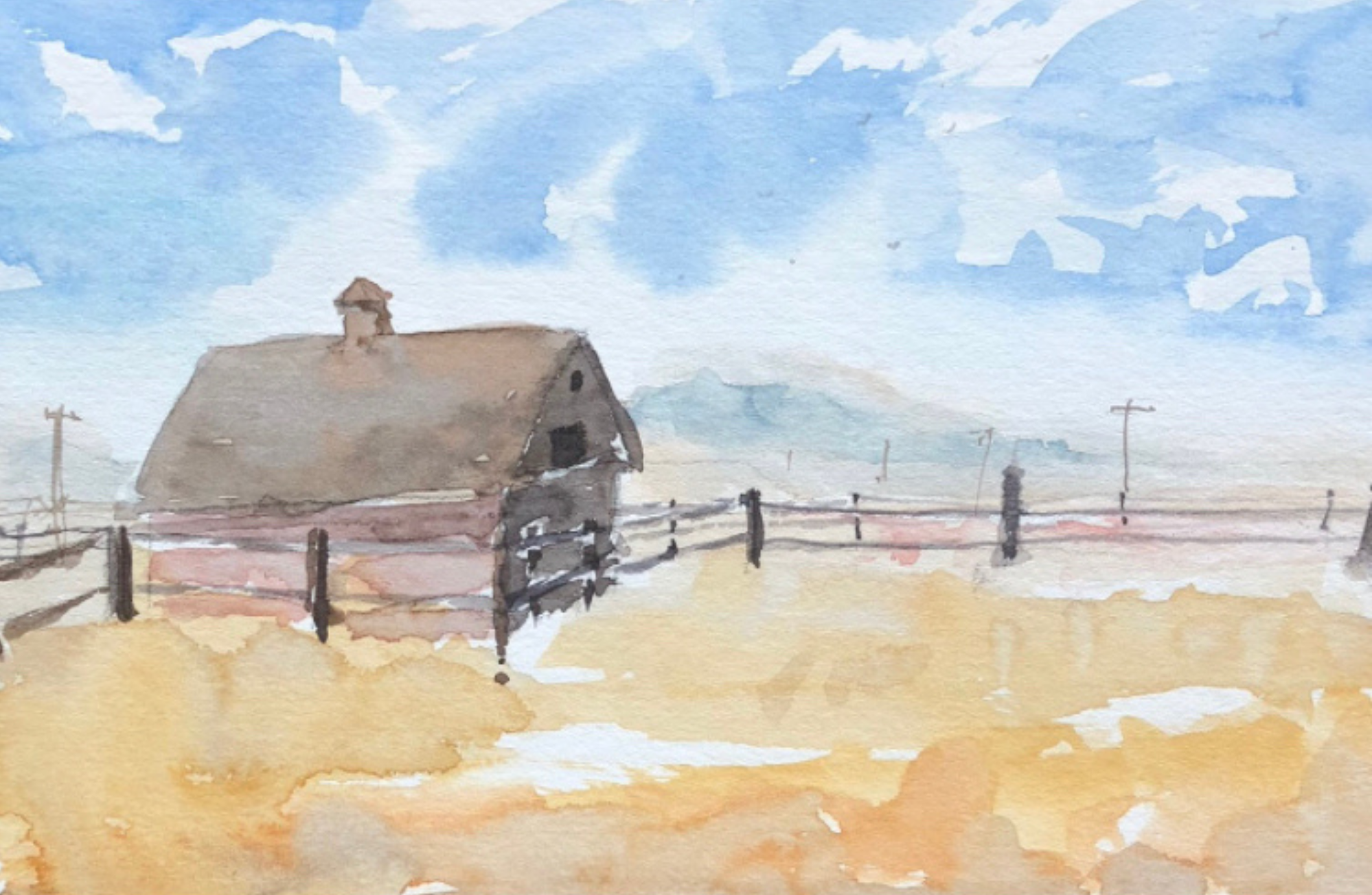
Here are three lessons that have helped me go from this painting:
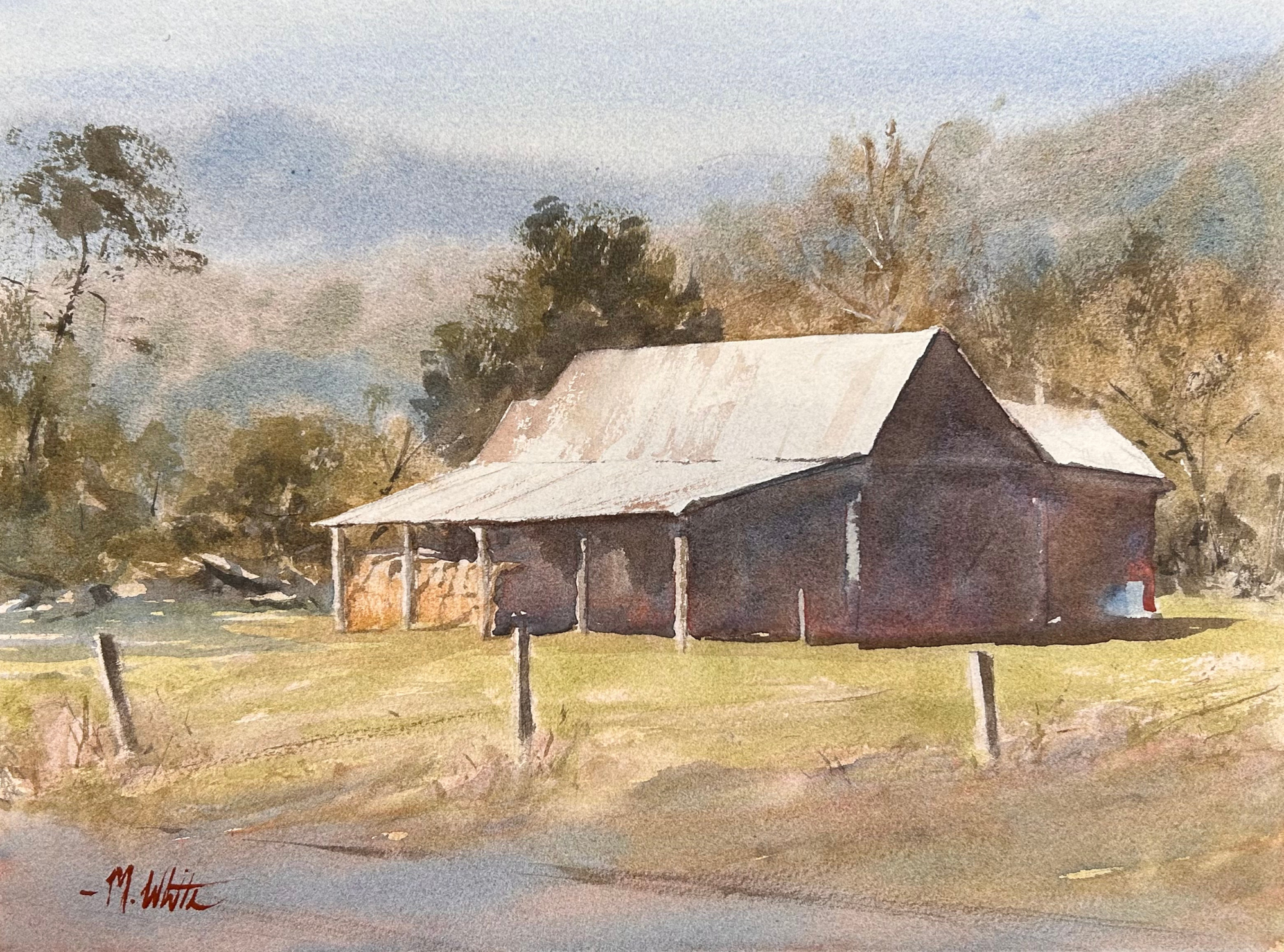
To this one:
Minimize the background
Want just one thing you can do today that will result in a clearer, more focused painting? Minimize your background.
This can be tricky, but its impact cannot be overstated. Let's look at some examples of reference pictures that had busy, textured backgrounds that had to be simplified greatly for the kind of clear, focused scene that I strive to create.
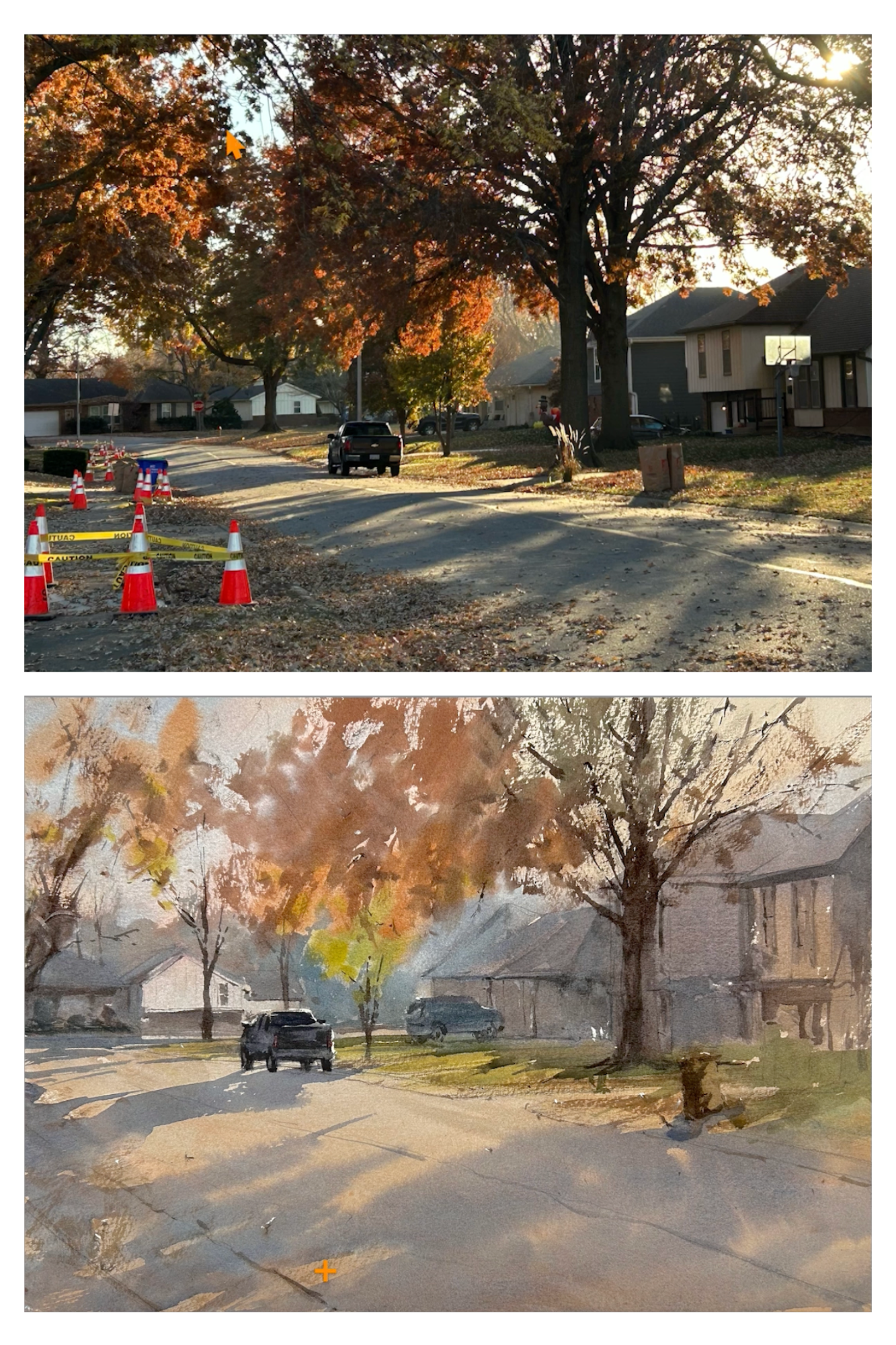
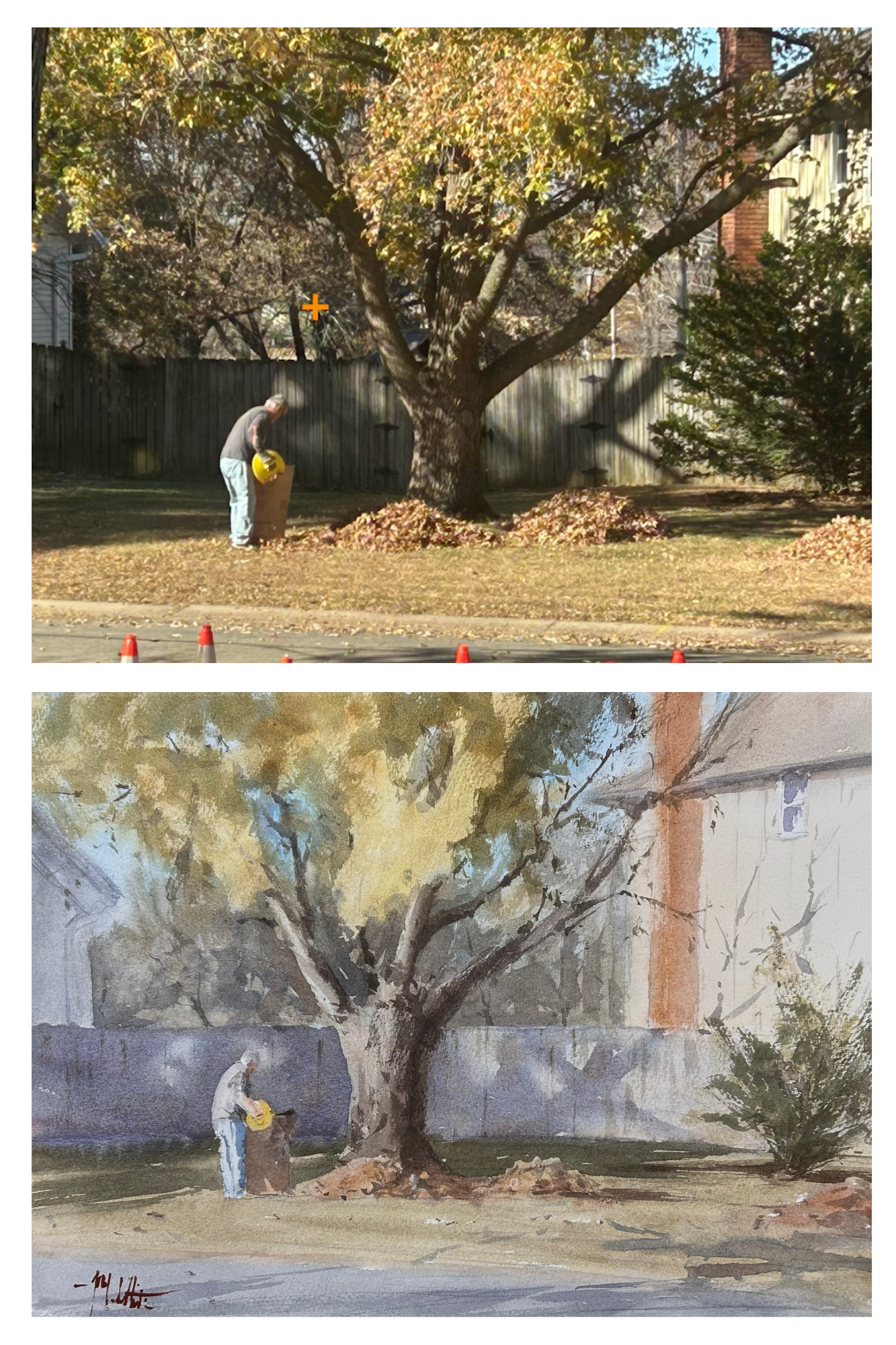
If I had approached either of these paintings with as much interest in the background as the foreground, the finished product would have been messy and overworked. Notice the texture I tamped down and the details that didn't make it into my rendition of the scene. This was purposeful, and it made for a simpler, more unified scene.
Focus Your Painting
A goal of mine when I paint is to communicate a clear vision and create a focused, unified scene. Minimizing the background is part of that, but providing focus should permeate every part of your painting process.
Here's the simple way to put it: the most contrast, saturation, and texture in the whole painting should be in the middle ground. It's your job to highlight the part of your painting that you want to get the most attention, which means the highest level of detail should be reserved for that focal area.
I recommend this strategy: get your painting to 85-90% finished and then stop. At this point in the painting process, it is easy to make a mistake that you can't take back. Additionally, this gives you the opportunity to step back from the painting that you've been honed in on and assess what it still needs to really spotlight the main idea.
Skip Lawrence shares the following adage in his book, Painting Light and Shadow in Watercolor: “When you’re working on the focal area, look at the focal area. When you’re working on the other areas, look at the focal area.” This doesn't literally mean your eyes need to be directed toward the focal area at all times; what it means instead is that you should be considering how to make the focal area stand out no matter what part of the painting you're currently working on.
Have a Plan and Be Selective
Today's final tip is to start thinking about your painting process before starting your painting and to be selective about what you include in your scene.
Before you put brush to paper, study the scene you want to paint and identify what it is that makes it interesting to you. What attracted you to the scene? What about it are you intent upon conveying? What about the scene is currently distracting from your vision?
Ensure that these are the types of questions that drive your next steps.
Remember - you are the artist, and your choices are what make something yours rather than someone else's. Don't be too influenced by the picture in front of you that you hesitate to eliminate what you need to leave out or to rearrange certain aspects of the scene. Clarify and simplify things so that your vision is unmistakeable.
Related Blogs
The 3 Biggest Mistakes Made By Beginner Watercolor Artists
How to Create a Focal Point in Art
3 Watercolor Rules to Help You Focus on your Main Idea