A Simple Guide on Watercolor Timing Focused on Painting Cars
Apr 27, 2026If you follow this blog and my YouTube channel closely, you'll know that I frequently post videos that encourage a focus on a single subject instead of a completed scene.
There are several reasons I'm a proponent of sketches like this:
- They allow you to build a skillset (like painting figures, cars, or skies) that you can call upon easily when you need them in scenes.
- They are quick, so you can get more reps in on a subject without the pressure of marring a painting.
- All the same variables are at play when you paint a sketch as when you paint a full scene, so these quick practices give you a chance to balance watercolor timing, mixing, and water-to-paint ratio.
All these skills transfer - and boost your skills - when you take on a full watercolor scene.
I've created tutorials like this on how to paint a tree, how to paint figures, how to paint a sky, and this one is a step-by-step tutorial on how to paint a car.
Painting Believable Cars
For the best demonstration, watch today's YouTube video.
Here's a quick rundown of the process:
Drawing
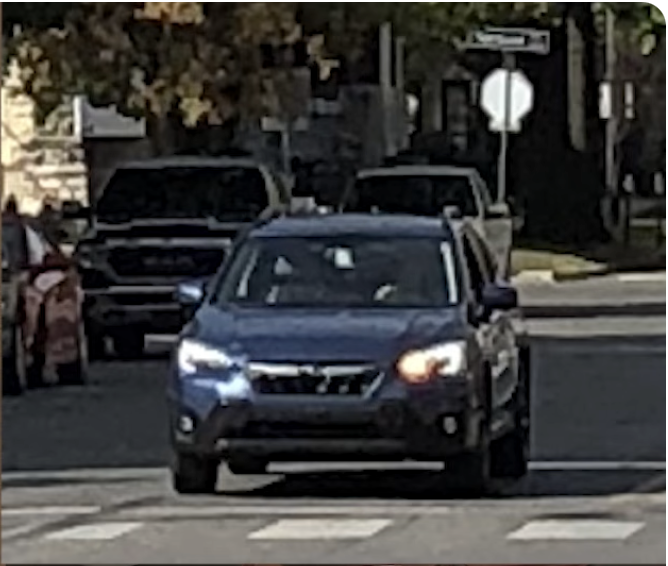
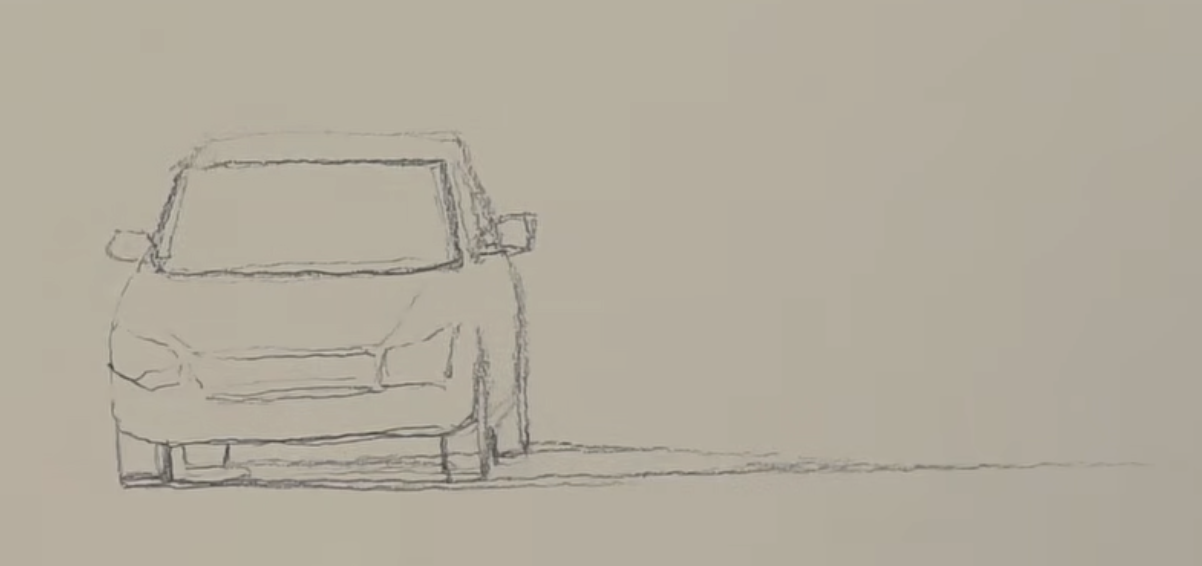
When you draw a car, make sure that you keep the horizontal lines flat - no matter the angle of the car, these lines should be flat. Notice how close the tires are in the reference picture. Don't obsess over the model and make of the car, just work to get the proportion right. Compare the distance between lines and different parts of the car, and refer to your reference consistently as you draw your car.
First Wash
First, dampen the front of your paper.
Then mix a light grey with Raw Sienna and Lavender. Use this to take away the white of the paper where you're painting your car.
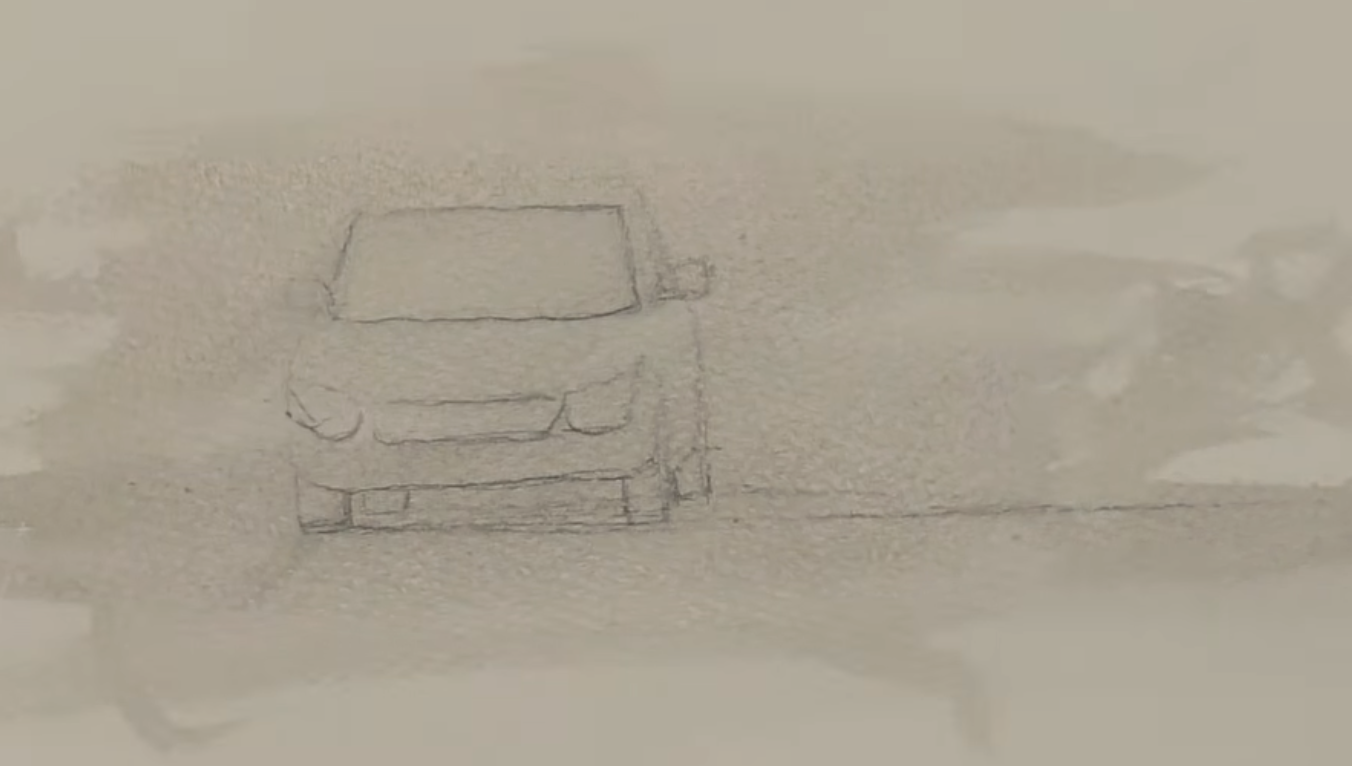
Add some light blue to the top of the car.
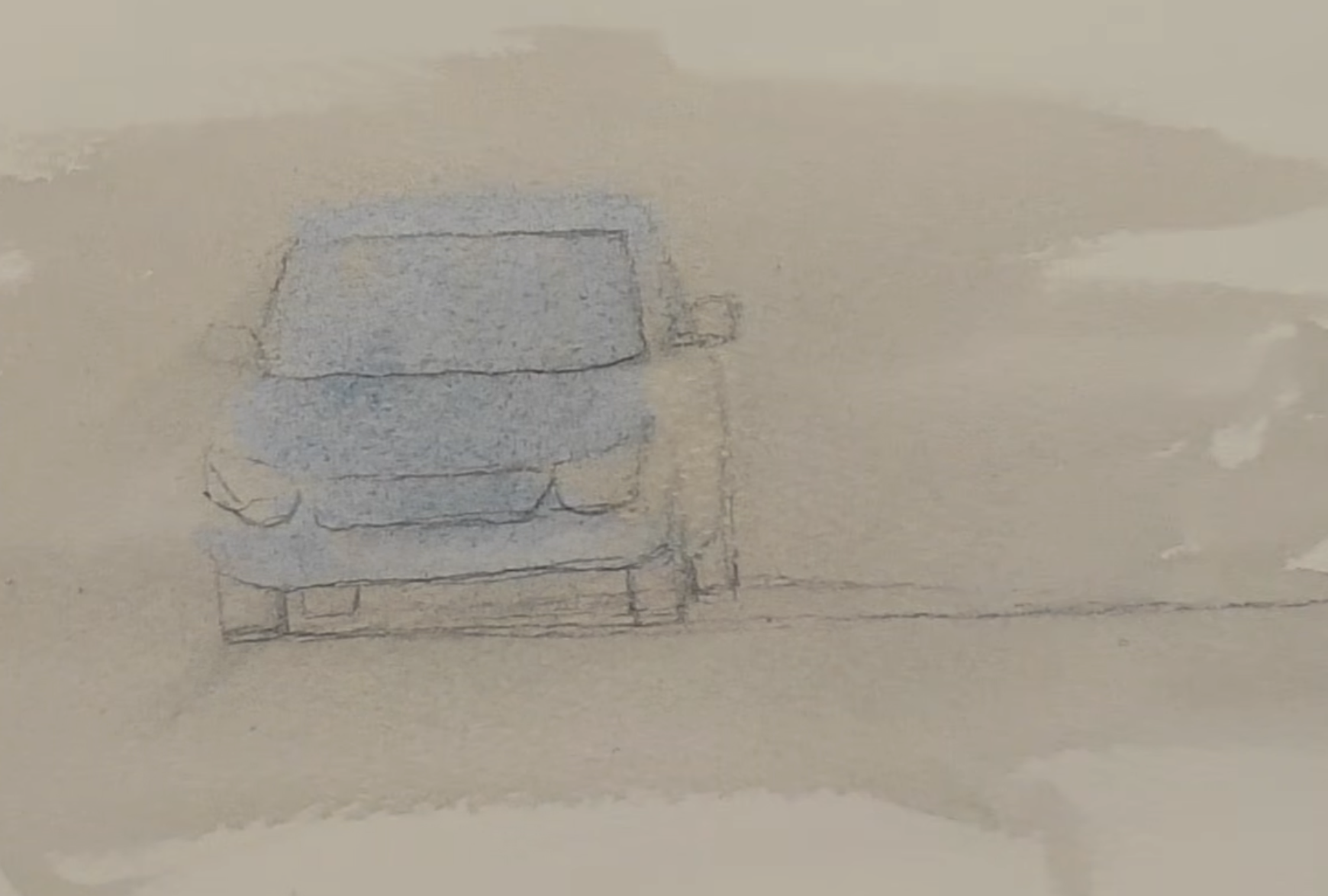
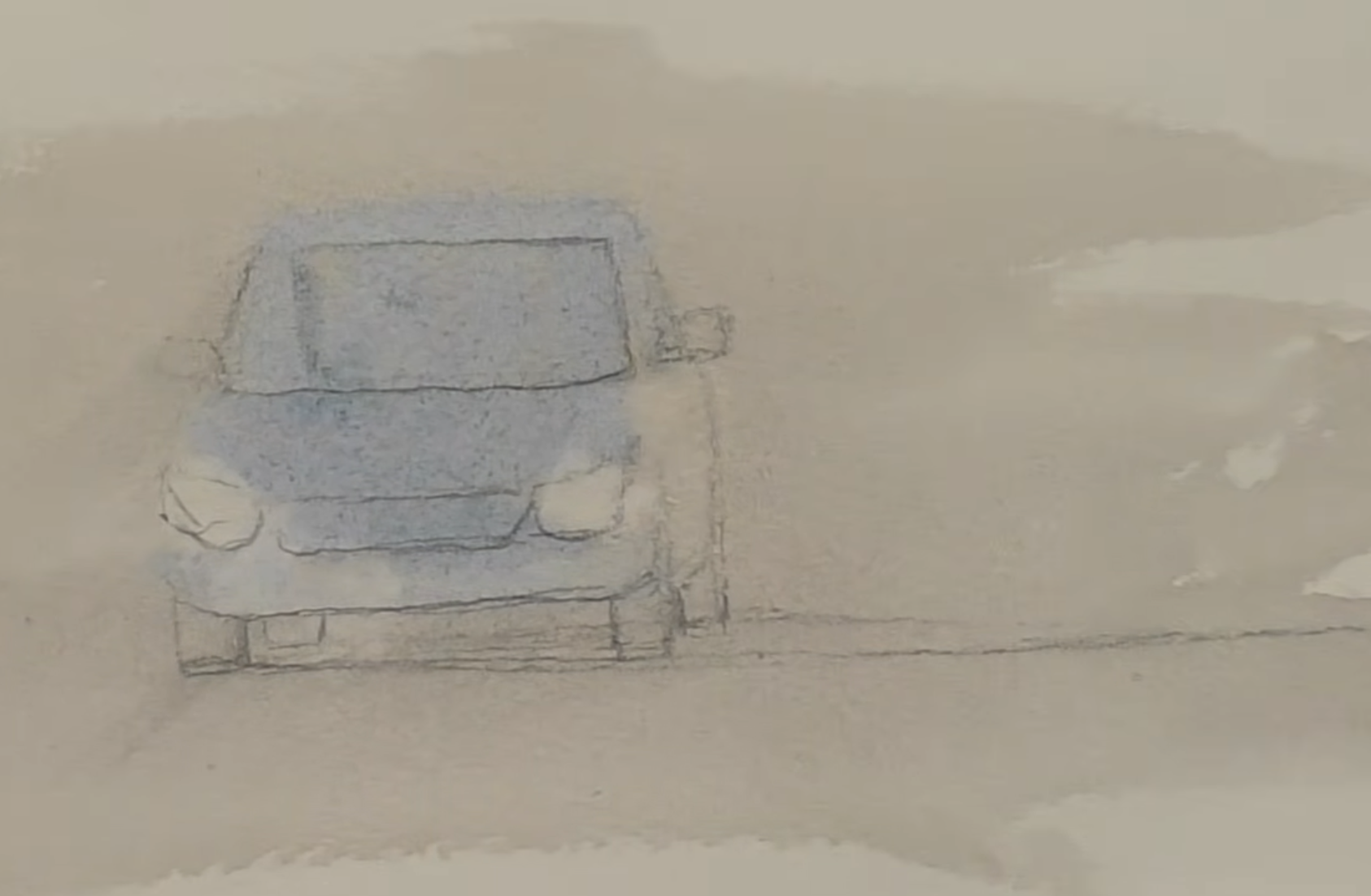
Use a paper towel to rub off some of the paint on the headlights and the bumper where there is a glare.
Second Wash
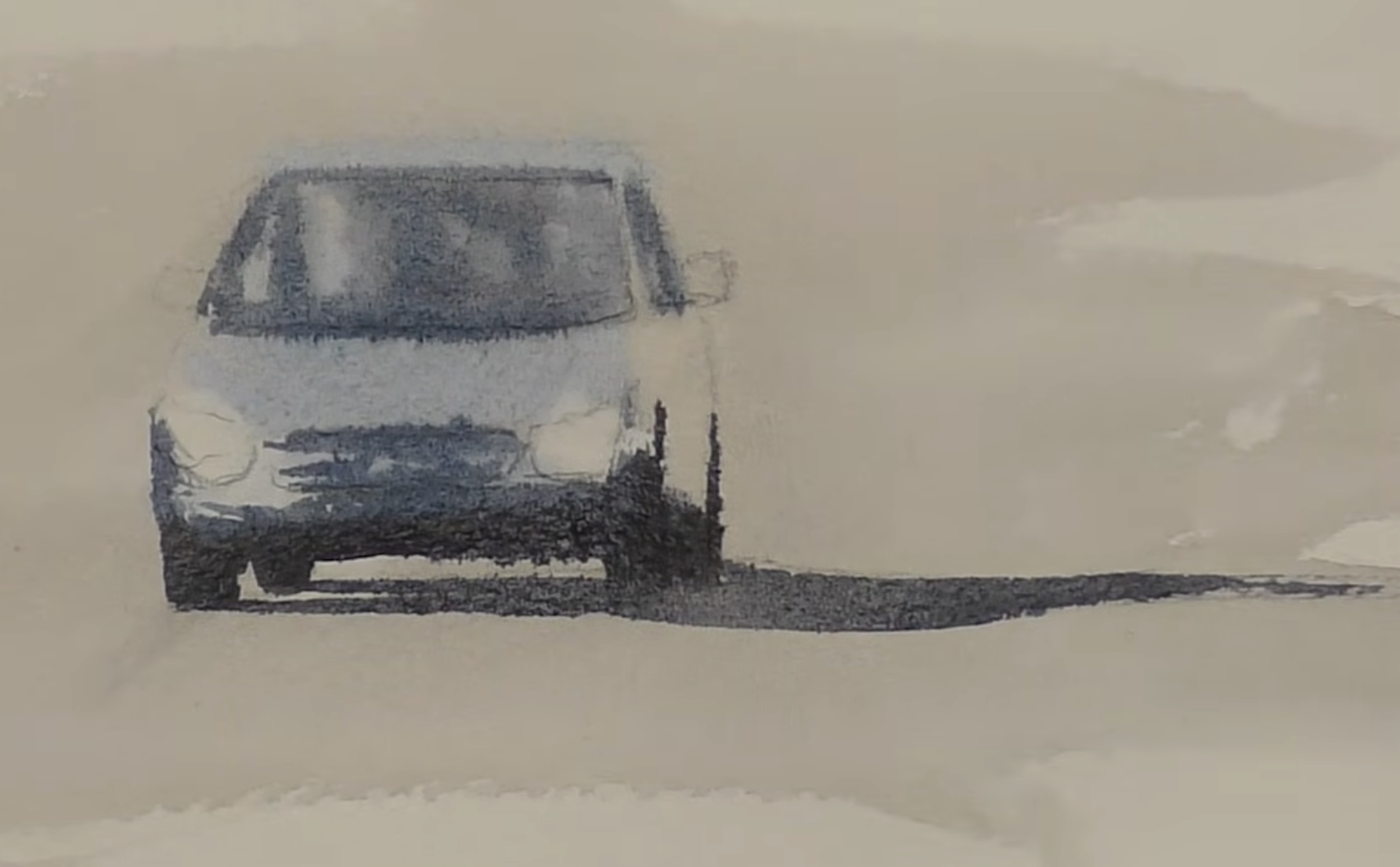
Add some soft darks to the windshield, side window, and the underside of the car into the shadow.
Darks and Details
One thing to think about when you're painting cars is that often the tops of the cars reflect the sky and the sides reflect the colors of the road. The blue I added to the side is a grayer blue.
Then I added the final details that polish the car and make it read well: the mirrors, the yellow of the headlights, the darkness of the grill.
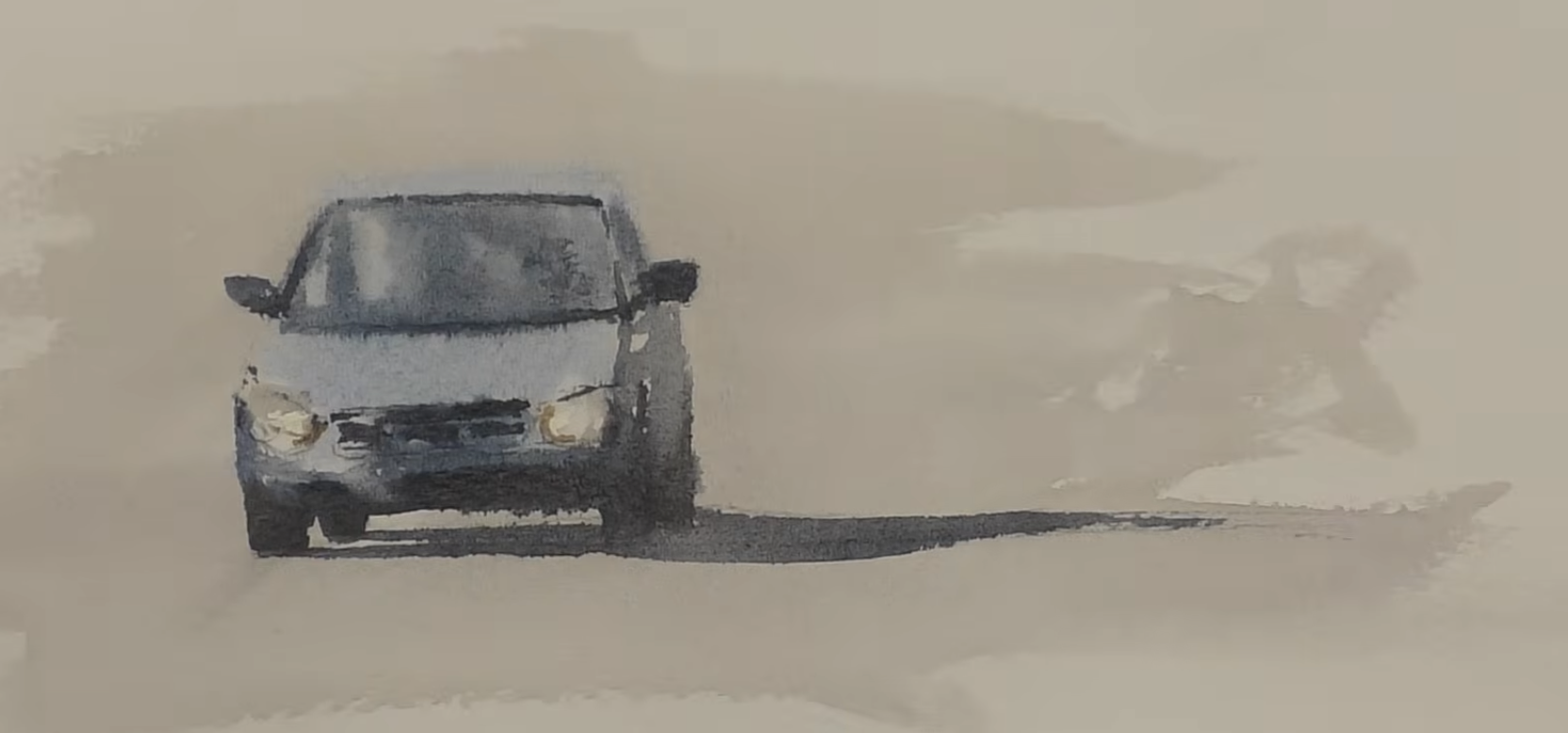
I hope you take this tutorial and paint some cars yourself! These tips should help you to refine your skills and have them when a scene requires them!
Related Blogs
A Simple Guide to Painting Cars in Watercolor
Painting Figures - Demystify the Process
Simple Tree Watercolor Painting Practice