Powerful Lessons From a Master - Trevor Chamberlain
Oct 19, 2026This painting - Felucca Journey, Egypt, by Trevor Chamberlain - is one of those paintings, that, depending on my mood, either makes me want to throw my brushes away or practice really hard every day to become a better painter.
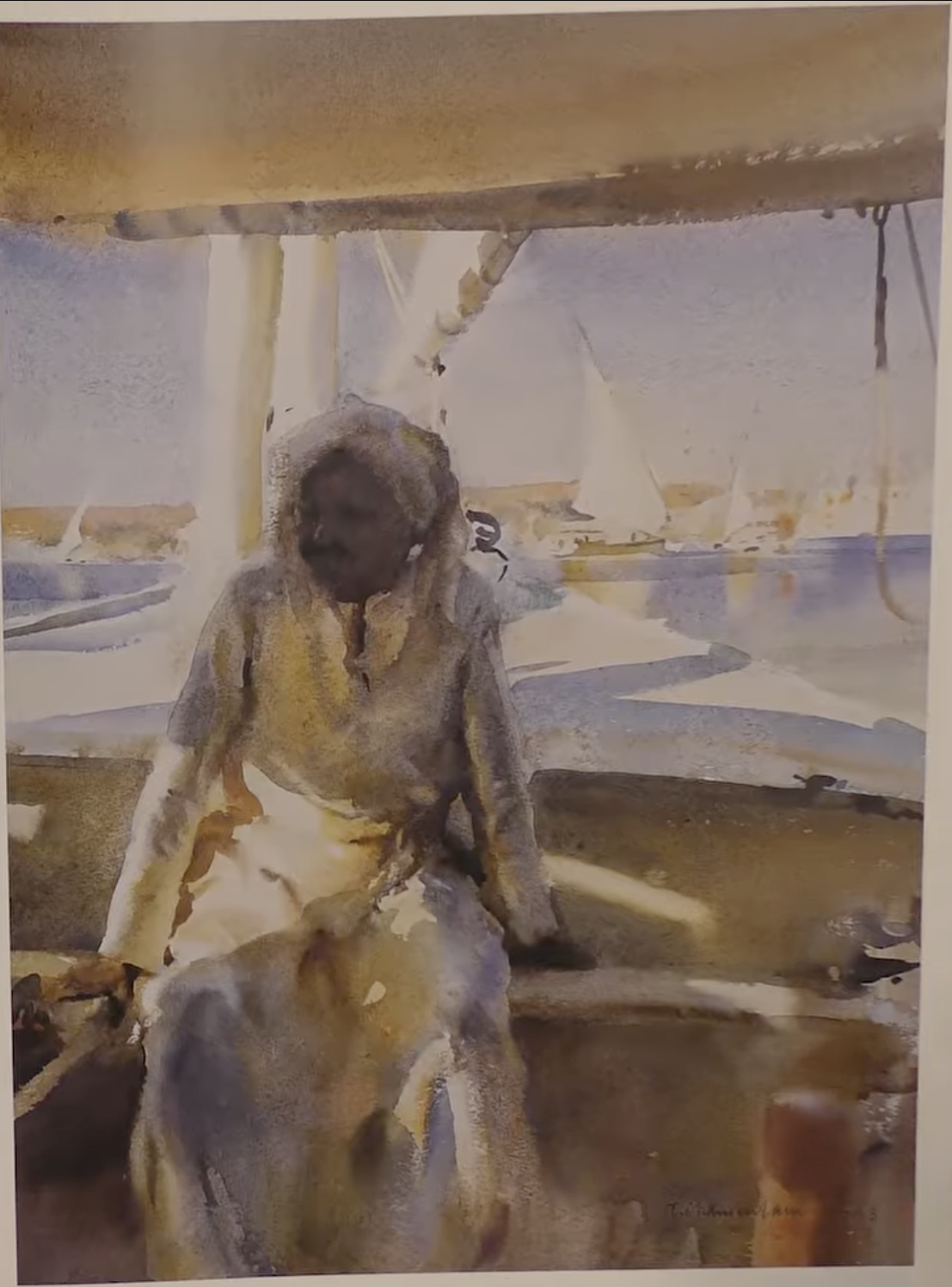
Masters of the medium can make you feel this mixture of discouraged and inspired. Their skill can be overwhelming to an emerging artist - even a competent one. But artists like Chamberlain are here to remind every one of us that there is always more to learn, always new challenges to take on. Chamberlain has had a big influence on many artists over the years, and I am no exception.
Today I'm sharing the top three lessons I've learned from studying his paintings.
Three Lessons from an Artist I Admire
I'm going to give you some very practical tips to help you get some of Chamberlain's magic into your own paintings. Whether you're a beginner to painting or a seasoned artist, I think you'll take something away from these three lessons.
Born in 1933, Chamberlain spent decades traveling the world and painting. His subject matter is extensive: he paints views of the sea, landscapes, and some of the wonders of the world. But some of my favorite paintings are the simple everyday subjects - the quiet moments of life - that he captures so beautifully and in such a fresh and direct way. The light makes you feel something even with a simple residential scene.
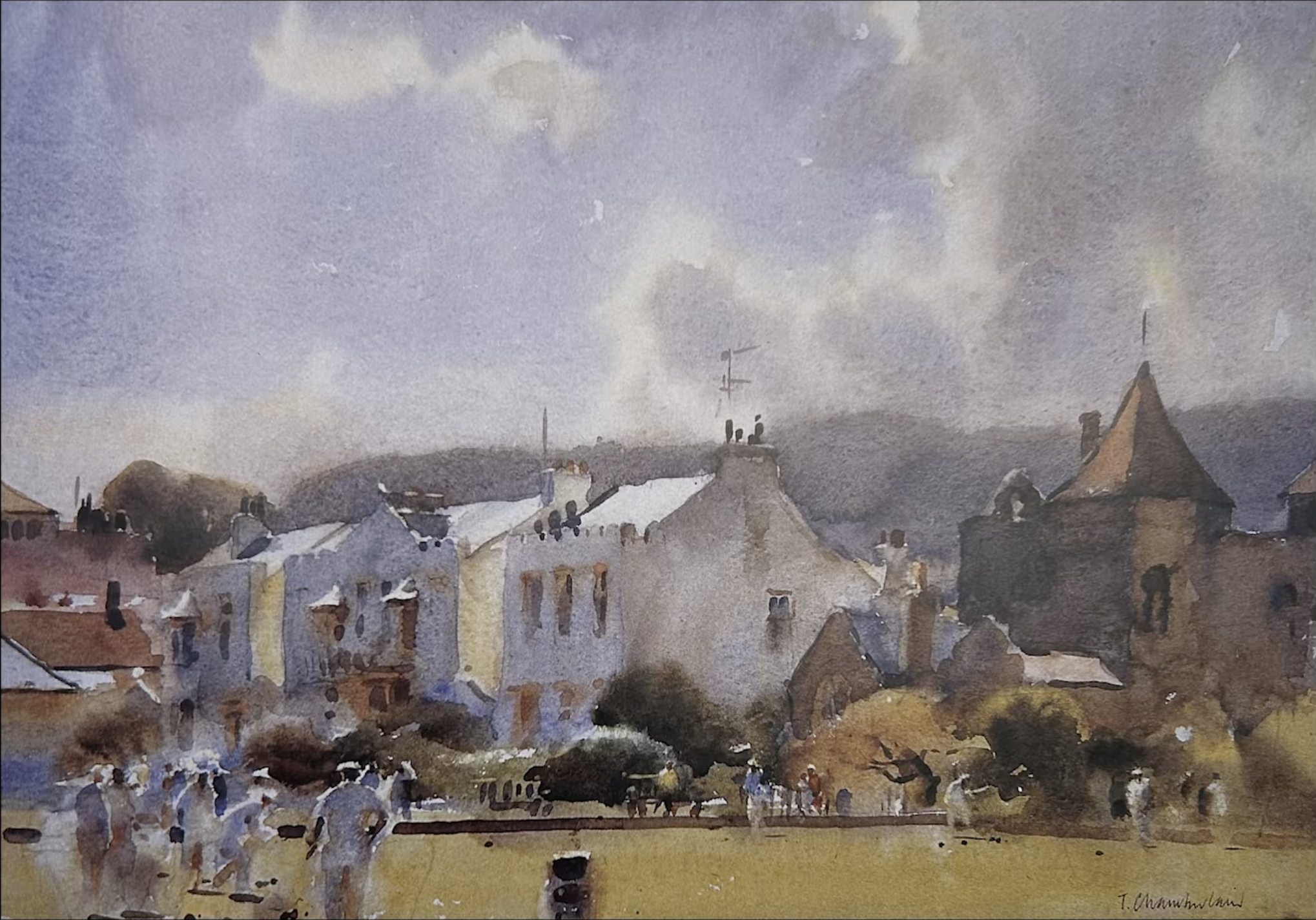
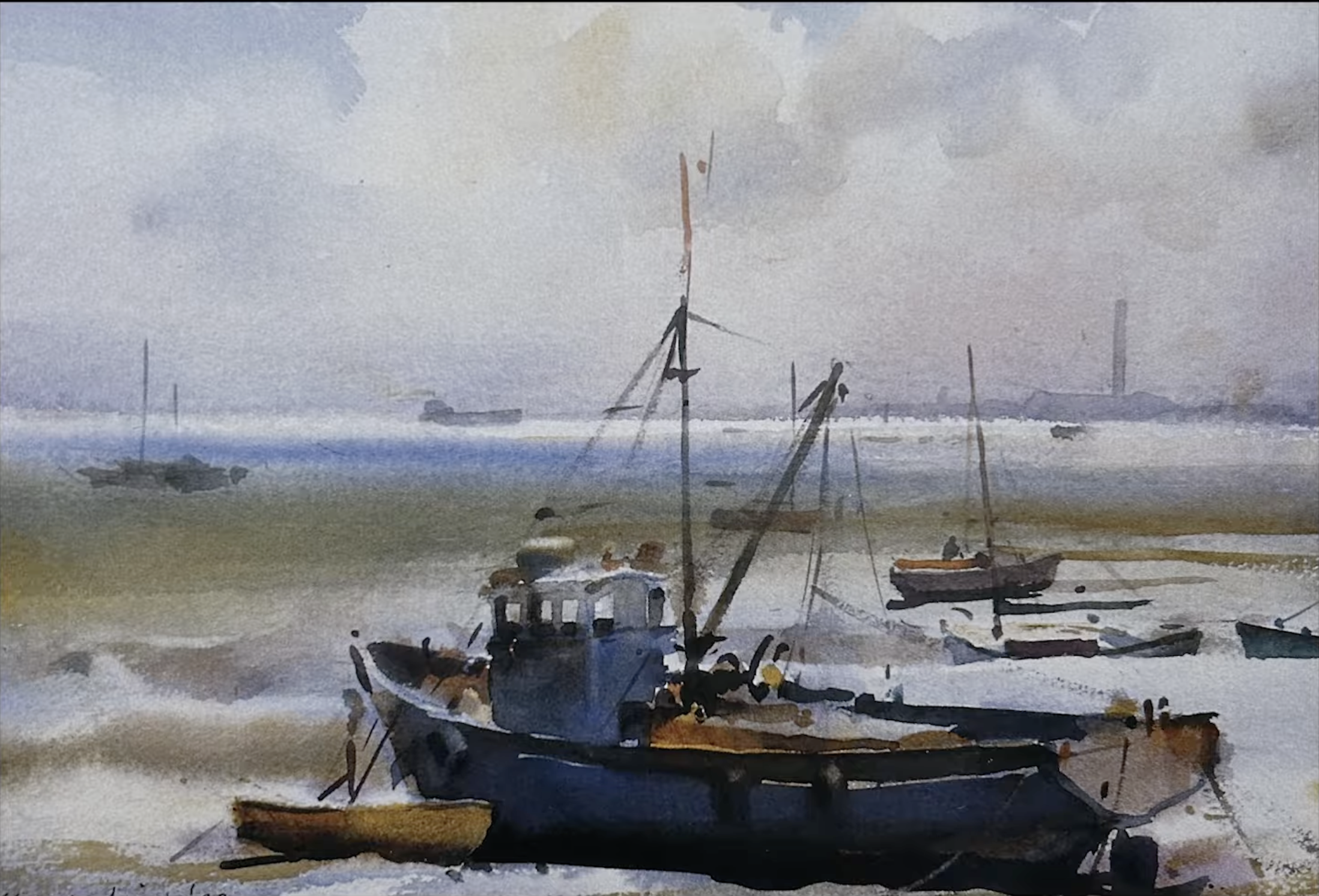
It's really the atmosphere and light that seem to lead the way for Trevor. Whether it's a misty gray harbor or the light glinting off the water or dappled shadows on fabric, the way that he has rendered the light falling on this fabric, such delicate work with the bounced light that goes from here up onto this sleeve. He just is so good at observing that and then recreating it in this medium.
Okay, one thing you need to know about Trevor Chamberlain is that many of his paintings, if not most, are done on location. This a very different experience than painting in the quiet controlled environment of the studio. With plein air, you're battling the wind, the changing light, people coming up and asking questions, and these factors can really make the work more difficult.
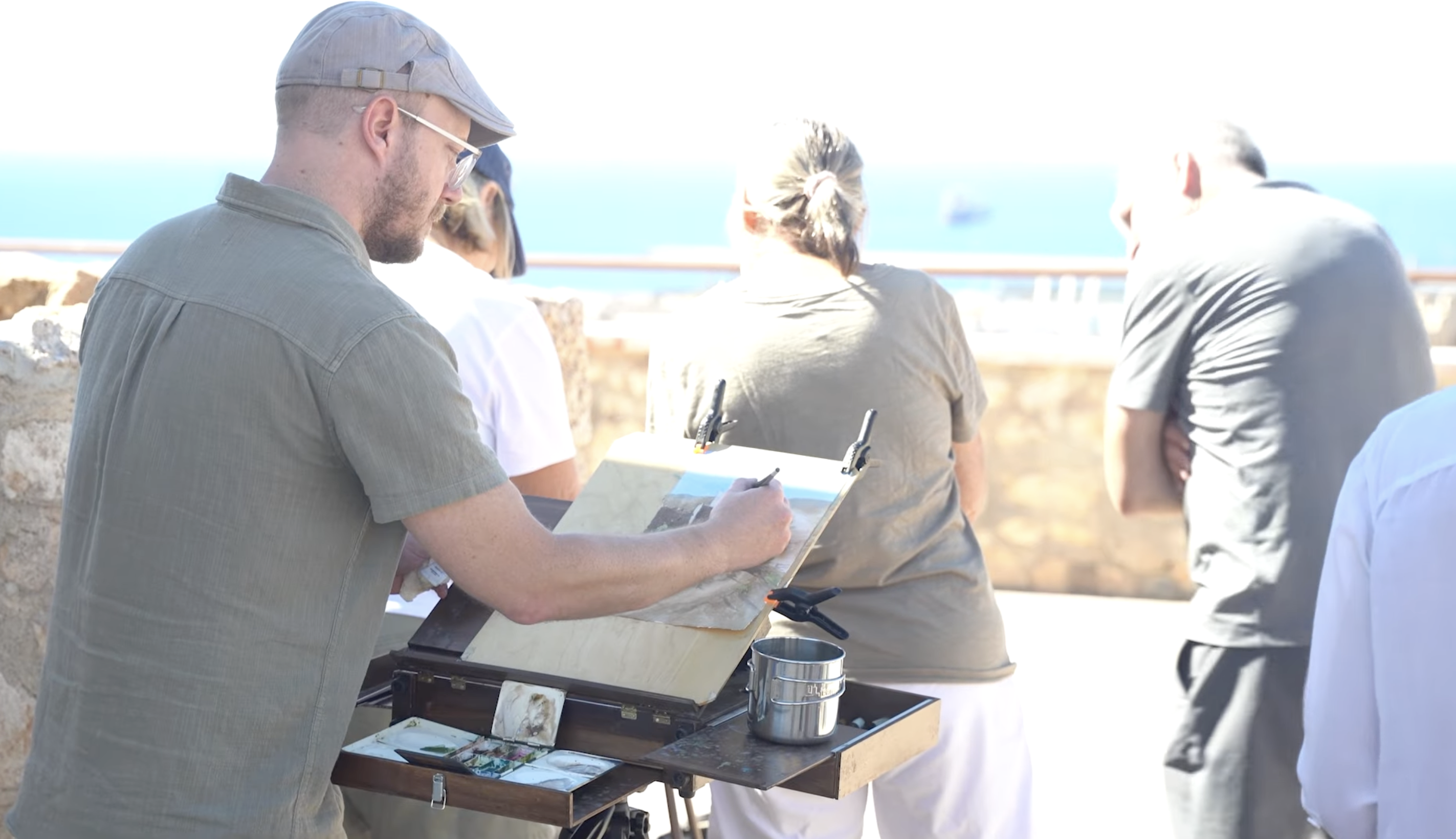
I recently returned home from leading a plein air retreat to Spain. We were in Almaria and we climbed these stairs and quickly got set up in front of this ancient fortress. It's eye opening how direct you need to be when you're painting outdoors. You don't have time to fuss too much over the details. You have to pick a subject and quickly get down an idea. It forces you to think less and just react to what's in front of you.
It's this directness and freshness that is evident in Trevor's work. He doesn't fuss with too much texture. He doesn't get consumed with minor details. He's actually one of the most economical painters that I've seen.
This leads me to lesson number one...
1. Simplicity is powerful.
I harp on simplicity all the time, and Trevor Chamberlain's example of this is a big reason why. Getting his painting down in the most clean, direct way possible is one of his superpowers, and I'm amazed at his ability to simplify a scene and still capture the essence of it.
Here are some tips to help you improve in this area:
- Pick what is most important in the scene. In Chamberlain's paintings, he has a clear hierarchy. Just glancing at his work, you can tell what the most important part of the scene is. He has a clear, defined focal area with great light, shadow, and contrast. Everything else plays a supporting role for what is happening in the main area of his paintings.
- Minimize the background. You don't have to paint everything that you see. The more you can simplify the background, the clearer your focus is going to become. Soften the background, cool it down, let it recede into the distance, and let it play just the role that it's supposed to play, and that is to just be the background.
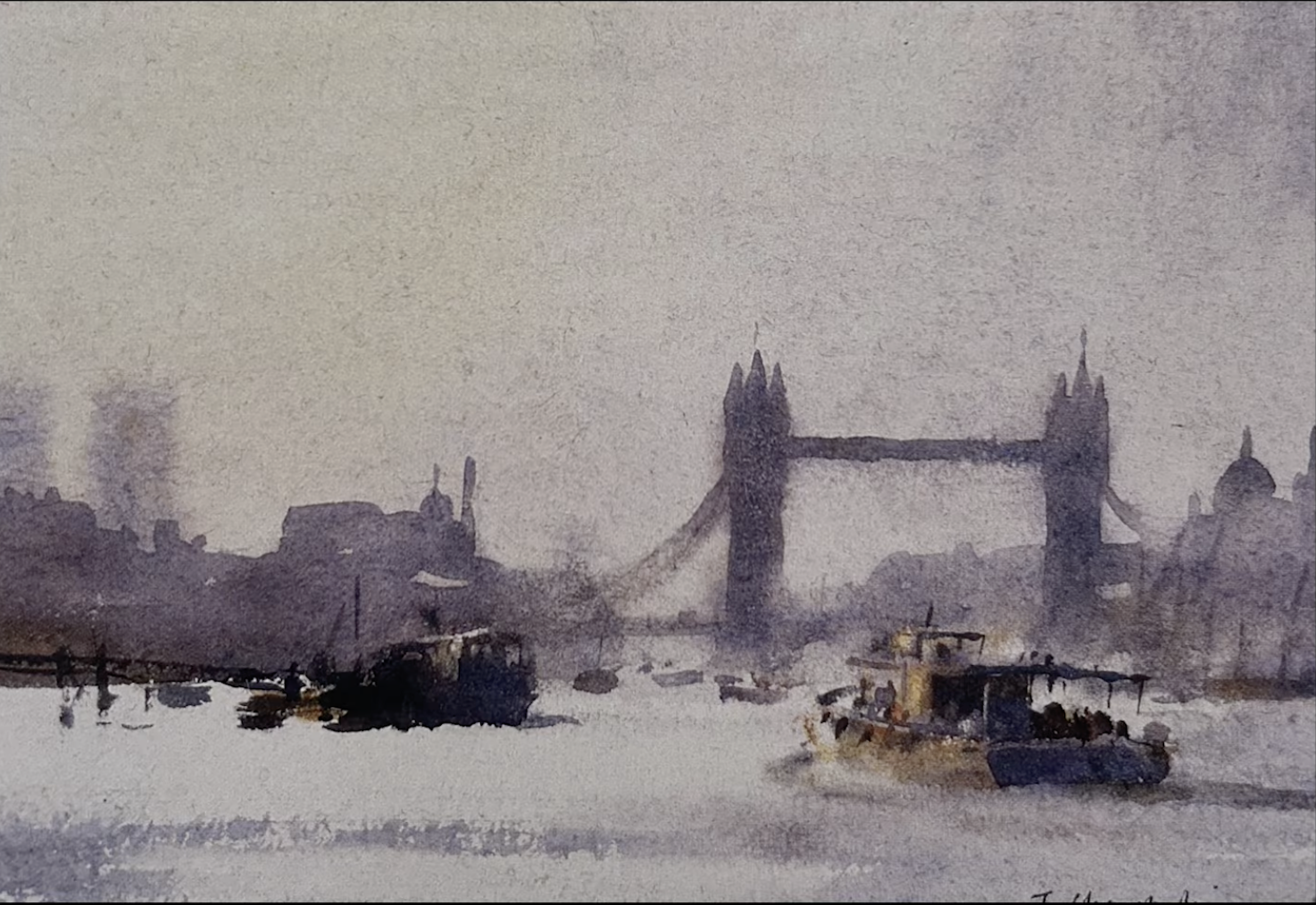
- The other key to Chamberlain's freshness is choosing the right size brush. One of the main culprits in overworking a painting is small, repetitive brush marks. Use a big brush on medium to large shapes. Try to not be constantly reloading and dabbing small little brush marks. That kills the freshness of your work.
2. There are good subjects everywhere.
Yes, Trevor paints glorious scenes from around the world, but he also will paint a street corner.
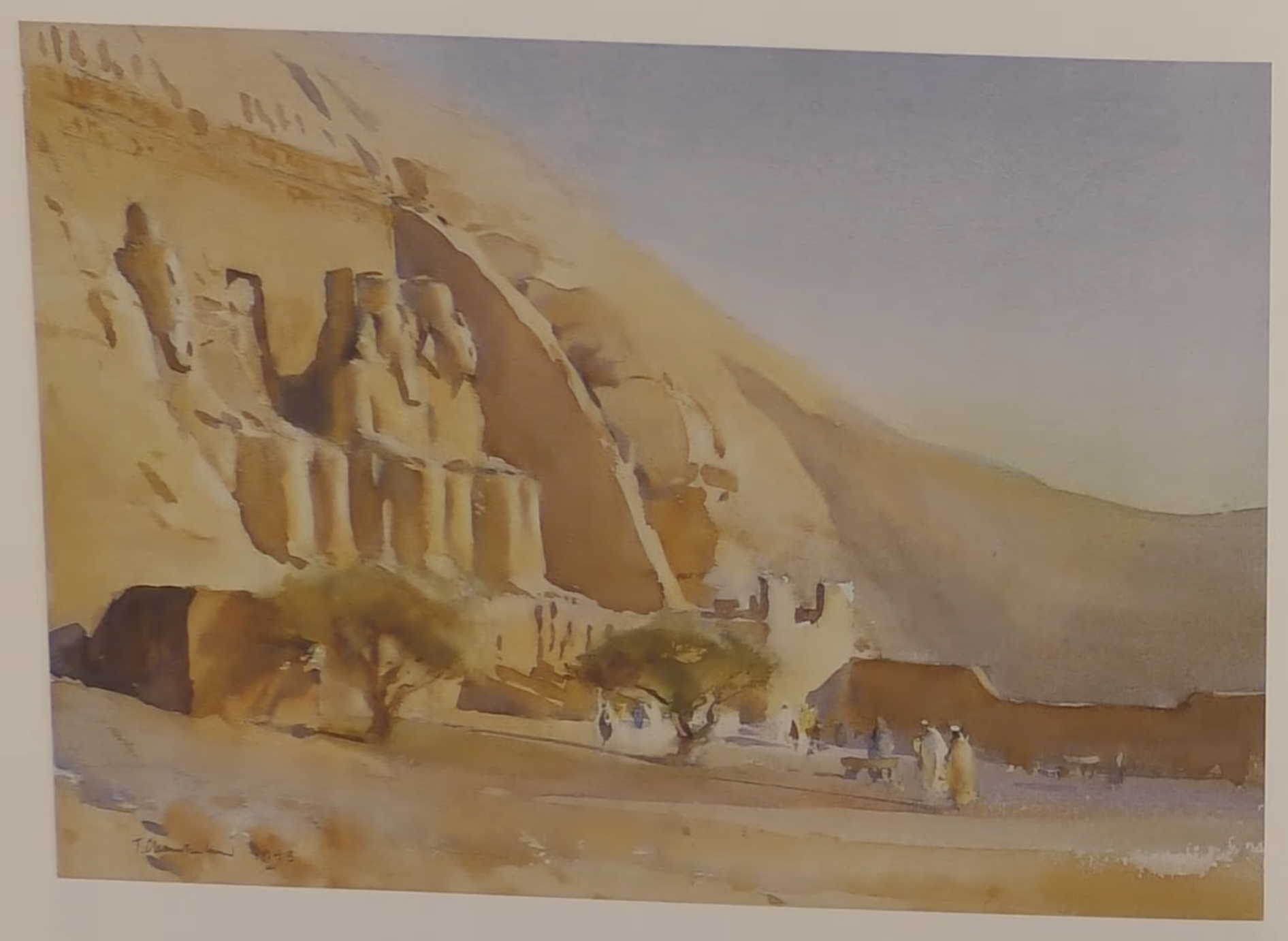
He can paint a magnificent scene in Egypt.
Or a simple street corner scene.
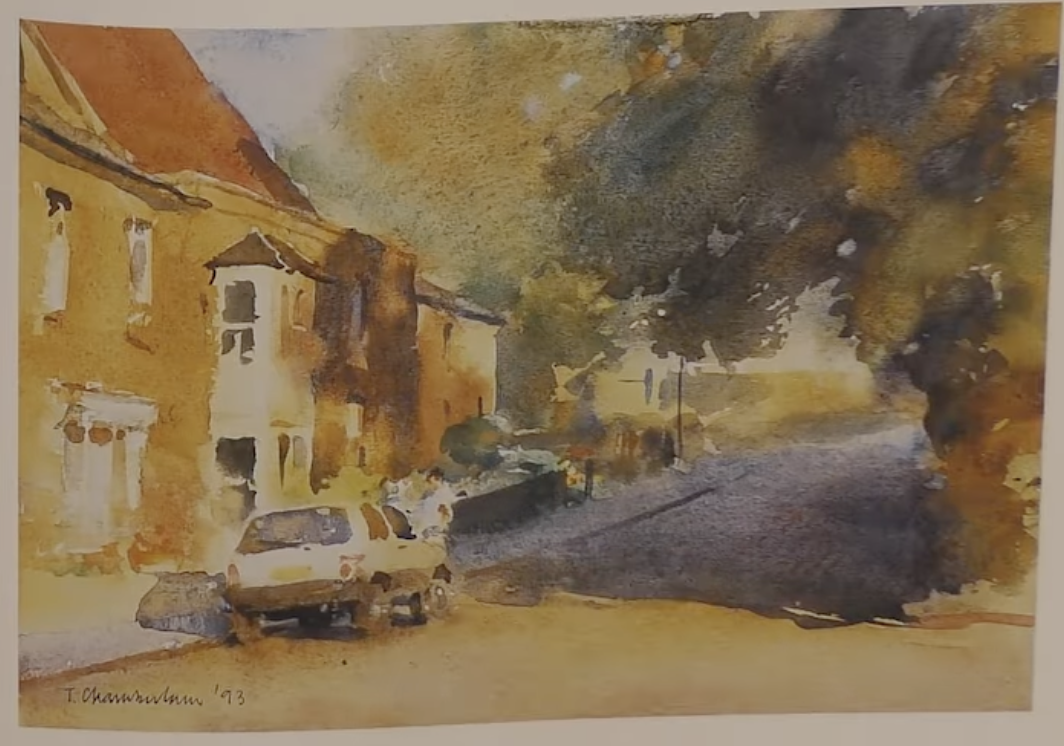
There is no bad subject when the main subject is really the light.
You don't need to be in a scenic ideal location. You can even paint in Shawnee, Kansas - or in Trevor's case, Hertfordshire, England.
3. Light and atmosphere is key.
In Trevor's paintings, the light and atmosphere are almost more the subject than the actual subject matter itself. You can almost feel the wind blowing through these trees and these clouds just drifting by and the sun shining down on the grass.
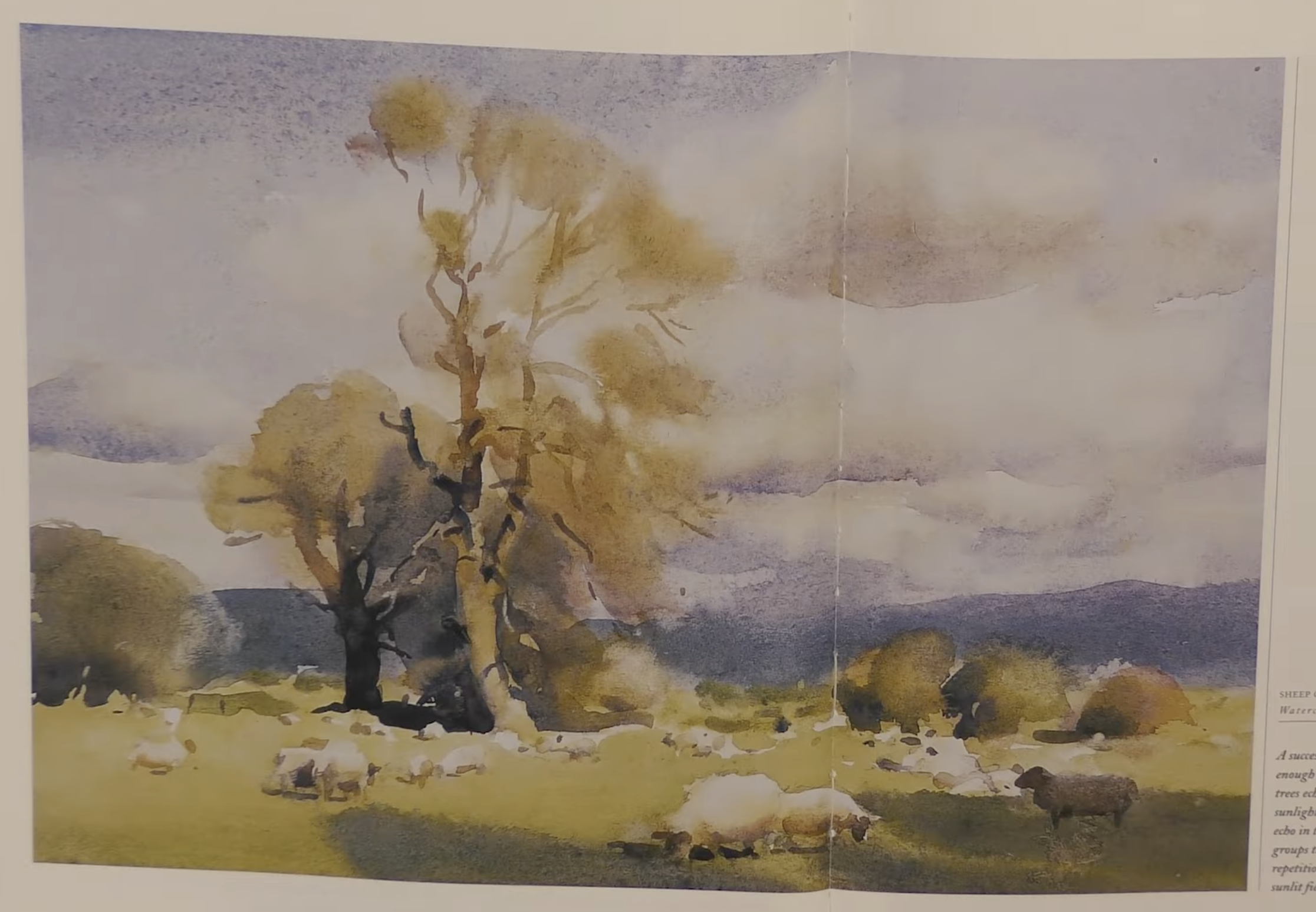
It's just such a great example of simplification, of light, and of atmosphere. His ability to respond to the scene and transpose the light, the mist in the air, the wind going through the trees. It's been a big inspiration for me.
Here are three tips for creating dynamic light:
- Number one is you want to make a plan before you paint. Doing a quick sketch or a study - anything that helps you keep values in mind - makes a huge difference. There's so much to think about when you're painting, so any planning that you can do beforehand really does help. If you need help with that planning, take a look at my free five-step guide.
- The next tip for painting dynamic light is to identify the brightest part of the scene and paint that first. Now you know that every other part of the scene needs to be darker than that one area. I have found that this simple trick is really helpful in keeping that key light area in mind throughout the entire painting process.
- Lastly, you want to ensure that you're painting dark enough, especially in the middle values and the darks. We really cannot have light if we're not painting strong enough. And this is one of the main issues I see in student's work. It's one of the main issues I had to work through too in the beginning.
One thing I hear from students is they don't want to waste paint. Well, the reality is you have to use paint if you want to paint bold dynamic scenes. You are going to use a lot of paint on your palette and probably wipe some of that off and throw it away. That is the cost of doing business. Values are really the key to painting light. And I have a watercolor essentials course that covers this extensively.
Related Blogs
How Smart Artists Study the Work of Masters: Studying Joseph Zbukvic
A Conversation with Watercolor Artist, Tim Wilmot
A Study of Chien Chung-Wei: How to Turn Inspiration into Action