Watch Your Watercolors Improve With Better Water Control
Jun 29, 2026If you've painted watercolor for very long at all, you've probably realized how important it is to control the amount of water and paint that you are using. This is essentially the key to watercolor painting. The key to values, the key to timing, and the key to creating a painting with compelling light is understanding some fundamental things about how you use your supplies and how much water and paint that you are using.
So today I have some very practical tips on how to manage that as well as a key practice that I'm going to show you at the end.
Transform Your Watercolor Paintings With Better Water Control
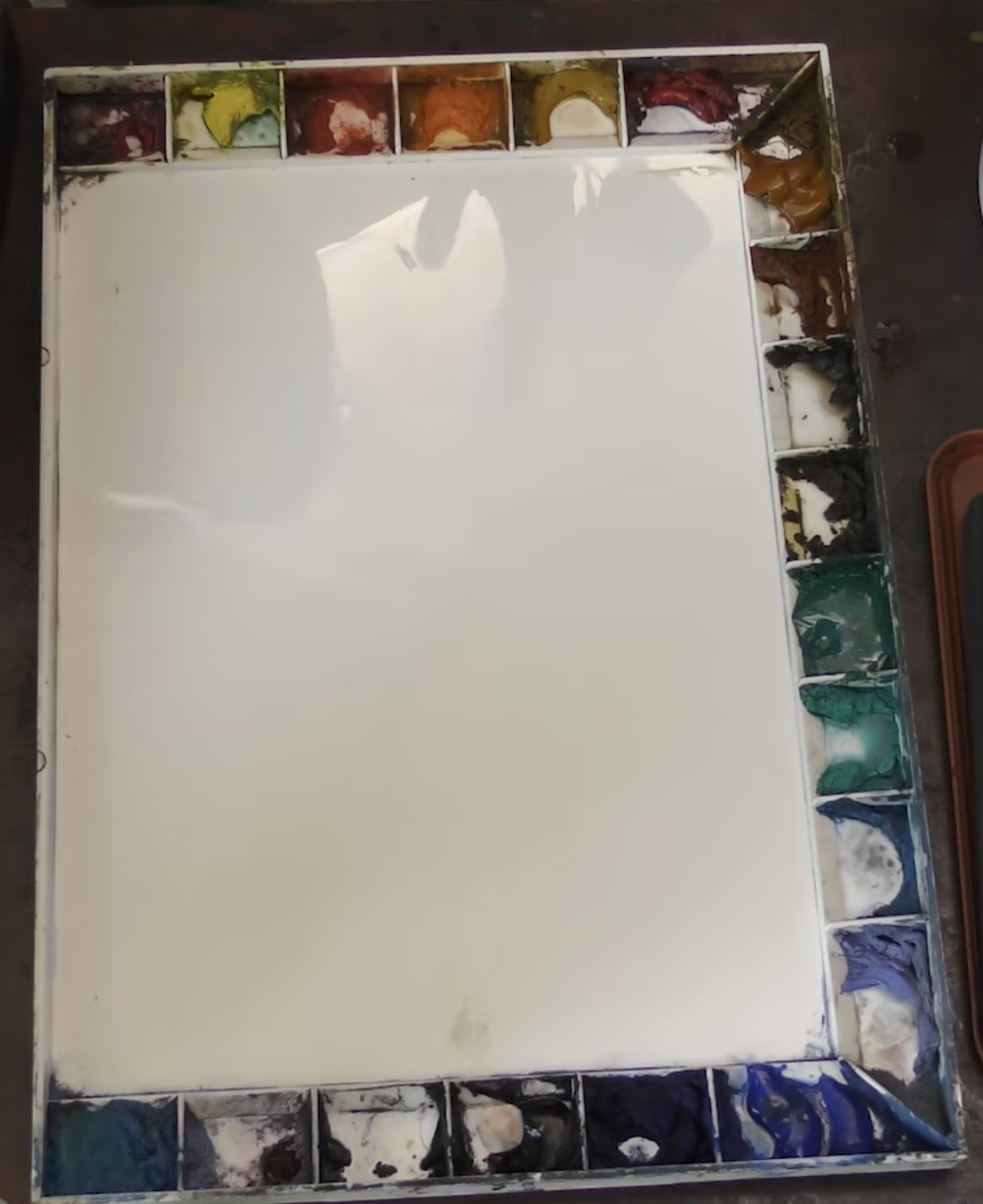
Okay, let's start here. This is my palette.
Spray Down Your Paints
In order to use these paints effectively, they need to be activated. And we activate the paints by spraying them with water.
Make them nice and wet so as you mix your colors and create your mixtures, it's easy to access the paint. If these bits of paint on my palette are dry and I'm just using a little bit of moisture on my brush to try to get a rich mixture, it's never going to happen. So the first thing that I do is I open up my palette and I spray the paints really well.
For that, I just use a spray bottle and I go around to all the wells and give them a spray. I've had students ask me if I put fresh paint on my palette before each painting. The answer is no. I just use the paint from my wells that I've already put there. Now if I was going to paint something like a nocturne scene where I really needed some strong values, I might consider adding some fresh paint to get a really rich mixture. But I'd say for 90% of my paintings, I'm just opening up my palette, spraying my paints really well, and just going from there.
Now this is a John Pike palette and what I like about this palette is it has plenty of mixing space. It can hold a lot of different colors, but also it has a nice cover to it. When I'm not painting, I'll put the cover on and that will actually keep a lot of the moisture in there ,and it keeps my paintings from drying out as much.
Use a Sponge
Another very practical tip is to use a sponge in your mixing process.
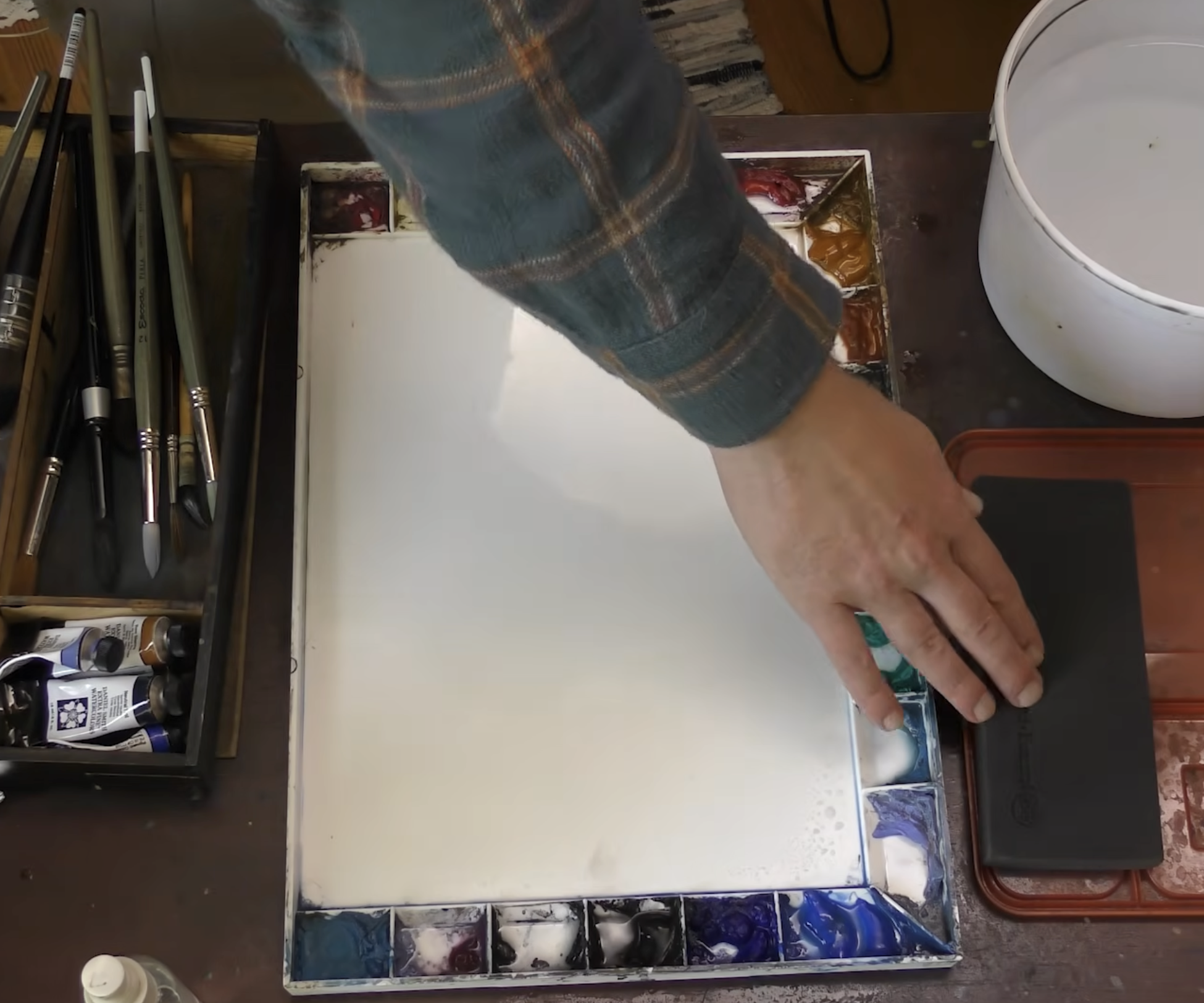
When mixing colors, it's tempting to get some of a color, put it in the middle, and then go rinse your brush off, go get some of another color, and then rinse your brush off with water in between each dip into a different color. But what you realize after you've been doing this for a little bit is that you are adding a lot of water every time you go in and get some more pigment.
Instead, have a nice sponge by your palette so you can rinse your brush, dry it off, and then get pigment again. This give you better control over your water to paint ratio.
If you don't use a sponge in that way, a lot of times you will water your mixture down quite a bit without even realizing it. If this brush is wet, it holds a lot of water as do most mop brushes. So look at this.
Why is this so important in watercolor?
Well, the strength of your mixture is going to determine the strength of your values in your paintings. That's why we want to keep close tabs on these things.
I think of my values as a spectrum from 0 to 10, representing your lightest lights your darkest darks. Most scenes, you want to have a full range of values (1-10) that can vary depending some on the subject or the atmosphere of the subject or what it is that you're going for. But if you find that your paintings are often too light, that means that you don't have a full range of values.
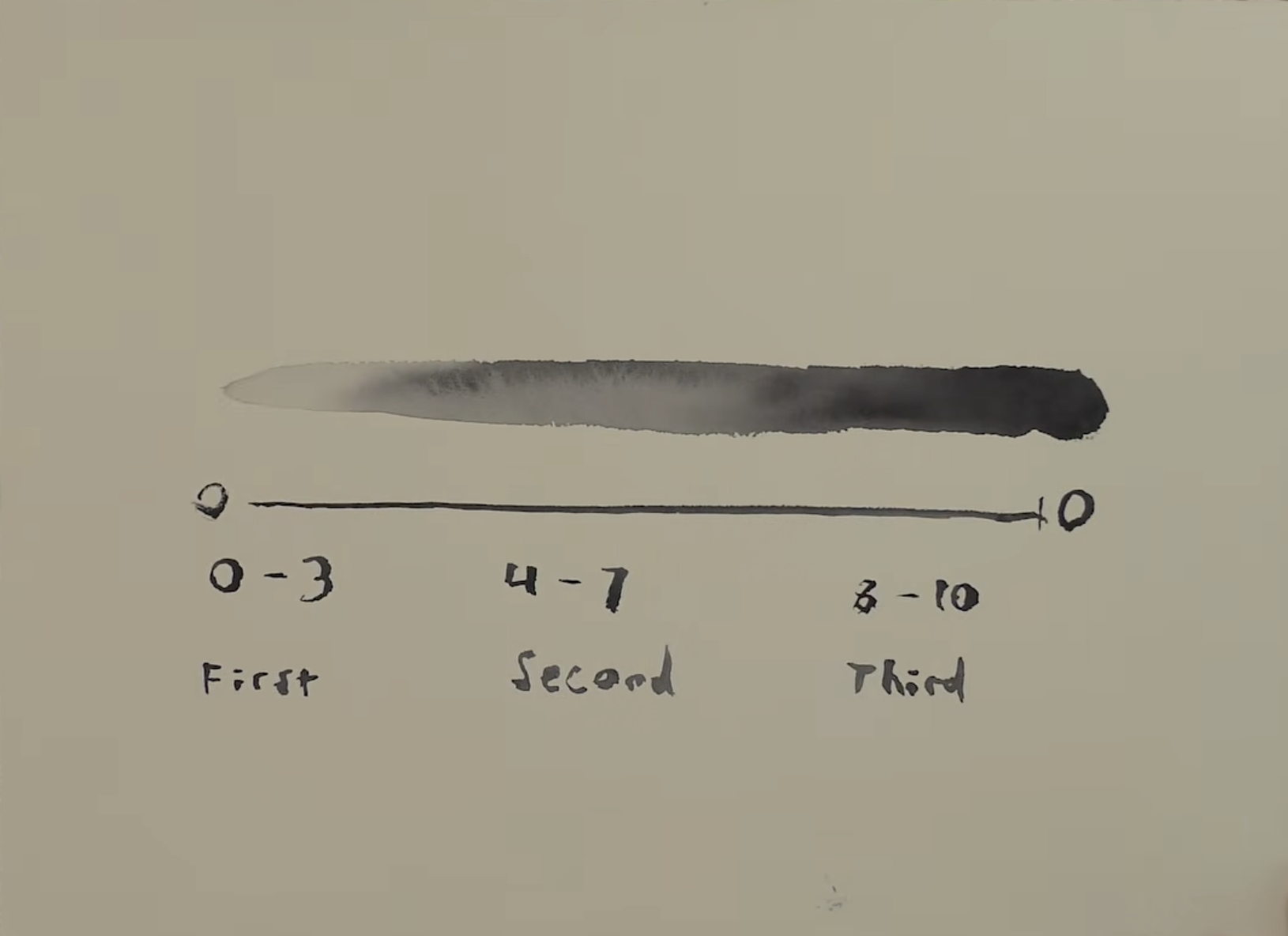
What I see a lot from students is they're painting with a spectrum from 0 to 7, but are not quite able to push past that and get up to the strength of 10. And when we don't have that darker side of the values in the painting, that is when we are really struggling to create light within our scene.
So if you've been watching this channel for a while, you know I talk a lot about values and how crucial it is to understand values to create compelling light in your paintings. This is very fundamental to that knowledge. Realizing that from light to dark, that's a full range of values and we want to have that within our paintings.
And that's where the water to paint ratio and controlling that becomes so important.
Tea, Milk, Cream, and Butter
One nice way to think about the consistency of your mixtures is to think about some common consistencies that we are somewhat familiar with: tea, milk, cream, or butter.
So a really light wash would land as tea. A little stronger is milk. A little stronger than that is cream. And even stronger than that is butter.
Now this is not, you know, science here. This is just a general way of thinking about this so you can be aware of how strong your mixtures are.
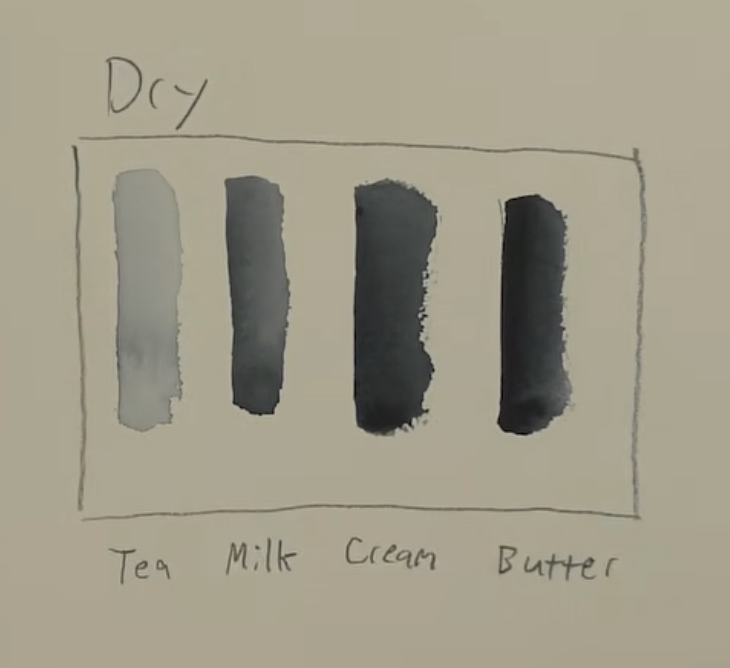
So the practice for this is a pretty simple one. We are going to use just one color. We're going to use neutral tint and I'm going to show you a good way to practice these different consistencies.
To see a simple way to practice that consistency of tea, milk, cream, or butter, watch my whole video. I hope that these practical tips and this way of thinking about the consistency of your mixture is helpful for you in your painting process. It's always great to come back to these fundamentals and to think about how we're managing the water and the pigments on our palette to keep our growth moving forward.
Related Blogs
How to Achieve Breathtaking Light in Your Watercolors
Colors to Use for Brilliant Watercolor Paintings
3 Watercolor Steps for More Vibrant and Interesting Paintings