5 Beginner Mistakes to Avoid in Watercolor Painting
Oct 12, 2026After teaching thousands of students, conducting years of critiques, and surveying hundreds of painters, I've learned what the top 5 beginner mistakes are and I'm gonna share those with you today and give you advice on how to fix each of them.
This is the same advice I give my students that have helped them to improve and help me to go from this painting to this painting.
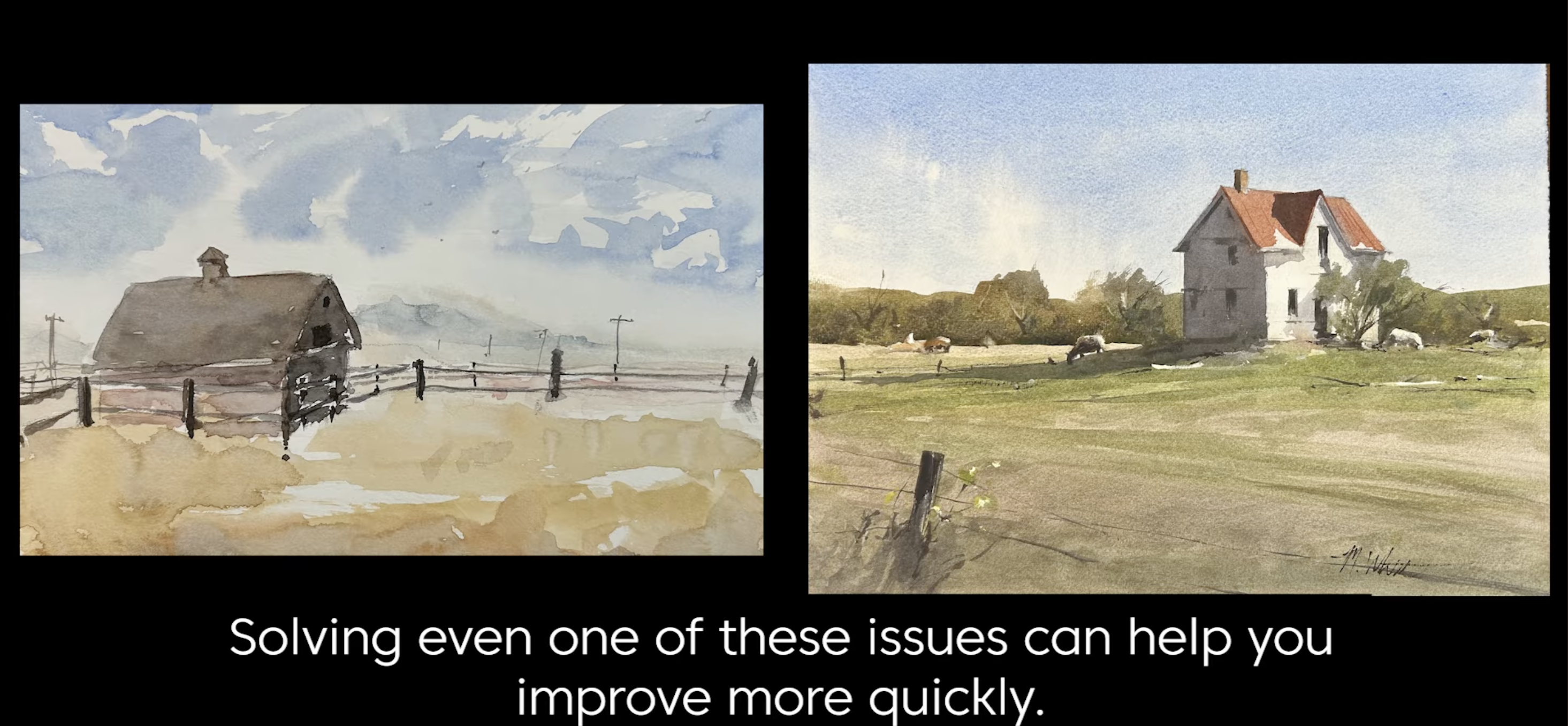
If you can improve in just one of these, you're going to see huge improvements. We're going to count down to the number one problem I see with painters starting at number five.
#5 Only Painting Complete Paintings
When I first started painting, I thought the only way to improve was to paint as many fully rendered scenes as I possibly could. While you do need a lot of repetition to learn watercolor, we need to work on specifics to take the those big steps forward. The only way to do this is to identify areas that you need to improve in and then to practice those specific skills beyond just creating complete paintings.
One of the number one practices I tell students to do is to practice painting skies. This will get you comfortable with mixing different paint consistencies, which is a major hangup I see time and time again with students; often they use too much water and not enough paint. The reason it's important is to create strong enough washes to make your light become really apparent.
Practice creating different consistencies: a tea consistency, a milk consistency, a cream consistency, and a butter consistency.
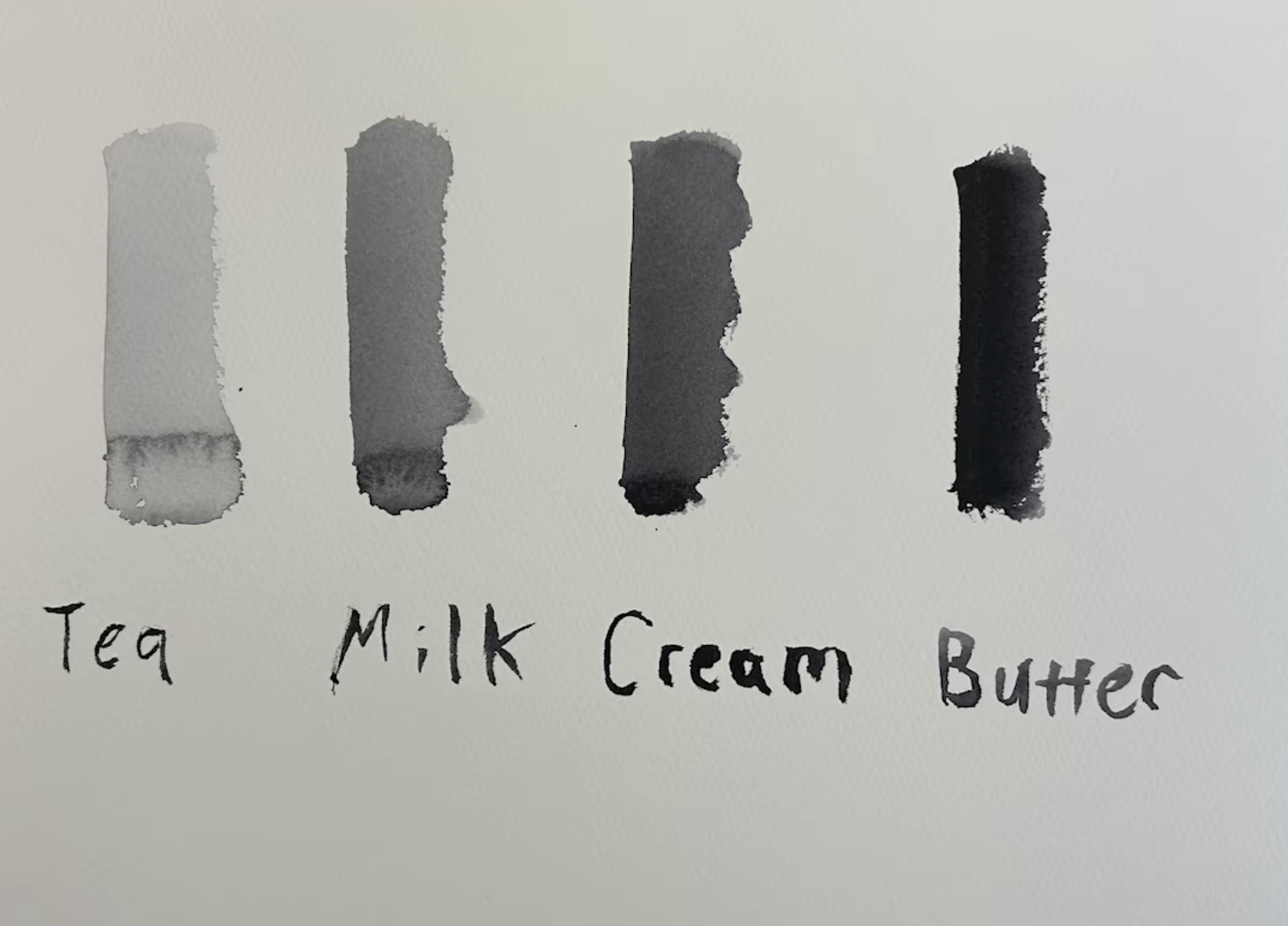
This small bit of practice will help speed up your learning and soon you'll develop the muscle memory that you need on how to mix rich mixtures.
Find time to practice specific things that you want to improve in, not just painting complete paintings. You can practice skies, figures, trees, cars, anything that you are struggling with. Taking time to do this will help you grow so much faster than just painting complete paintings.
#4 Painting Too Big
When I was first getting started, I wanted to paint the same size as all of my watercolor heroes. Now, the problem is that there's too much that you have to learn to paint at a large size early on.
When you paint a large painting, it forces you to be much faster at color mixing, to have a more keen sense of watercolor timing, and a large painting is much more of a commitment in time than a small painting is.
We learn lessons every time we paint. We might as well learn a lot more of those lessons more often by painting smaller watercolors.
If you want to take this a step further, after you complete a small painting, give it about 24 hours and come back and look at your work with fresh eyes. Make a list of the things that went well in your painting and make a list of things that you would like to improve on. If you do this over time, you will come up with a list of things that you need to improve in. These are the things that you can focus on and practice in between creating a full painting.
Imagine how much more you can improve if you can foster this kind of intentionality. You will grow much faster.
#3 Focusing on Colors Over Values
The number one question I get when I'm teaching is, "What color is that?" If you go to an art store, there are walls and walls of pigments for you to choose from, and it's very overwhelming. Making small changes to colors, constantly changing your palette, and using too many pigments is a mistake that I see often.
I find that supplies can actually be a distraction for early painters when the reality is if you don't understand values, the color choices that you make are not going to make that much of a difference.
Keep your palette simple.
Realize that you really don't need a ton of pigments. If you're just getting started and you want to know what pigments do I actually need, well, take a look at my mixing guide. Here, I've listed out all the pigments that I use and I've actually categorized them from the ones that I commonly use to the ones that aren't really that important to me.
Now, after you've been painting for a while, then you can really hone in your palette a bit more. You'll find mixtures that you like and pigments that work well together. But all of this takes time and I highly suggest that first you learn about values and focusing your attention there and less on specific colors and pigments.
#2 Choosing Complicated Scenes to Paint
One of the biggest problems I see is painters selecting scenes that are too complicated and not good for watercolor.
I understand being ambitious. Sometimes you don't know if you can paint something unless you try.
But when you're trying to get a handle on the medium and still learning about values, paint consistency, drawing, and preserving light throughout each stage of the process, don't pick something too complicated.
(Take a look at my five-step guide to planning a successful watercolor painting).
Try to pick scenes that have clearly defined light, middle, and dark areas, not scenes that have a ton of positive and negative shapes, a lot of small little bits of light around the scene that you're trying to preserve. Scenes with difficult architecture and drawing challenges are not good options, either, when you're new to painting.
Try to pick more simple subjects. And once you take your photo, spend some time cropping it to find a simple area within the scene. If there's something complicated that you don't know how to draw and it's going to create a problem for you, just leave it out. We so often feel bound to the photograph that we take, but remember that you are the artist and you can change whatever you want within the scene. Also keep in mind that nobody's going to hang the reference photo next to your finished painting. Simplify, crop in, and remove things that don't add to the scene.
#1 Using too many brush strokes.
Time and time again, using too many brush strokes steals the freshness from your painting and leaves it feeling overworked and amateurish.
One game-changing lesson that I learned was that I can simplify the edges of shapes and only include minimal texture to create a more fresh appearance in my painting. This is especially true when it comes to painting trees.
Beginner painters often feel like they need to include all the texture that they see in a shape. And what happens is you use so many brush strokes and overload this area of your painting with information. But by simplifying those edges and including a few edges with a bit more texture, you can really simplify that shape and take away some of that busyness from your painting.
So, here are three tips to help you solve this problem.
1. Use a larger brush. I often will see students using their small favorite brush and just reloading it 500 times to paint a large shape in their scene. But by using a bigger brush, you can reload your brush less and really simplify that problem of too many brush strokes.
2. Identify the larger shapes of the scene. Instead of painting everything separately, you can squint at your scene to find those large connected shapes within your painting.
3. You can also turn your reference photo black and white to see the values more clearly. You can also do things like value studies that can teach you to group those shapes together and include less information in your painting.
All of these things can help you simplify what you're looking at and paint a stronger, more compelling image.
Related Blogs
Top 10 Watercolor Problems and How to Fix Them