Top 10 Watercolor Problems and How to Fix Them
Feb 09, 2026Today, I'm going to cover ten frequent mistakes I see watercolor students make. All of them are mistakes that I too have made before, and all of them are fixable.
So let's go through them and address how you can avoid making these mistakes in the future.
10 Watercolor Blunders and How to Avoid Them
1. Choosing a Subject That's Too Complicated
The subject you choose can set you up for success or it can make your job a lot more difficult.
Time and time again, I have students who choose subjects that are really complex. Often, they follow reference photos with a lot of positive and negative shapes, which is an incredibly difficult challenge in watercolor.
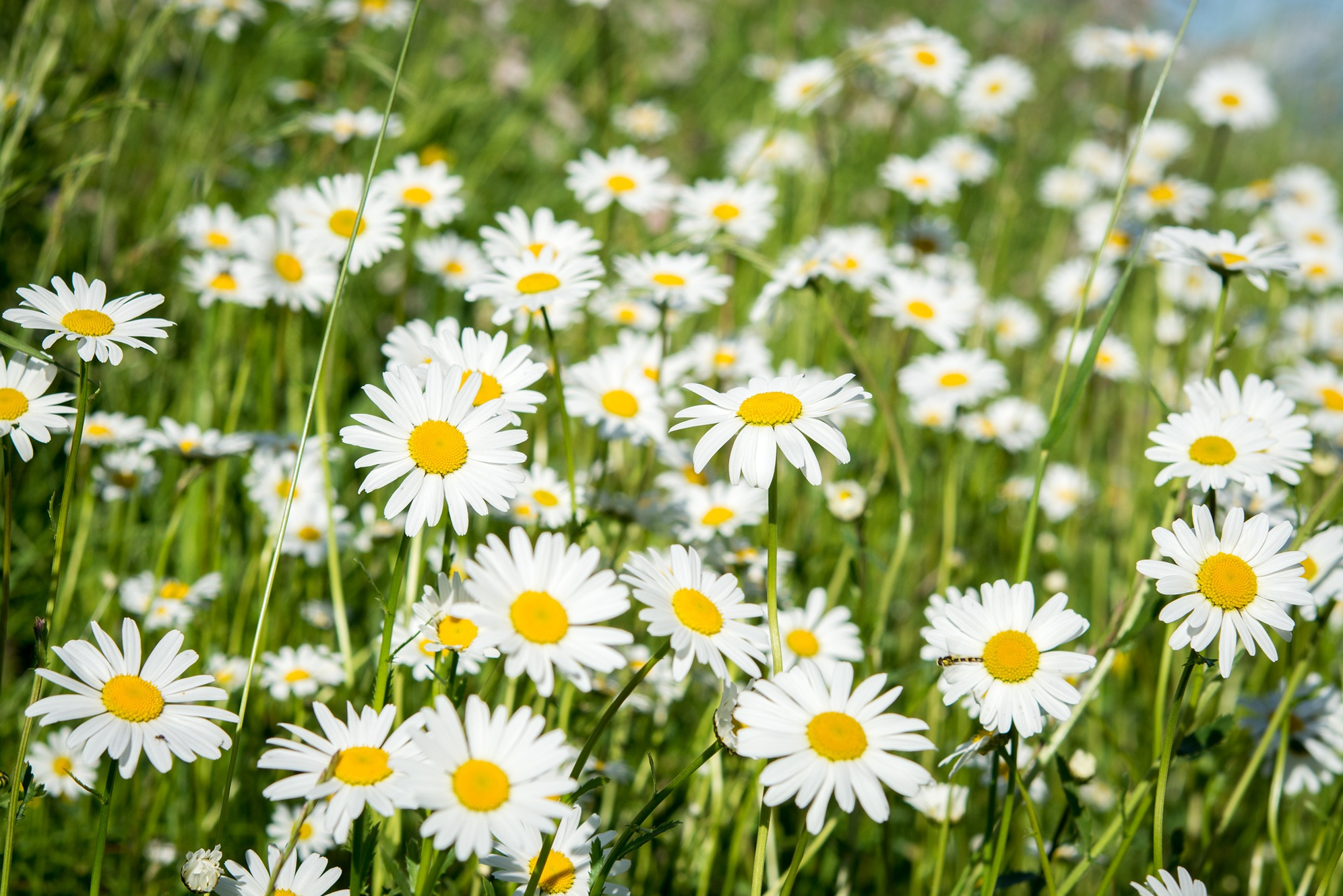
With watercolor, you paint from light to dark, and the lightest lights must be preserved as you lay in the darker values. So trying to depict a scene like a field of daisies with various positive and negative shapes is not for the faint of heart.
So, my advice to you is to choose a scene that has clearly defined lights and darks.
Now, I'm not saying that you shouldn't push yourself or that you should avoid a subject you want to paint just because it will be challenging. But it's important that you assess your skillset against the challenge and approach it strategically. Maybe you're not yet ready to take on a certain subject. Knowing why a scene would be difficult will help you progressively improve.
2. Failing to Crop Your Reference Photo
When painting from a reference photo, students often feel an obligation to include every detail of the photo and to paint the exact composition of the painting. But the truth is that oftentimes there are improvements you can make to a scene right away - even before you put brush to paper.
Here's a photo that I used to paint a photo recently:
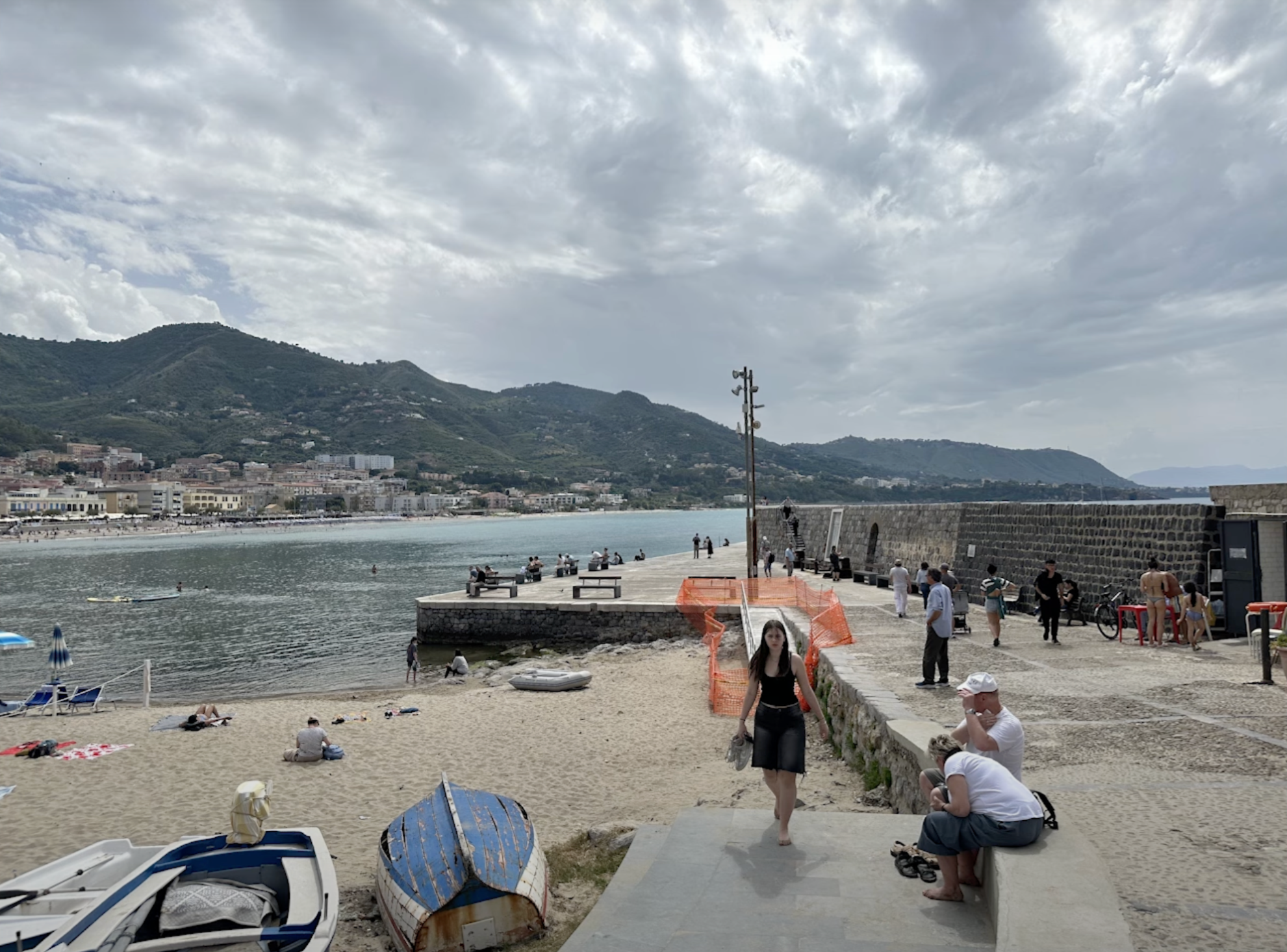
I wanted to capture the light on the water and depict the distance between the hills and the beach. Having identified my focal point, I then chose to crop the photo and change the layout of the scene.
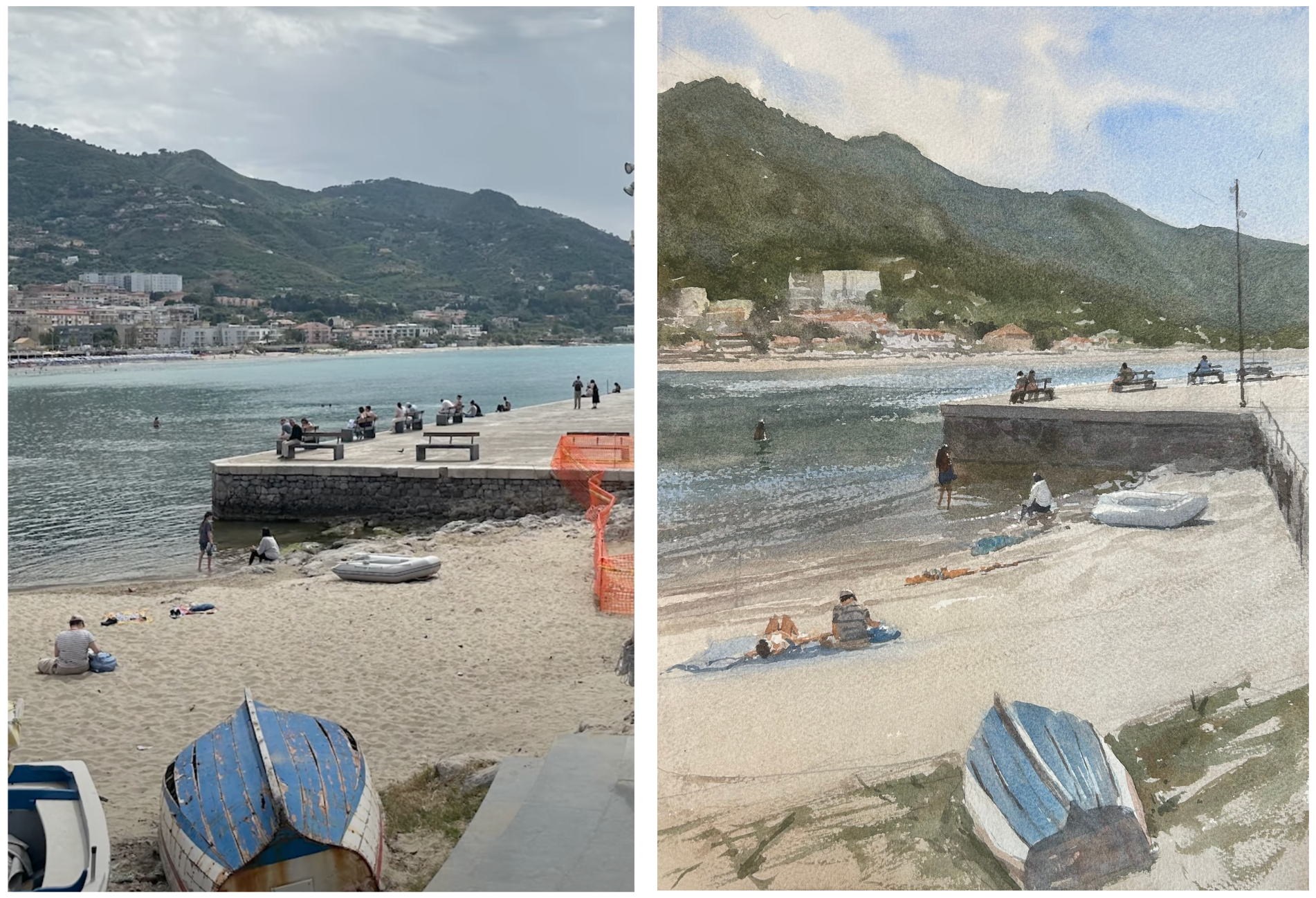
To fix this problem, don't let a photograph make you feel hemmed in. These choices are yours to make, and the changes could be as simple as cropping the scene.
3. Using Too Many Brushstrokes
I see this in so many beginner's watercolor paintings. They use too small a brush, resulting in dozens of brushstrokes to complete a shape that could be achieved more efficiently (and more gracefully) with a bigger brush. The problem with too many brushstrokes is that the painting tends to look overworked and labored over.
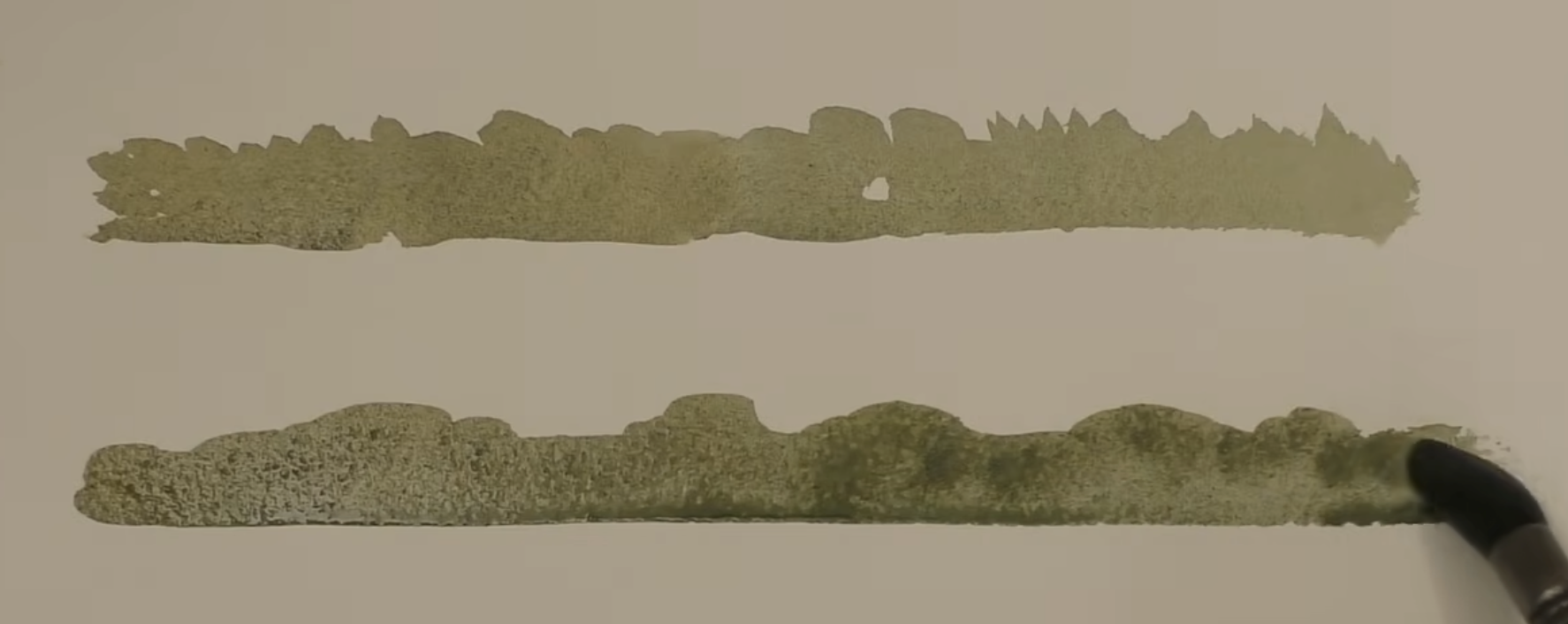
With a larger brush, you can hold more paint and you can create a much more effortless shape.
So, my advice on this one is to use the proper paintbrush for the shape you're working on: larger shapes require larger brushes. Smaller shapes and fine details require smaller brushes.
4. Adding Too Many Layers
The fourth mistake I see often in paintings is similar because it also contributes to a painting being overworked. The issue is adding too many layers. This happens when your first layer isn't satisfactory and a second or third layer has to be added to achieve the value you want.
To avoid this misstep, make sure your mixture is strong enough before you apply it to your painting. One way I do this is to keep a scrap piece of paper close at hand so that I can test my mixture out there before I use it in my painting.
5. Rushing into the Painting Without a Plan
It can be exciting when you find a scene that excites and inspires you, and sometime you just want to jump right into it's creation.
But I am here to tell you that when you can step back and do some thinking and planning before you start, the more likely you are to complete a successful painting.
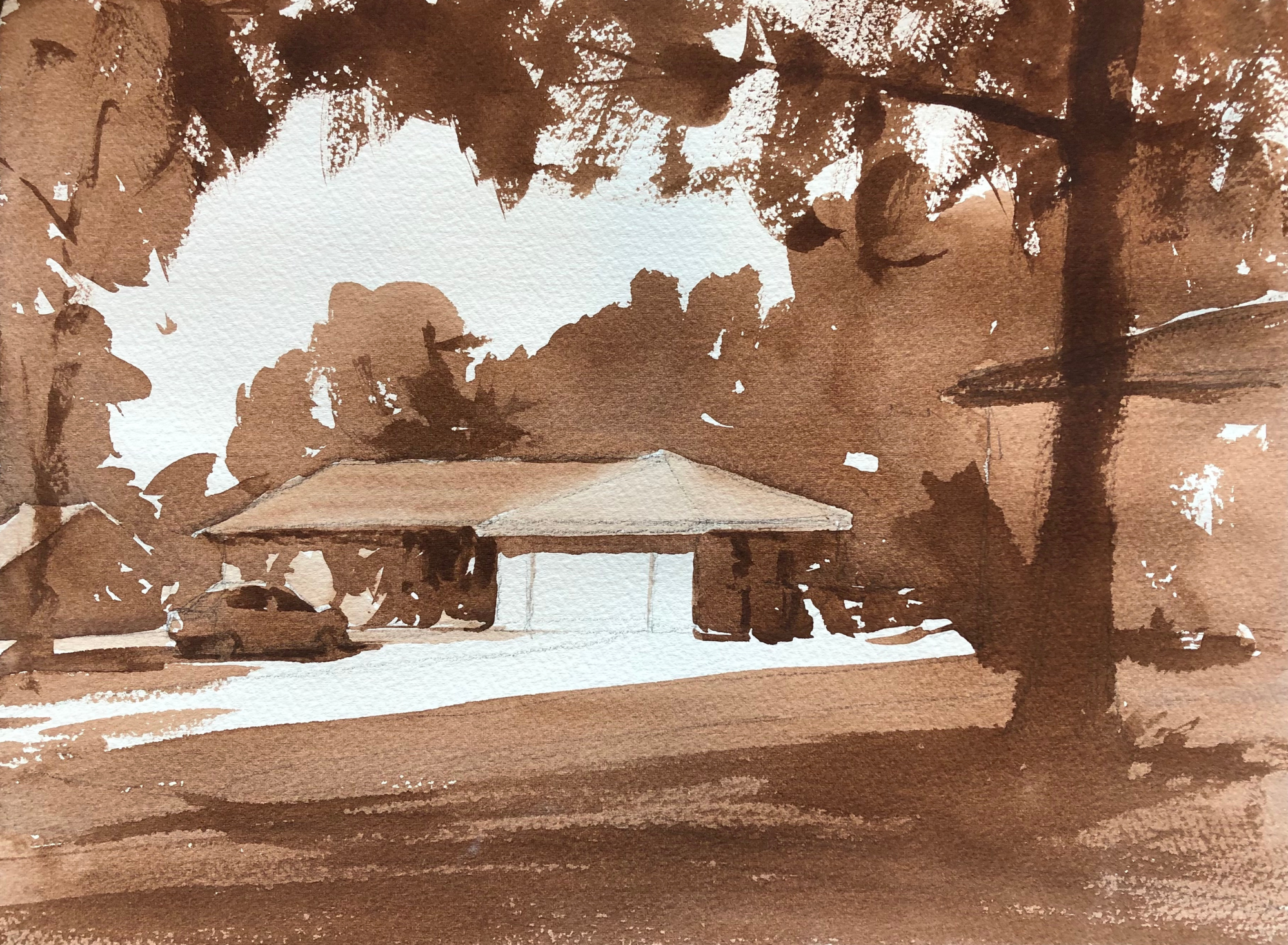
This could look like doing a little thumbnail sketch, completing a value study, or mix some colors and practice certain shapes on a scrap piece of paper. Watercolor painting requires a lot of you - focus, decision-making, and timing. You're thinking about color, value, composition; it's a lot. So any decisions you can make beforehand can help ease the stress as you paint your scene, leading to better decisions and a stronger painting.
6. Neglecting to See Connections and Big Shapes
If you squint at the scene you're working on, you can see value connections. These are values in the scene that are similar strength and can be combined into a bigger shape. These are the building blocks of a strong painting.
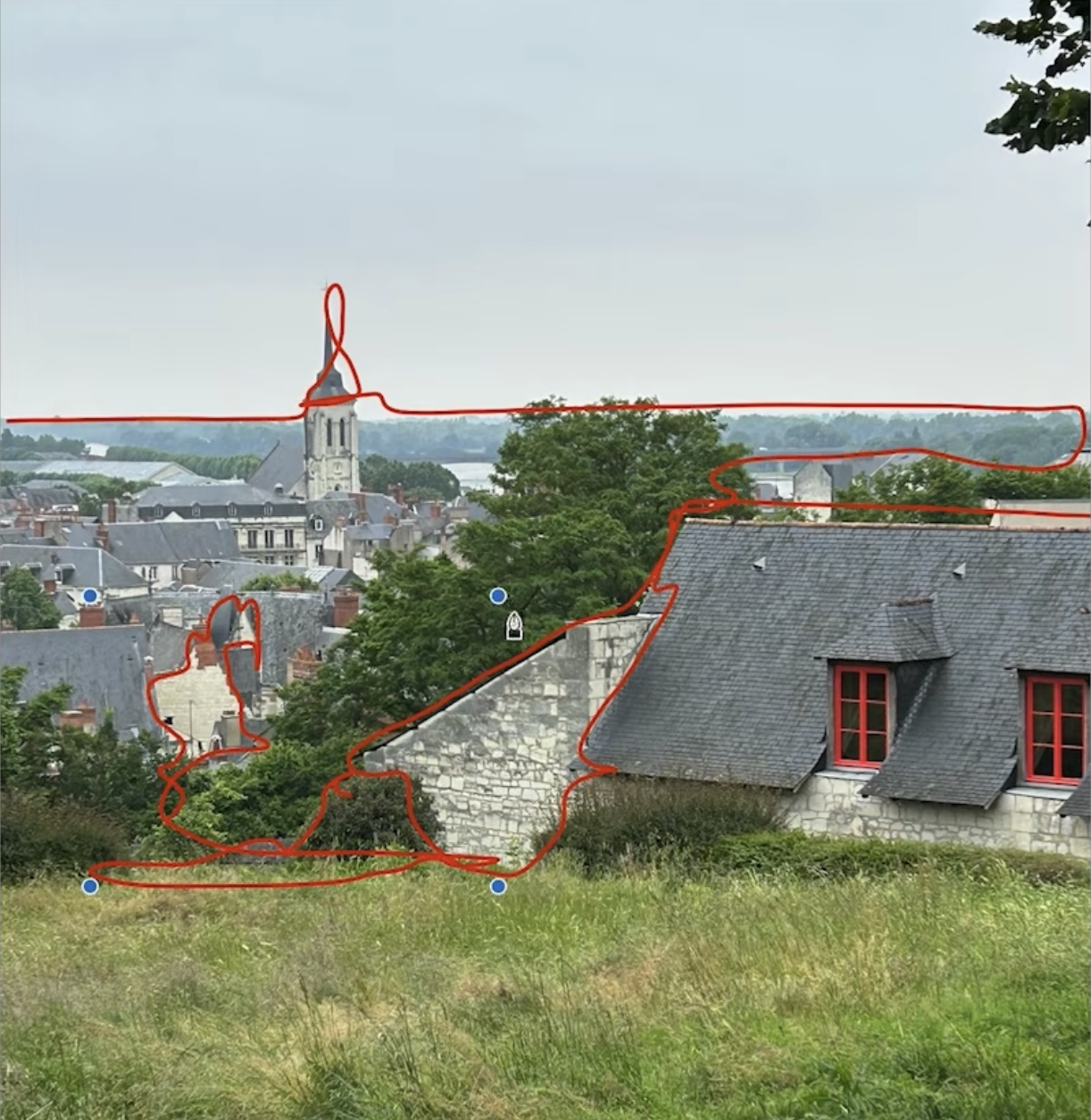
Students tend to paint every part of their watercolor as separate shapes. Instead, I advise you to squint at your scene and identify those larger shapes that can be connected. It's these big shapes that really make the painting work.
7. Painting With Too Light a Mixture
Painting too lightly is a big problem for watercolor artists because if you don't achieve a full range of values in your painting, the light and impact of your scene can get lost.
One culprit of painting too light is using pans of paint. Use tube paints. They are easier to activate and mix strong mixtures with. Modern, professional pan paints can be okay, but tube paints are reliably easy to create the strong mixes you want.
Also, pay attention to your water to paint ratio. Ask yourself - are you constantly going back to the water to mix more? Maybe you wash off your brush and then go straight to your paint mixture on your palette, adding more water every time. I suggest using a sponge to absorb that extra moisture on your brush before you go back to your mixture on your palette.
8. Painting Only on Large Paper
I remember when I first started painting, I felt compelled to paint at least a quarter or half sheet. But what I really needed to be doing is painting small and often.
Watercolor requires a special feel for the mixing and painting that really comes down to muscle memory. Water to paint ratio, timing, and other variables are at play at the same time, and this can be overwhelming. When you can control the scale, though, you can develop a better feel for how all these things work together, and you will get better at juggling them.
9. Only Focusing on Complete Paintings
Beginner watercolor artists often get it in their heads that the only way to improve is to focus on painting complete scenes. I fell into this trap too when I first started. But soon, I realized that it would benefit me to take a step back and focus on specific skills like painting figures and painting skies. These were skills that time and time again I had to call upon, and they weren't that developed yet.
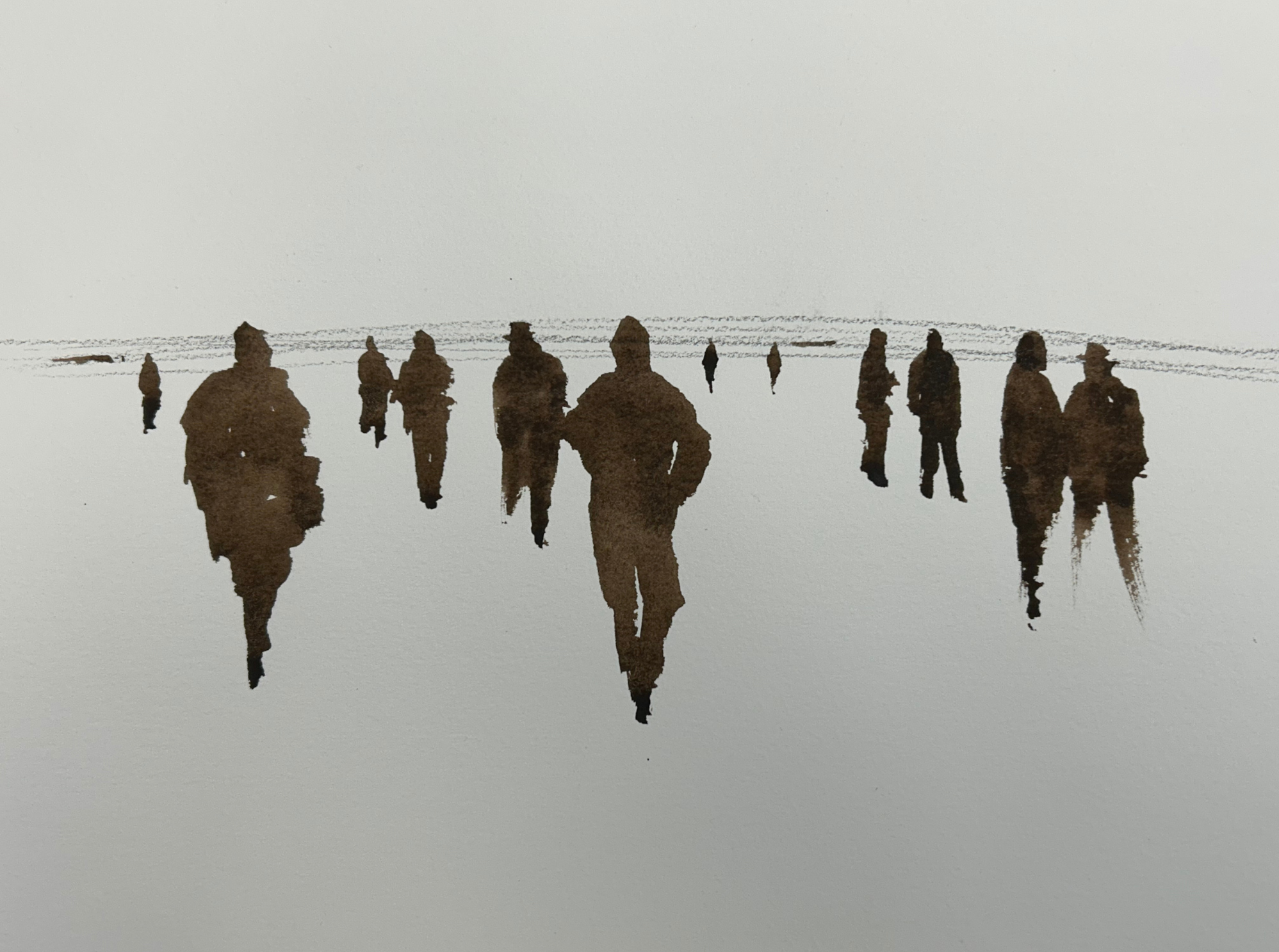
So my advice is to practice specific skills and subjects instead of only focusing on complete paintings. Now, you don't have choose between the two. You can paint a complete scene one day and then hone in on some skills that need some work the next day. You can take out a scrap paper for 20 minutes every day and just paint trees or skies or animals - whatever it is that you want to see improvement on.
10. Not Using Enough Variety
Variety is the spice of life and a key to good paintings.
If you're looking at a painting of yours and wondering how you could improve the scene, ask yourself whether you have enough variety.
Assess the variety in your:
- Brushwork - Are you using a variety of brushes and making different marks with them on your paper?
- Edges - Do you have a balance of hard edges and soft edges in your painting?
- Shapes - Have you included big shapes, small shapes, and medium-sized shapes in your scene?
This variety is a great way to mix things up and ensure that you're creating a dynamic, engaging scene.
Pick One of These Suggestions to Work On
A list of ten is great because it gives you many avenues to follow for growth, but don't let it overwhelm you. Choose one to focus on and come back to the list when you feel like you need another challenge.
Related Blogs
The 3 Biggest Mistakes Made By Beginner Watercolor Artists