Creating Smoky Landscapes - The How and Why
Aug 31, 2026Adding Smoke to a Landscape
Adding smoke to your landscape scenes can transform them from flat and boring to airy and atmospheric.
One of the absolute masters of this is Joseph Zbukvic:
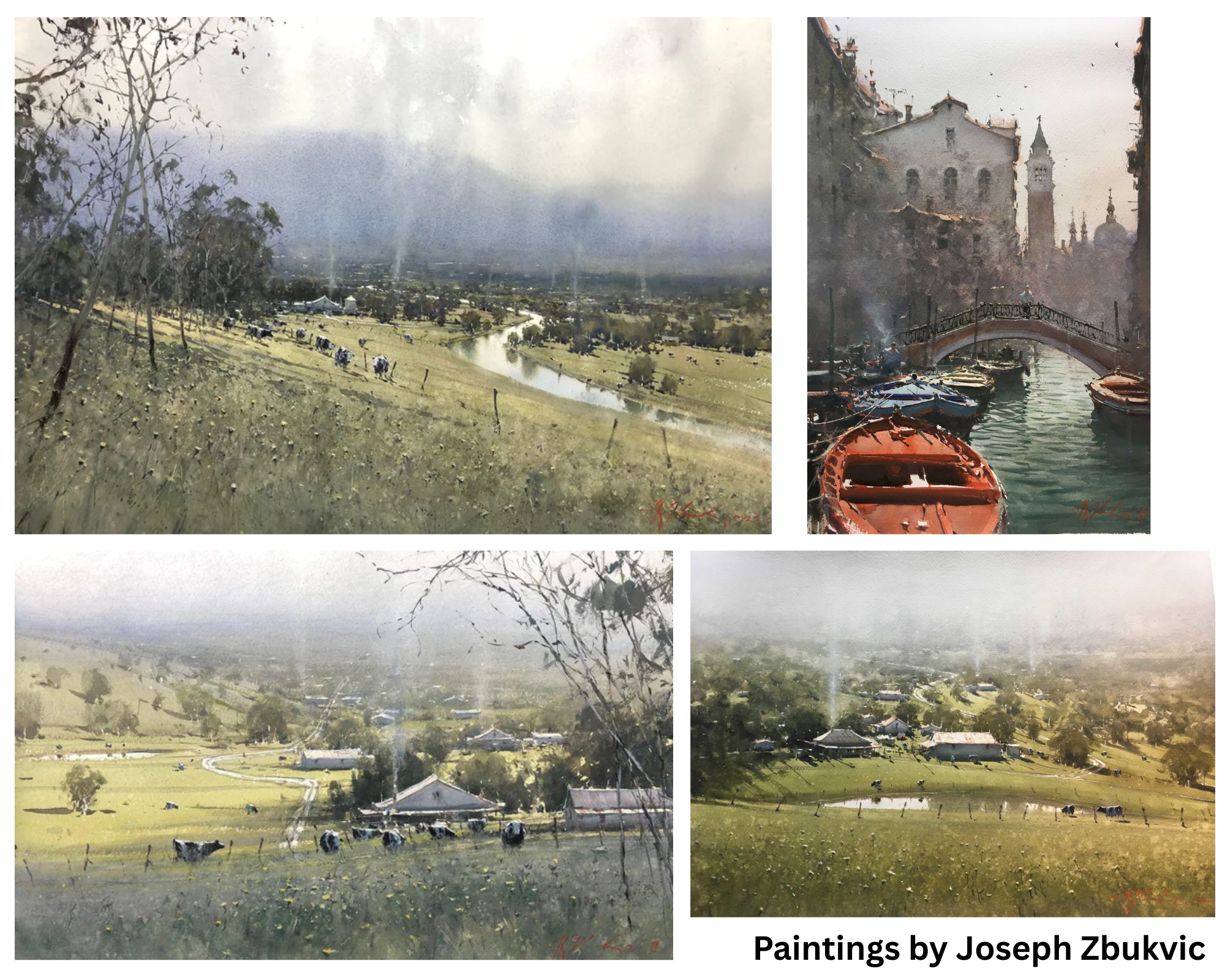
Today, we're going to explore how you too can add smoke to your scenes.
Why Smoke, Though?
Let's talk for a minute about why Joseph adds smoke in the first place.
I was lucky enough to learn from him in 2017. Here's a picture of me and him standing awkwardly far apart from each other. I guess I was trying to not invade his personal space.
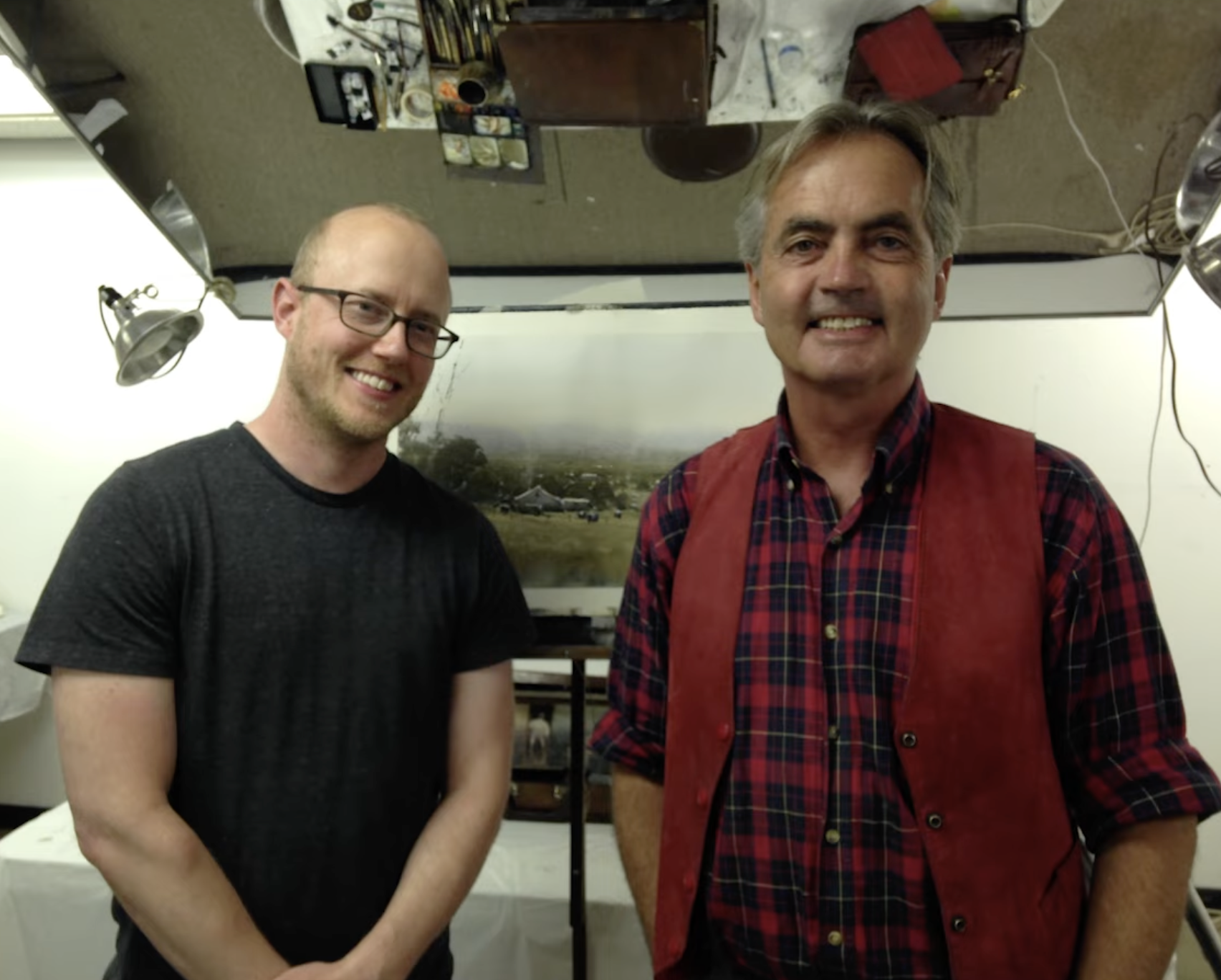
One day, he was painting a landscape scene, and he started adding some smoke into the distance. Out of nowhere, this lady says, "Where's the smoke coming from? What's burning?"
You could see it on Joseph's face: he was kind of puzzled, and borderline irritated.
Joseph explained he's so deeply thinking about the connectivity of the scene, the composition of the scene, and the atmosphere. He's not thinking that literally.
The smoke that he adds does a few different things:
- First, it adds to the atmosphere of the scene.
- It also gives his work a fleeting moment in time feel, which is something I really like about his paintings.
- In addition, it adds to the old world aesthetic that his work has. It just feels like it's a different time, a different place, and it takes you there.
But the smoke in his scenes does something else that's really important, too. And it's something that the lady in the workshop didn't understand, and I didn't understand at the time.
Smoke can connect what is happening in the middle ground with the background. The smoke is a connector, and this is an essential part of good painting.
It also adds verticals to move the eye around the scene, as well as to break through that horizontal barrier.
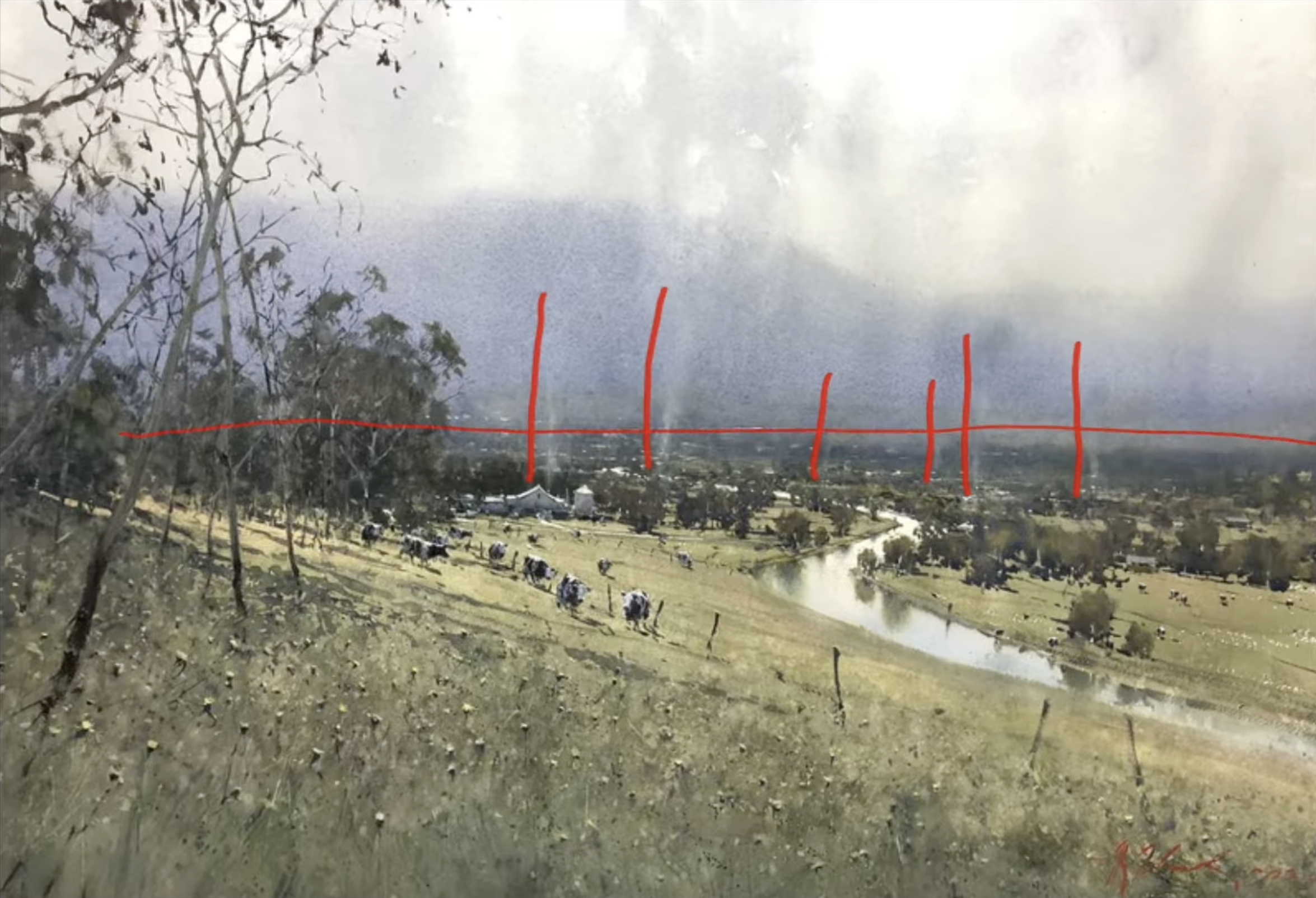
Painting by Joseph Zbukvic
How To Add Smoke to Your Paintings
So now that we know the why, let's look at the how.
When I lay out the drawing for my scene, I'm already thinking about where am I going to include the smoke.
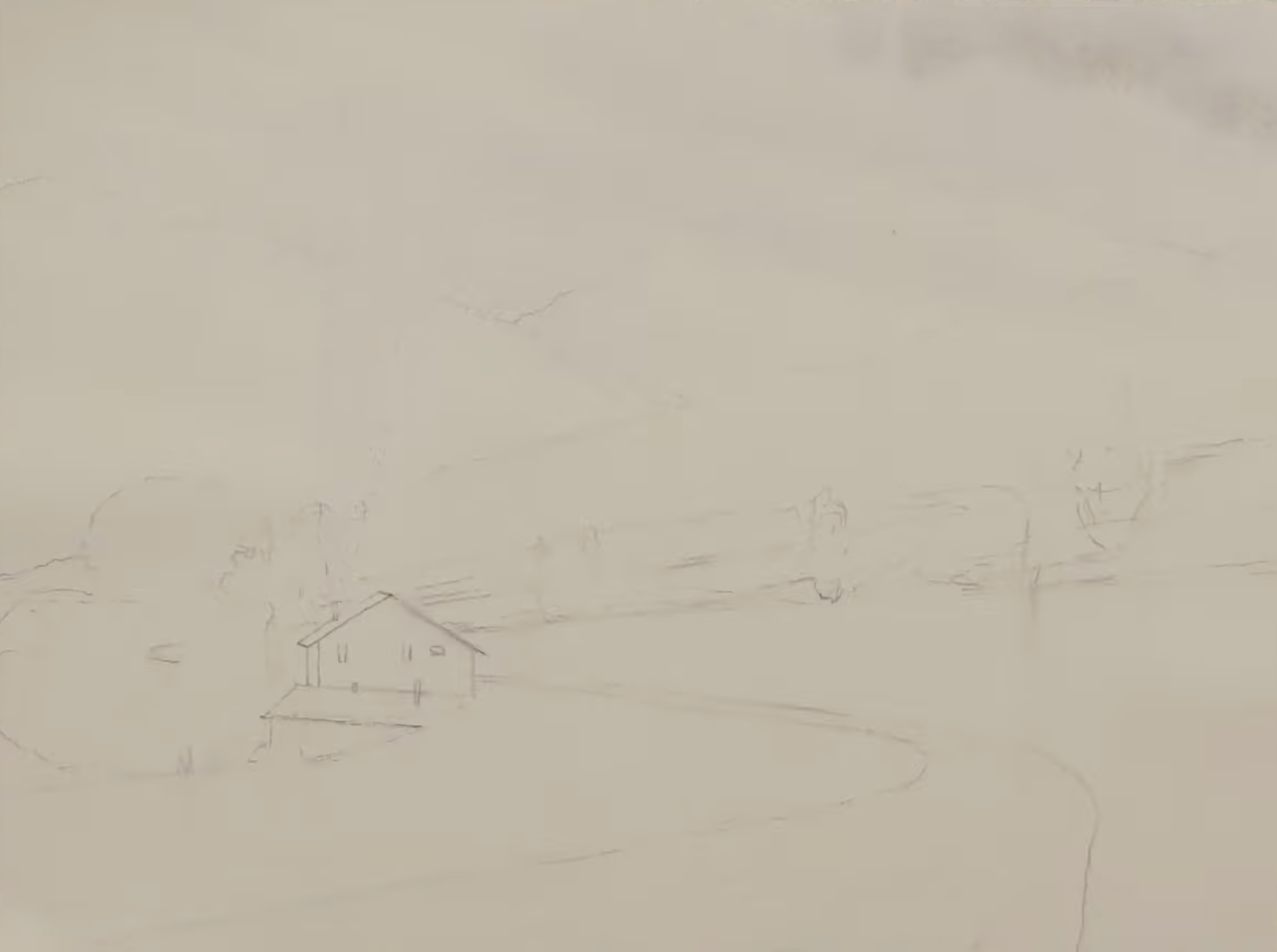
So in this landscape, it's pretty obvious I want it coming out of this one cabin. I'm actually thinking about the direction of the smoke, too. I want it to kind of create an S to lead the viewer's eye into the scene, to add a vertical in the focal area, and to be a connector between the two halves of the scene.
So I'm laying in the really light values for that background hill. I'm painting around the smoke.
One thing I realized when I was painting from Joseph is how much he does while the paper is wet. While he does not dampen the back and the front of the paper like I do in my approach, he does dampen most of the paper when he's painting the sky and all the light values underneath. Then when he's going through and painting the landscape that sits on top of that, he is lifting paint carefully while the paper is still wet. A lot of the work that's done to create the smoke has to be done when the paper is wet and damp.
So here I'm laying in all the light values for the scene. Notice how I'm painting right up to the smoke.
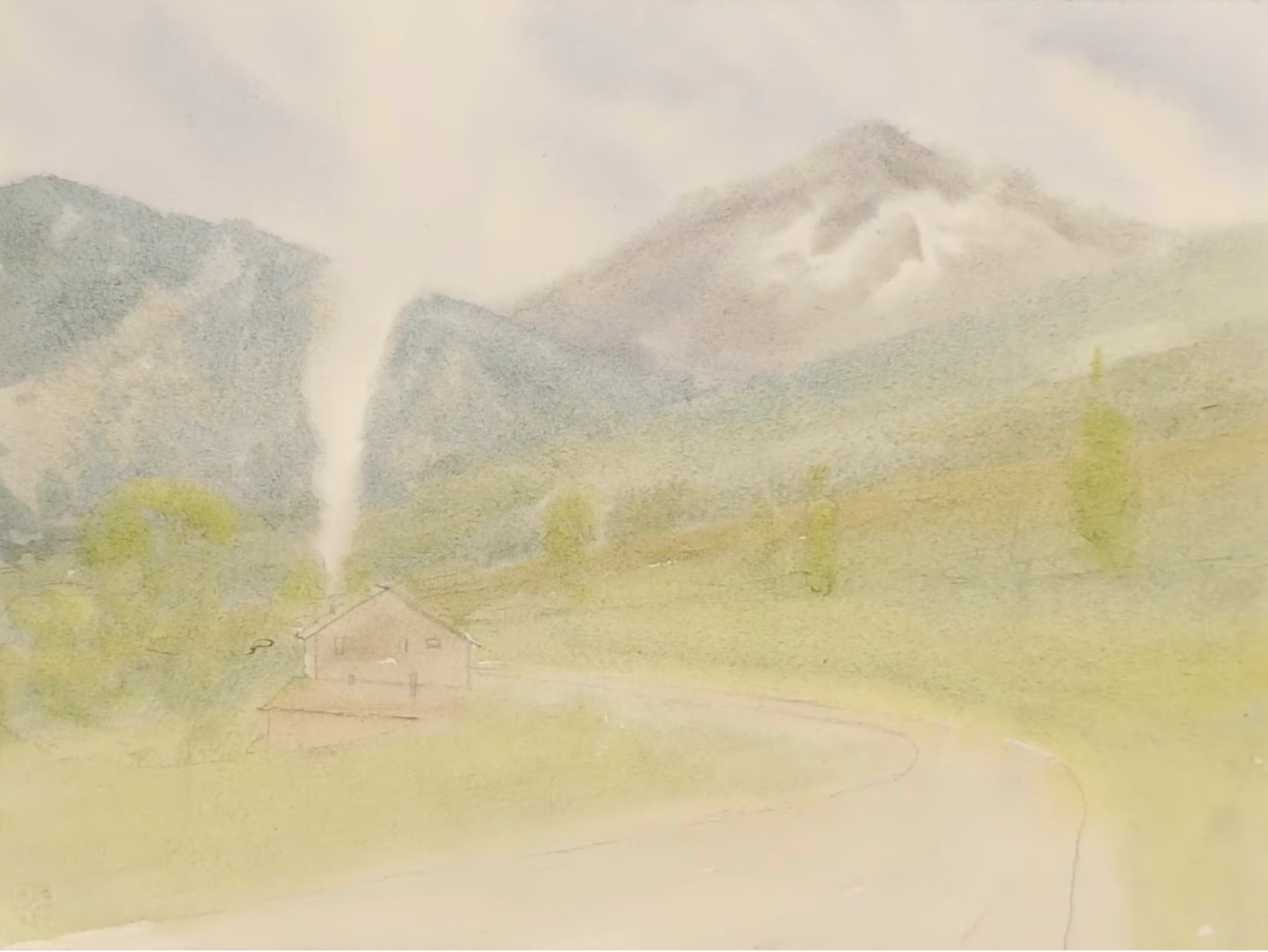
Okay, at this point I've let my paper dry, and now I'm coming back in to add all of the details into the scene.
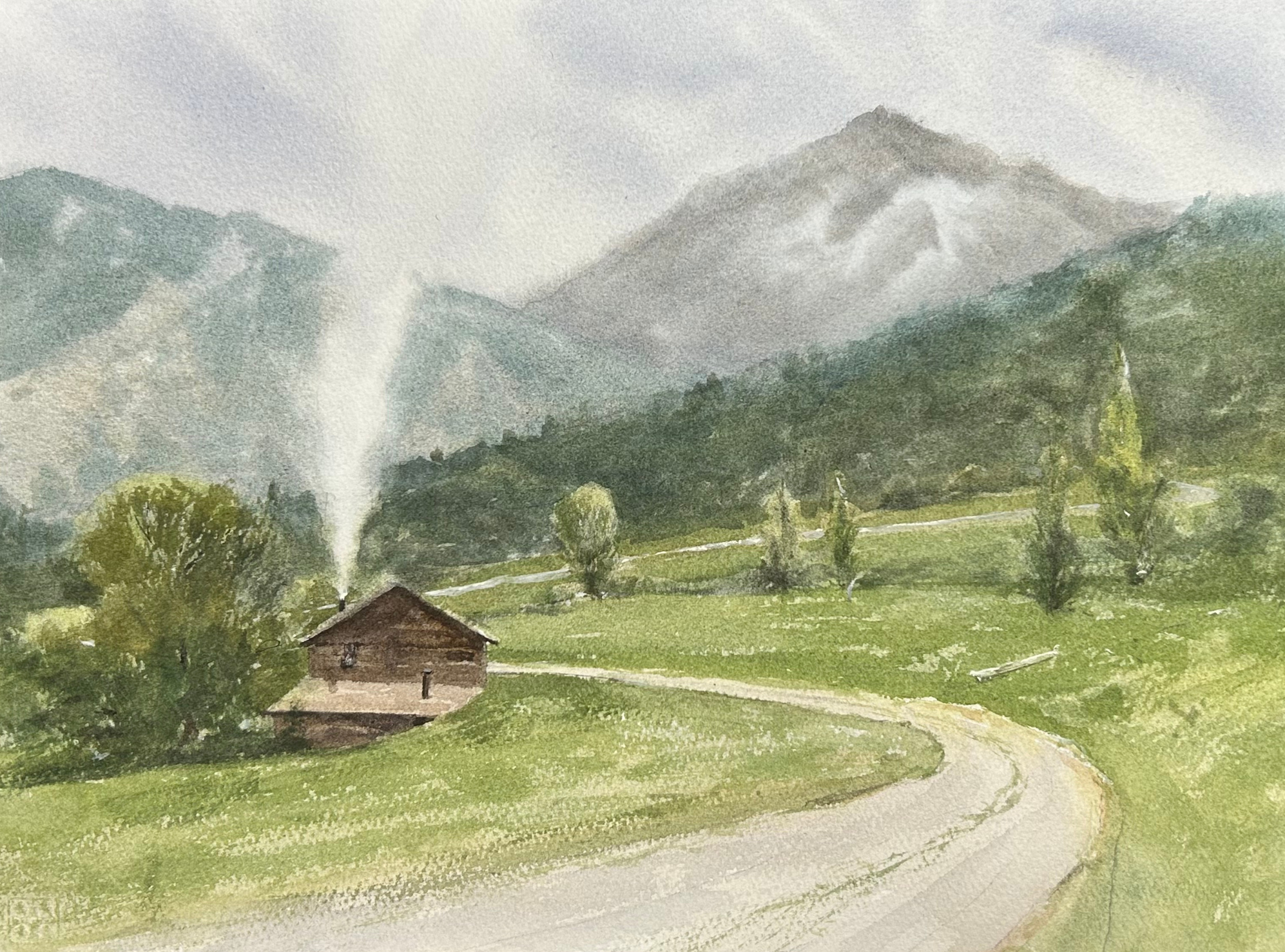
At this point, I used some Ivory White Holbein gouache to add a few little highlights around the scene.
I'm going right to where the smoke is coming out of the chimney, and I'm adding just a touch of that Ivory White Holbein gouache. This creates a nice contrast between the chimney and the really white part of the smoke.
One thing I like about how this turned out was it's way soft at the top. And then as it gets closer to the cabin, the chimney here, it becomes more solidified.
Related Blogs
The Scratching Watercolor Technique for Beginners
Using Gouache To Create Highlights in Watercolor Painting
Take Advantage of Watercolor's Best Attribute - Lost and Soft Edges