Are You Using The Wrong Watercolor Palette?
Sep 21, 2026Have you ever wondered if the palette you use affects how your paintings look?
Today, I'm going to show you how switching my palette helped me go from this painting to this painting.
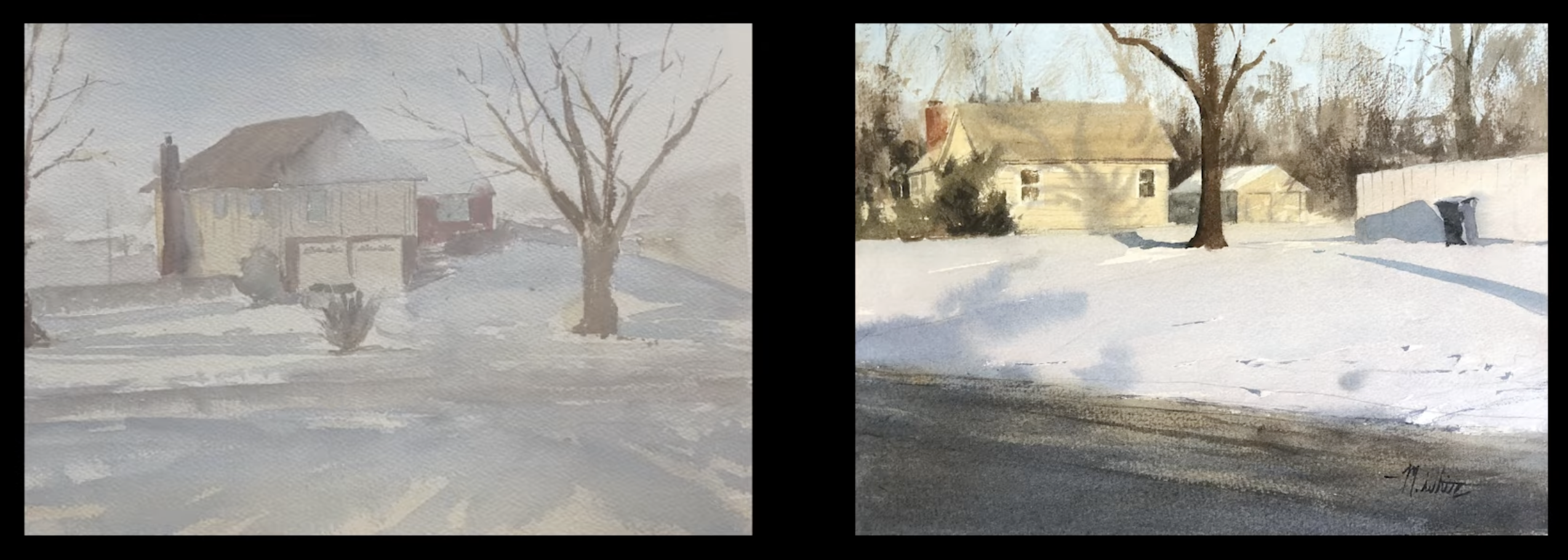
I'm going to explain the reasons why, but also give you the techniques that, combined with this change, made the biggest difference for me.
Why I Switched to a John Pike Watercolor Palette
This is an old palette of mine that just didn't cut it. Let me tell you why.
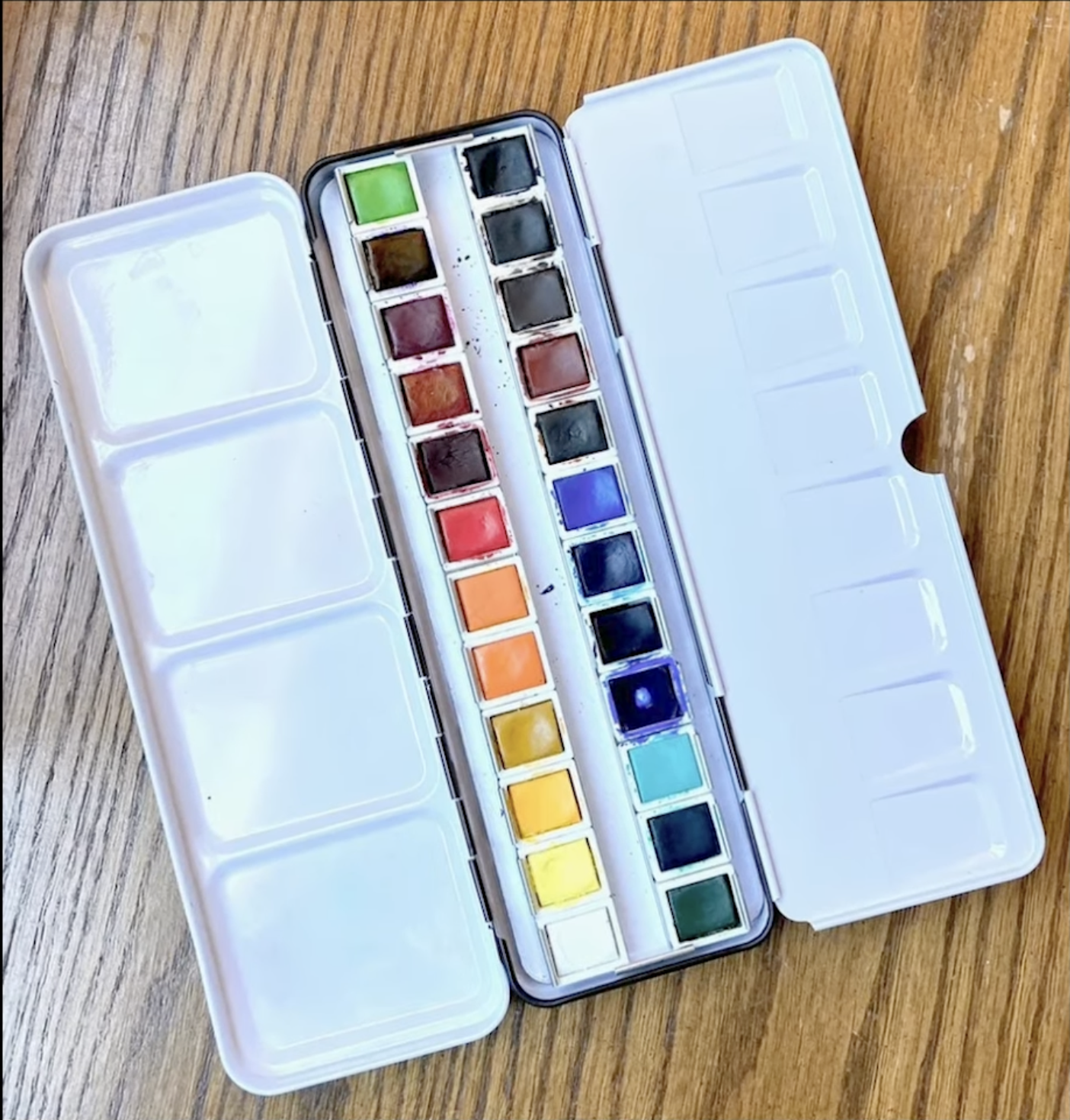
There are some pros - it has multiple wells for paints, it's made of a durable metal. and there's some room to mix.
As I used it, though, I found that it wasn't serving my painting process adequately.
The main reason was because I needed a lot more room to mix paints.
If the mixing space on the palette is too small, this can create several issues.
First, small spaces will cause you to run out of mixed paint faster. This means you have to stop what you are painting and come back to mix more. The issue with this is that watercolor demands we move quickly in certain parts of the process - especially when painting the large, connected middle value shape.
You have so much to think about during this phase of the painting. We're thinking about edges, about values, color changes, and we're trying to paint all of this while the wash stays wet. And if you have to stop and mix more paint, you're adding pressure to an already stressful situation.
One easy way to make this stage of the painting process easier is to premix as many colors as you can. Before I start this phase of the painting process, I look at the scene, think through what colors I need, and mix these so they're ready.
With a lot of mixing space, I can add in accents within these mixtures. So one area of this mixture could be a bit cooler and one area could be a bit warmer. This helps add interest and ensures that I'm not using too much of one color.
By the way, if you want help with your color mixing in a straightforward way, take a look at my free mixing guide.
The Palette I Use Today
Now I have exchanged my small metal palette for a John Pike palette.
I like this specific one quite a bit. It's becoming harder to find and it's kind of expensive, but it doesn't have to be this specific palette - just one that gives you the room you need to mix colors.
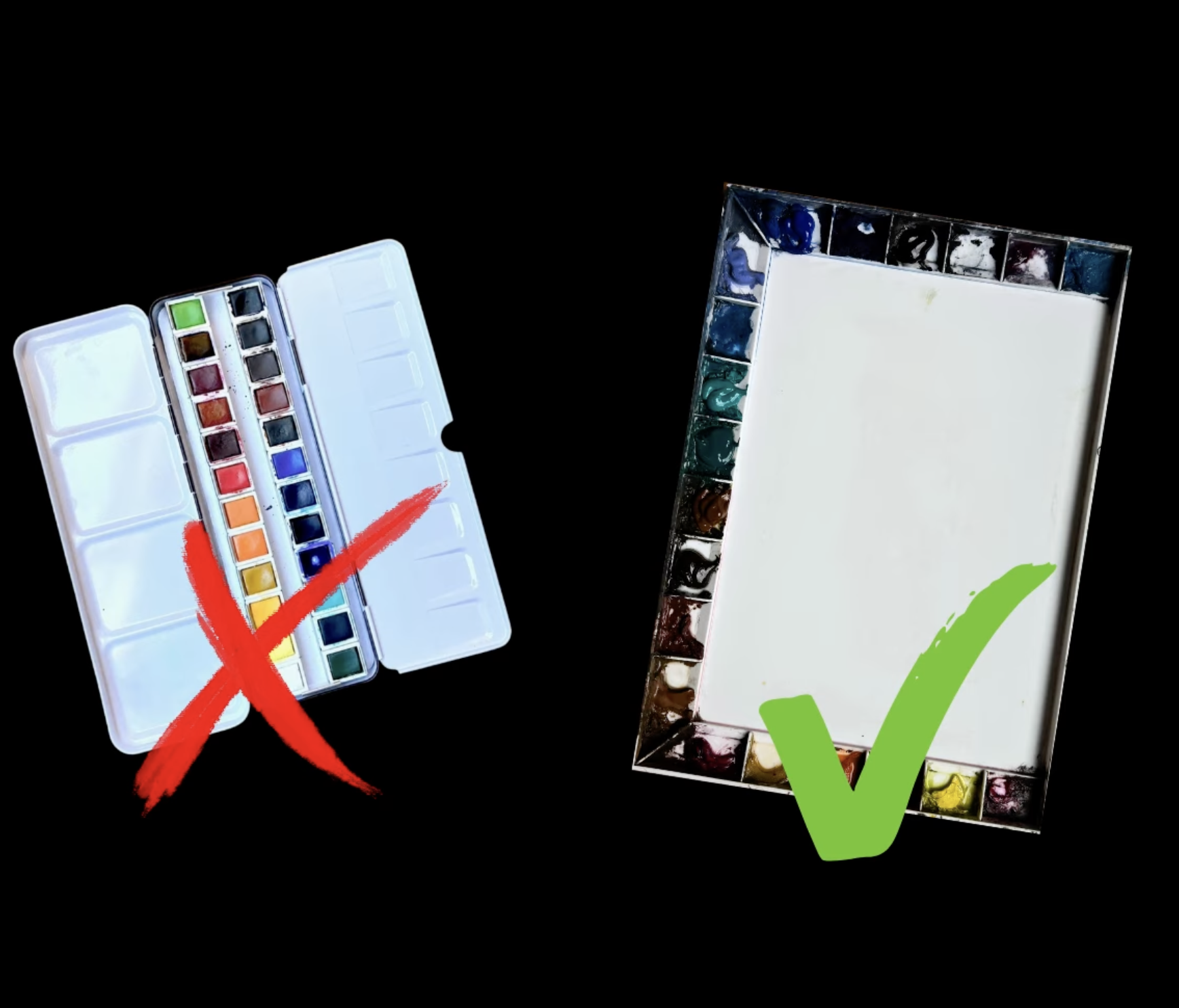
I remember when I was first getting into buying watercolor supplies, I thought I really needed to mix on a metal or ceramic palette, but actually plastic works just fine.
One hang-up that people have with using plastic palettes is that the pigment can kind of gather up on the surface and not spread out like you want it to. But I have found that after you've used it a few times and you've kind of roughed up the surface, that texture alleviates this problem.
Now there's an even more important reason to have plenty of mixing space.
Mixing space allows us to more easily and reliably achieve a full spectrum of values, which is key to creating rich, dynamic watercolors with compelling light.
Now, how does mixing play in with this? Well, we need to ensure that we are mixing strong enough mixtures, and we can't have strong middle values and darks if we don't have enough mixing space to mix these bold washes.
Questions About Other Supplies I Use?
Would you like to know more about my supplies? You're in luck - I have compiled a list of my essential watercolor supplies, and, without any extra cost to you, you can purchase them with this link.
Related Blogs
The Only Watercolor Brushes You Need for Professional Paintings
The Watercolor Artist's Guide to Paints
Tape-Free Watercolor: Embracing Spontaneity on Paper